Skip to content
Briefings are running a touch slower this week while we rebuild the foundations.See roadmap
Artemis II Moon Mission
2APR

A crater named 'Carroll' in deep space

2 min read
11:46UTC

Commander Reid Wiseman wept as a Canadian crewmate read his late wife's name to Mission Control. NASA did not announce it.

ScienceDeveloping
Key takeaway

A grieving commander has tied a lunar feature to his late wife's name on the open record.

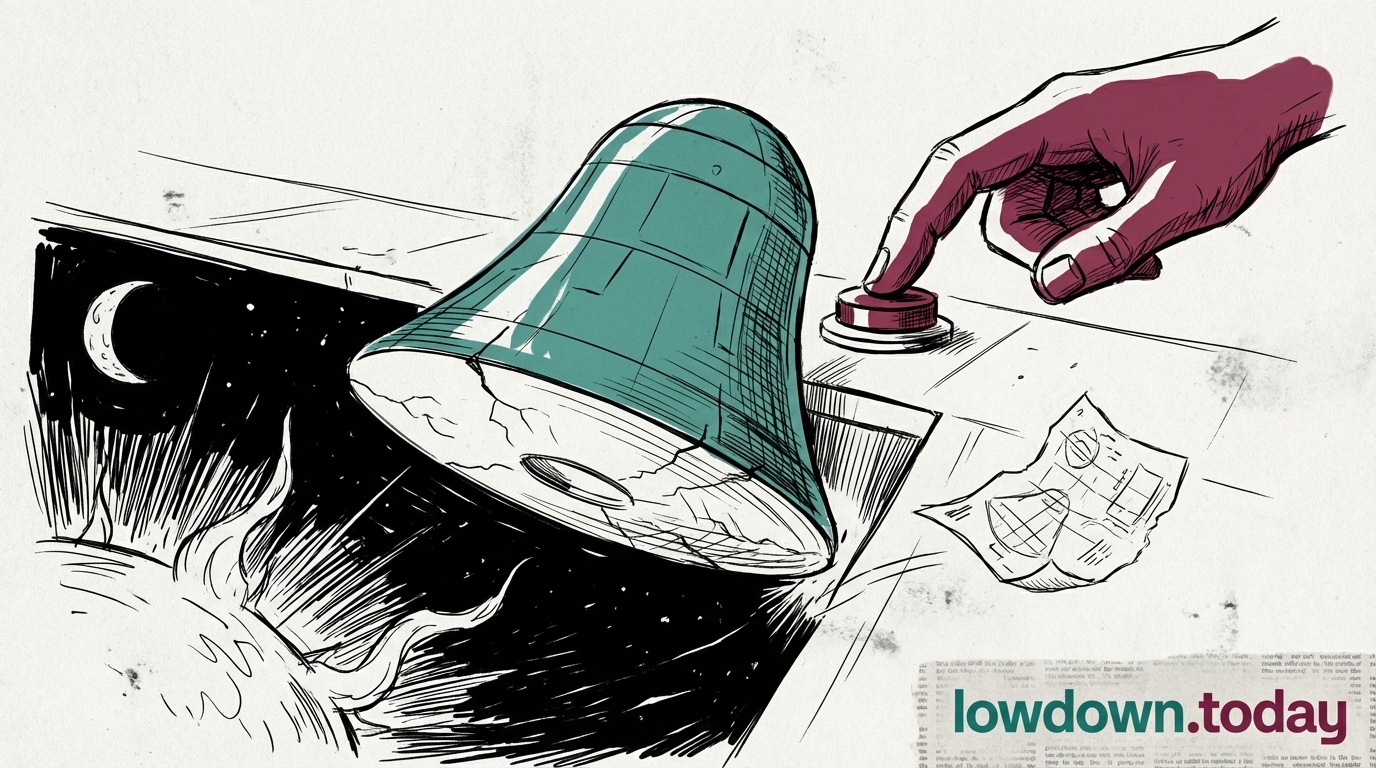
Commander Reid Wiseman wept in deep space yesterday as Canadian crewmate Jeremy Hansen relayed the name Carroll to Mission Control, a crater proposed in honour of Wiseman's late wife.1 All four crew members embraced on the flight deck. The naming was the most consequential moment of the lunar flyby distance record window , and it surfaced through a private ritual rather than an agency press release.

The bright spot sits on the near/far side boundary of the Moon, northeast of a second proposed feature the crew named Integrity, and will sometimes be visible from Earth.2 Carroll honours Carroll Taylor Wiseman, Reid Wiseman's wife, who died of cancer on 17 May 2020.3 Both names were transmitted as formal proposals for submission to the IAU (International Astronomical Union) after splashdown, a review process that can run for years.4

CBC News and Irish public broadcaster RTE confirmed the moment from ground-side coverage.5 Space.com placed the naming against the record Wiseman had set minutes earlier, the furthest any human being has ever travelled from home at 252,756 miles .6 The mission's emotional peak arrived in the same six-hour window as its arithmetic peak.

Deep Analysis

In plain English

The Moon's surface is covered in craters, and most of them have official names approved by an international astronomy body called the IAU. During the Artemis II flyby, the crew proposed that a crater near the boundary between the Moon's near and far sides be named Carroll, after Reid Wiseman's wife who died of cancer in 2020. The proposal still has to be formally reviewed and approved after the mission lands — that process can take a year or two. But the name was relayed to Mission Control as a formal proposal, which puts it on the record.

Deep Analysis
Root Causes

The absence of a formal NASA press release about the Carroll naming reflects an institutional choice to treat personal crew moments as crew business rather than agency communications. NASA's public affairs operation has been notably selective about which emotional moments it amplifies during Artemis II.

The fact that the naming surfaced through CBC News and Irish RTE rather than NASA's own channels is consistent with a pattern across the mission: Canada's institutional contribution (Hansen as the relay; Gibbons as capcom at the record; the Canadian angle on the flyby) has been visible only through first-party CSA or international broadcaster fetches, not NASA press.

What could happen next?
  • Meaning

    The Carroll naming is the first lunar feature proposed in real-time from deep space by the crew who first reached that distance, giving it a historically unique provenance in IAU records.

    Long term · 0.8
  • Precedent

    If ratified, Carroll becomes the first lunar feature named in honour of a private individual by a crew transmitting from beyond the Moon, setting precedent for future deep-space naming conventions.

    Medium term · 0.72
  • Risk

    IAU review timelines of 12-36 months mean the Carroll name may not be formally ratified before Artemis III launches, creating an awkward gap where the feature is publicly discussed without official status.

    Short term · 0.75
First Reported In

Update #6 · Rest Day Between Records and Reckoning

NASA· 7 Apr 2026
Read original
Causes and effects
This Event
A crater named 'Carroll' in deep space
The most consequential moment of the lunar flyby reached the public through a private crew ritual, not an agency press release.
Different Perspectives
JAXA
JAXA
JAXA is an Artemis Accords signatory with the Lunar Cruiser rover planned for south-pole surface operations; Chang'e 7's first-arrival timeline compresses the window those surface systems were designed to operate in alongside American crew.
Space Research Institute RAS / Roscosmos
The LILEM instrument on Chang'e 7 gives Russia science-cooperation presence at Shackleton's rim with no independent crewed lunar capability on a public timeline. This is Roscosmos's only confirmed path to south-pole science in the current decade.
CNSA / China Manned Space Agency
Chang'e 7 at Wenchang confirmed a second-half 2026 launch for Shackleton rim, 18 to 24 months before any American crewed arrival. The mission carries a Russian LILEM instrument, giving Roscosmos a south-pole science foothold inside China's programme.
Jeremy Hansen / Canadian Space Agency
Hansen appeared at the 16 April JSC press conference in his only public moment since splashdown. Canada's Canadarm3 remains without a confirmed deployment host after Gateway cancellation, with CSA maintaining institutional silence on the programme's status.
Airbus Defence and Space
Airbus has issued no post-mission ESM performance statement; its press room returned a 404 error on a 14 April check. The only named Airbus engineer quote on the mission appeared in a Nature interview, not a company release.
Daniel Neuenschwander / European Space Agency
ESA's 11 April statement praised ESM translunar injection precision and omitted the pressurisation valve anomaly; the June 2026 Council is the sole stated review forum. ESM-3 is at KSC without a corrected-baseline disclosure to justify its readiness.