Alphabet reported Q1 2026 revenue of $109.9 billion, up 20 per cent year-on-year, with Google Cloud growing 63 per cent past $20 billion in a single quarter for the first time 1. Quarter-one capex was $35.7 billion. Total backlog nearly doubled quarter-on-quarter to $460 billion, the disclosure that mattered most. CEO Sundar Pichai told the call that Google was "compute constrained in the near term".
The backlog figure is the cleanest signal in any of the Big Tech earnings this cycle. Backlog measures contracted future revenue that the company cannot currently fulfil because it does not yet have the compute capacity. A near doubling in a single quarter to $460 billion means demand is accelerating faster than Alphabet can build, and the $35.7 billion in Q1 capex is the spending rate that response requires. Annualised, Alphabet's capex run rate clears $140 billion, which puts it in the same range as Meta's revised guidance and within sight of Microsoft's $190 billion ceiling.
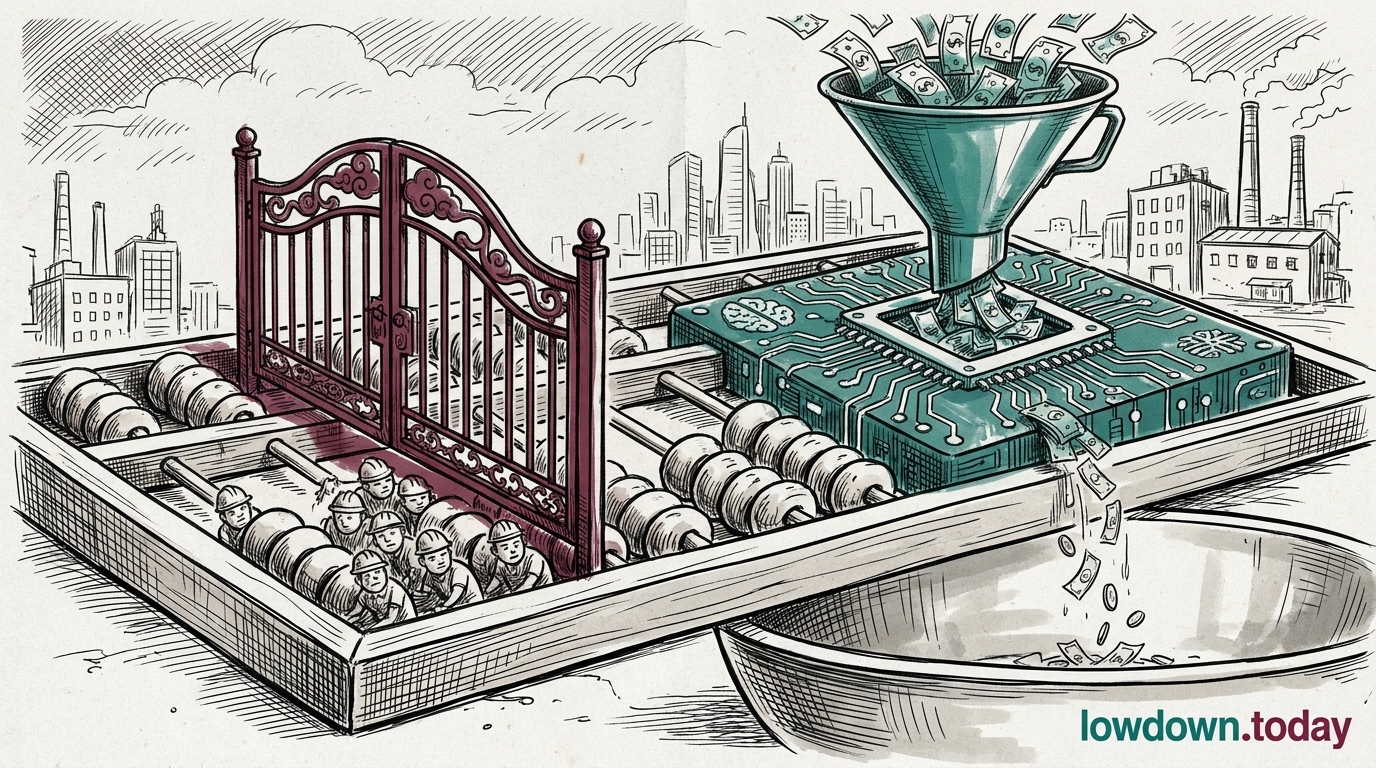
Pichai's compute constraint comment did the strategic work. When the CEO of a company spending $35 billion a quarter on data centres says he does not have enough capacity, the binding bottleneck on near-term AI revenue stops being model performance or product adoption and becomes physical infrastructure. Microsoft was running Azure at 40 per cent growth at the prior quarter and has since raised its own capex to $190 billion; Alphabet's backlog is the demand signal that justifies the $560 billion combined commitment across the four hyperscalers this year, and the matching pricing power that TSMC, SK Hynix and Samsung are converting into supplier margins. Some of the labour cost the hyperscalers are removing is being transferred into the supply chain rather than retained.
For savers exposed to the tracker funds that hold these four firms, the Pichai admission is reassuring on demand and unsettling on cost. Compute constraint at this scale means revenue is real; the capex it requires means free cash will not be returning to shareholders in the form most investors model.





