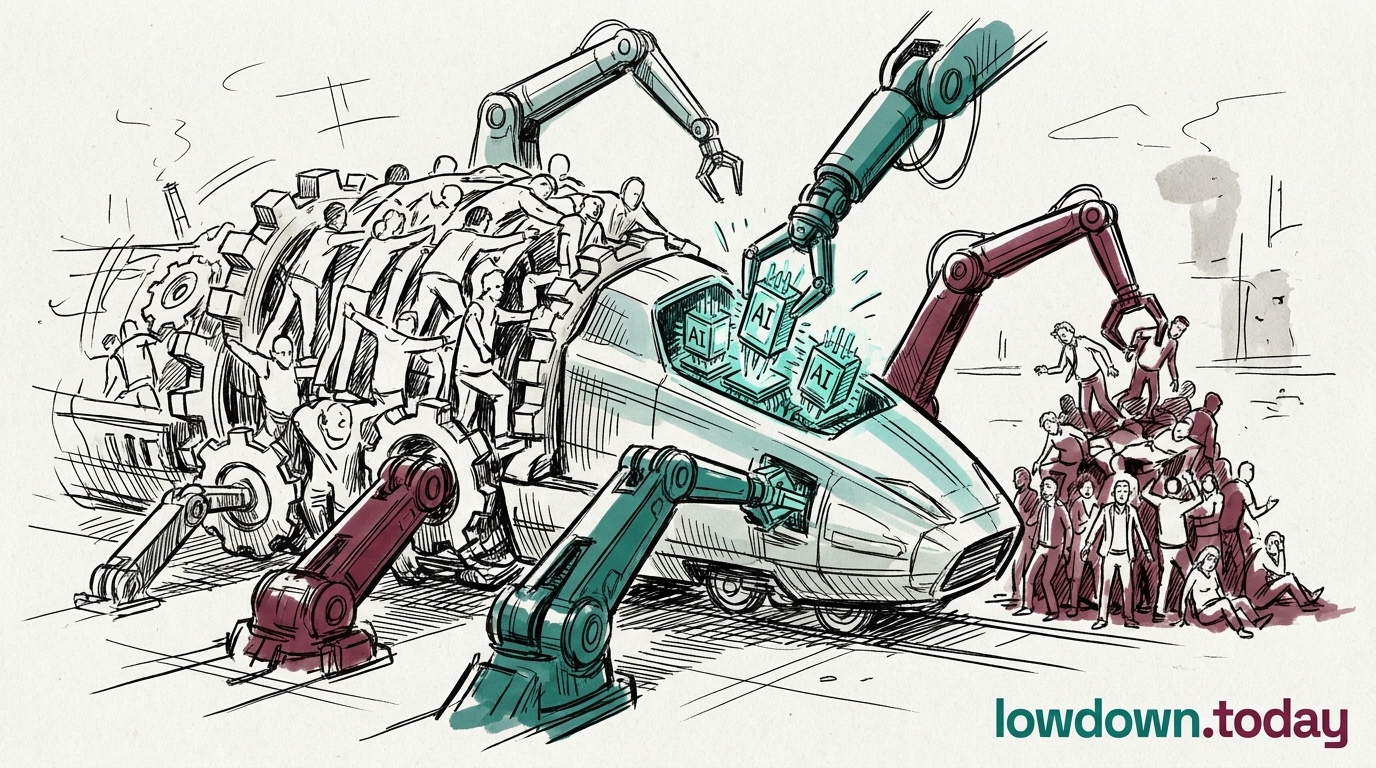
Meta raised its 2026 capital expenditure guidance to $125-145 billion at its Q1 2026 earnings call, the second upward revision in two months, and confirmed approximately 8,000 engineering layoffs starting in May 2026 with 6,000 open roles left unfilled1. Q1 revenue was $56.3 billion, up 33 per cent year-on-year. Multiyear contractual commitments rose by $107 billion in the single quarter, the clearest signal yet that Meta is locking in supply at NVIDIA, Broadcom and the memory cohort against forecast 2027-2028 capacity tightness.
The two figures belong together. The 19 April announcement of 8,000 engineering cuts is now confirmed for May execution, and the 6,000 roles left unfilled extend the headcount reduction by an effective 14,000 once the open requisitions are closed. Meta has been the clearest of the four hyperscalers in describing what it is doing: AI-native engineering roles are being created where bounded coding work is being substituted, and traditional engineering titles are being closed. The $107 billion in new contractual commitments is the supply-side mirror of the $145 billion capex ceiling.
Meta's second capex raise inside two months reveals the underlying pattern. Hyperscaler capex revisions on this scale, in this direction, with this frequency, have no peacetime precedent. The closest analogue is the 1996-2001 telecoms fibre buildout, which produced 90 per cent capacity overhang and a debt-driven sector collapse. Today's spend is equity- and cash-funded rather than bond-funded, which mutes the systemic risk channel but concentrates the equity drawdown if the bet underperforms. Meta's investors are bearing that drawdown directly.
The political consequence sits inside US legislative debate. Two of the largest engineering employers in the country are confirming engineering reductions on a Q1 earnings call while Senator Mark Warner lines up endorsements for a commission to study the labour effects of AI. Capital moves in months; the legislative response moves in years.





