The Federal Reserve Bank of New York published firm-level survey work on 5 August finding that AI use among service firms in its district rose from 25% in August 2024 to 40% a year later, while those same firms reported very few AI-driven layoffs and said they intend to retrain staff rather than dismiss them.1 The regional Fed banks run these surveys of local employers every month, which makes them one of the few instruments that asks companies directly rather than inferring from filings or announcements.
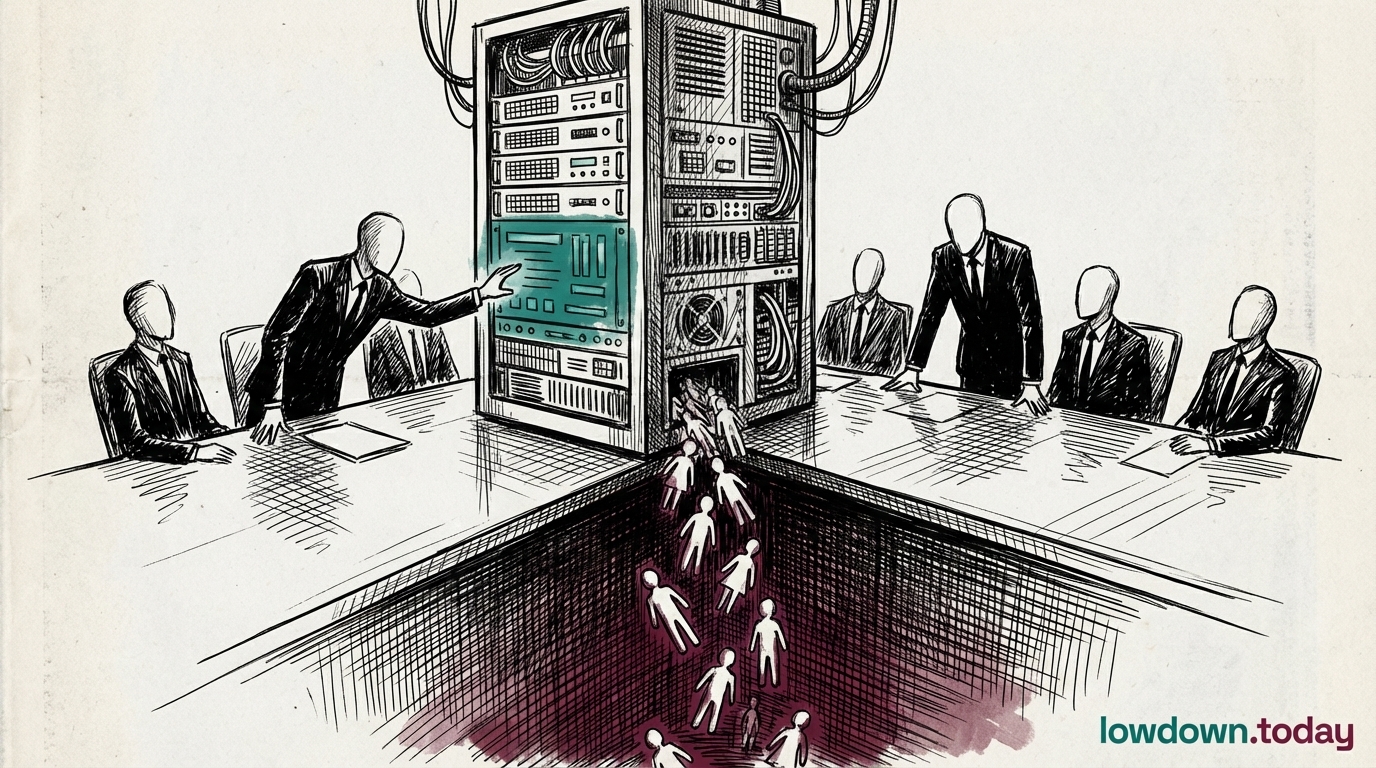
What the survey does find is hiring suppression aimed at college-educated applicants. That is a different mechanism from redundancy and it leaves a different trace: no notice, no severance, no filing, no press release, just a vacancy that never opens. SAP chief executive Christian Klein told investors in July that the company's research headcount will not grow for a year, which is the same decision described from the employer's side.
Stanford's Digital Economy Lab put the ratio at roughly 34 suppressed hires for every declared AI layoff. Federal Reserve governor Michael Barr said in July that the central bank had found little evidence of economy-wide displacement. Both statements survive the New York Fed's result intact, because an adjustment that runs through unopened vacancies will not show up in dismissal counts and will not move an aggregate unemployment rate quickly.
The reading matters for how the rest of the evidence on this beat should be weighed. A survey of firms sees intentions and dismissals; a pension register sees entries and exits. Where the two disagree about severity, the gap is likely to be sitting in the cohort that was never hired in the first place, and no instrument in wide use counts that group directly.


