Skip to content
Welcome, thoughtbot's Giant Robots listeners!Start here
AI: Jobs, Power & Money
28NOV

News1: Korea's big banks rehire retirees

2 min read
12:18UTC

Korea's four largest banks rehired 1,013 retirees last year, equal to 79.1% of their graduate intake, according to the news agency News1.

EconomicDeveloping
Key takeaway

Korea's largest banks rehired retirees at nearly four for every five graduates hired, News1 reports.

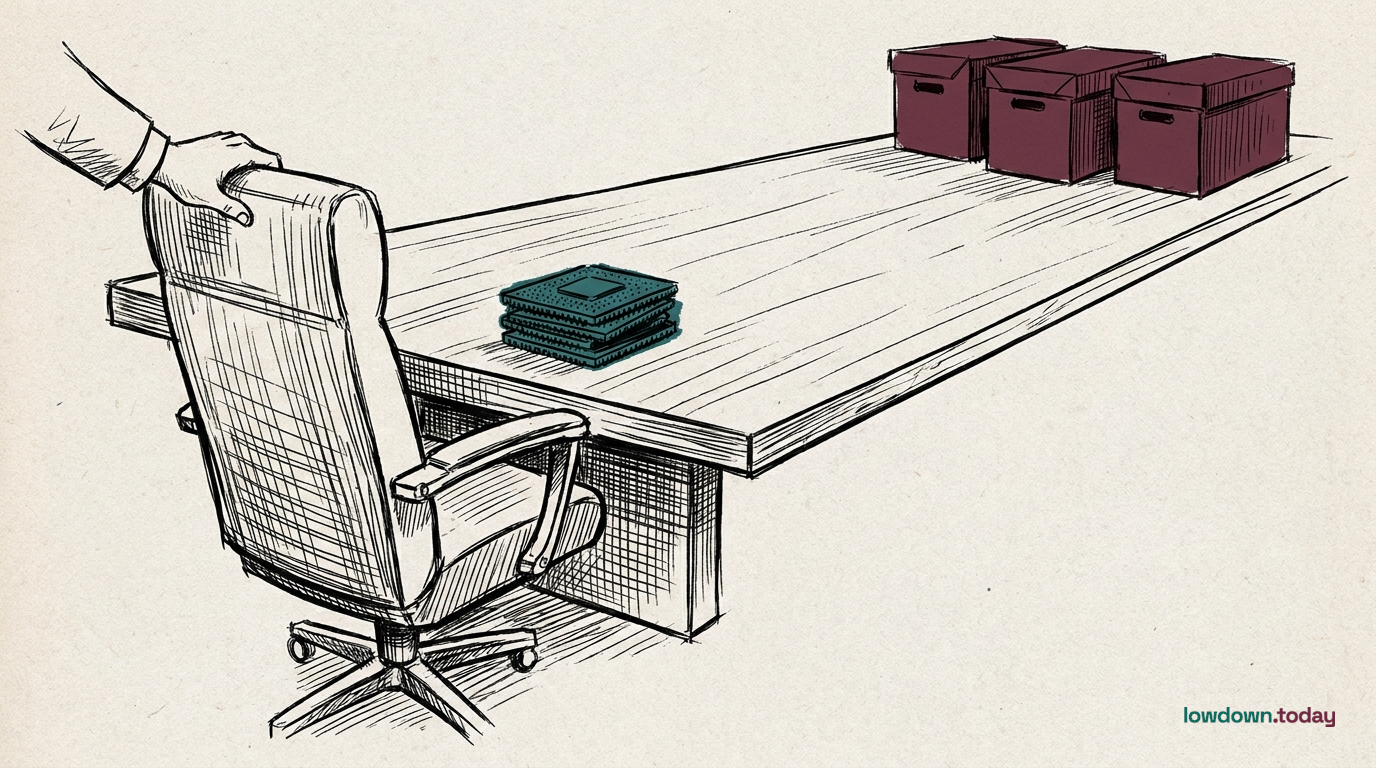
Korea's four largest banks, KB Kookmin Bank, Shinhan Bank, Hana Bank and Woori Bank, rehired 1,013 retirees last year, equal to 79.1% of their graduate intake, according to the Korean news agency News1 on 3 November⁠1. That is roughly four returning retirees for every five graduates hired. Entry-level hiring at banks fell about 30% over two years, News1 reports, and the returners work in credit screening and internal control on contracts of up to two years at lower pay, while AI takes over repetitive tasks.

The pattern matches what the Bank of Korea found in August: youth jobs fell in AI-exposed sectors while employment among workers in their fifties rose, and youth employment kept falling in September. In Japan, the three largest banking groups are cutting their graduate intake for April 2027.

In effect, a bank that pays a buyout and rehires the same person a year later on a cheaper fixed term keeps experienced judgement and skips the cost of training a graduate. News1 does not name its data source and gives no bank-by-bank figures, so the numbers cannot yet be checked against the banks' own disclosures.


Deep Analysis

In plain English

South Korea's four largest banks are KB Kookmin, Shinhan, Hana and Woori. Like many Korean employers, they pay older staff much more than younger ones. The banks have been offering long-serving employees money to retire early. According to a Korean news agency, many then come back a year later on short contracts at lower pay. They do jobs that need experience, such as checking whether borrowers can repay and making sure the bank follows the rules. At the same time, the banks are hiring fewer graduates, and computer systems, including AI, are taking over routine tasks.

Deep Analysis
Root Causes

Korean bank pay rises steeply with seniority, so a long-serving employee costs far more than a graduate. Buyouts reset that cost; a rehire on a fixed-term contract keeps the skills at a lower wage.

Retirement schemes have spread to younger staff. Research relayed from June reporting shows the five main banks' 2025 voluntary retirements hit a record 2,470, with buyout eligibility lowered into employees' forties.

Korean regulators hold banks to account for credit screening and internal control, so mistakes in those seats cost money. Banks keep humans with long track records in those seats even as they automate branch and back-office tasks.

What could happen next?
  • Risk

    A thinner graduate pipeline could leave banks short of experienced credit staff once today's rehired retirees leave.

    Long term · Suggested
  • Meaning

    The bank-level practice matches the national pattern of youth job losses alongside rising employment for older workers.

    Immediate · Suggested
  • Consequence

    Fixed-term senior rehires lower salary costs while keeping control functions staffed.

    Short term · Assessed
First Reported In

Update #22 · Central banks see AI before payrolls do

News1· 6 Nov 2026
Read original →
Different Perspectives
Competition and Consumer Commission of Singapore
The regulator found on 27 November that businesses can still choose and switch between cloud providers and AI models. It named dominant firms blocking rival AI agents as a risk, but answered with eight voluntary principles rather than rules.
La Poste
La Poste
France's state-owned postal group signed its first AI accord with four union confederations on 19 November, setting up a joint committee to oversee AI use. The announcement gives the unions a say, but no job security and no training hours for its 227,000 staff.
Nascent Information Technology Employees Senate (NITES)
The IT workers' union asked India's central government on 26 November for a mandatory national policy on AI layoffs, with every automated job cut logged in public. It expects to meet Labour Ministry officials; no government response has been reported.
China State Council
China State Council
Beijing's cabinet told local governments to pace AI in labour-intensive industries and to screen large AI projects for job losses. It keeps backing AI but wants the replacement of workers slowed, and it set no numeric targets.
SAP
SAP
SAP answered Bloomberg's report of at least 10,000 planned job cuts by telling CNBC that nothing is settled. In Germany a cut on that scale goes through works councils, and its 2024 round of about 10,000 ended mostly in voluntary departures.
Nvidia's board of directors
The board reinstated Jensen Huang on 22 November after input from senior levels of the US government, while its committee of independent directors keeps investigating. Its confidence rests, by its own account, on Washington's input, and the company says it will keep cooperating with government inquiries.

Written with AI from Lowdown's published reporting. Not individually reviewed by an editor. Editorial standards.
