Skip to content
You can now search across every topic, entity and event.What's new
AI: Jobs, Power & Money
21SEP

Columbia: 75% of jobless never file claims

2 min read
16:45UTC

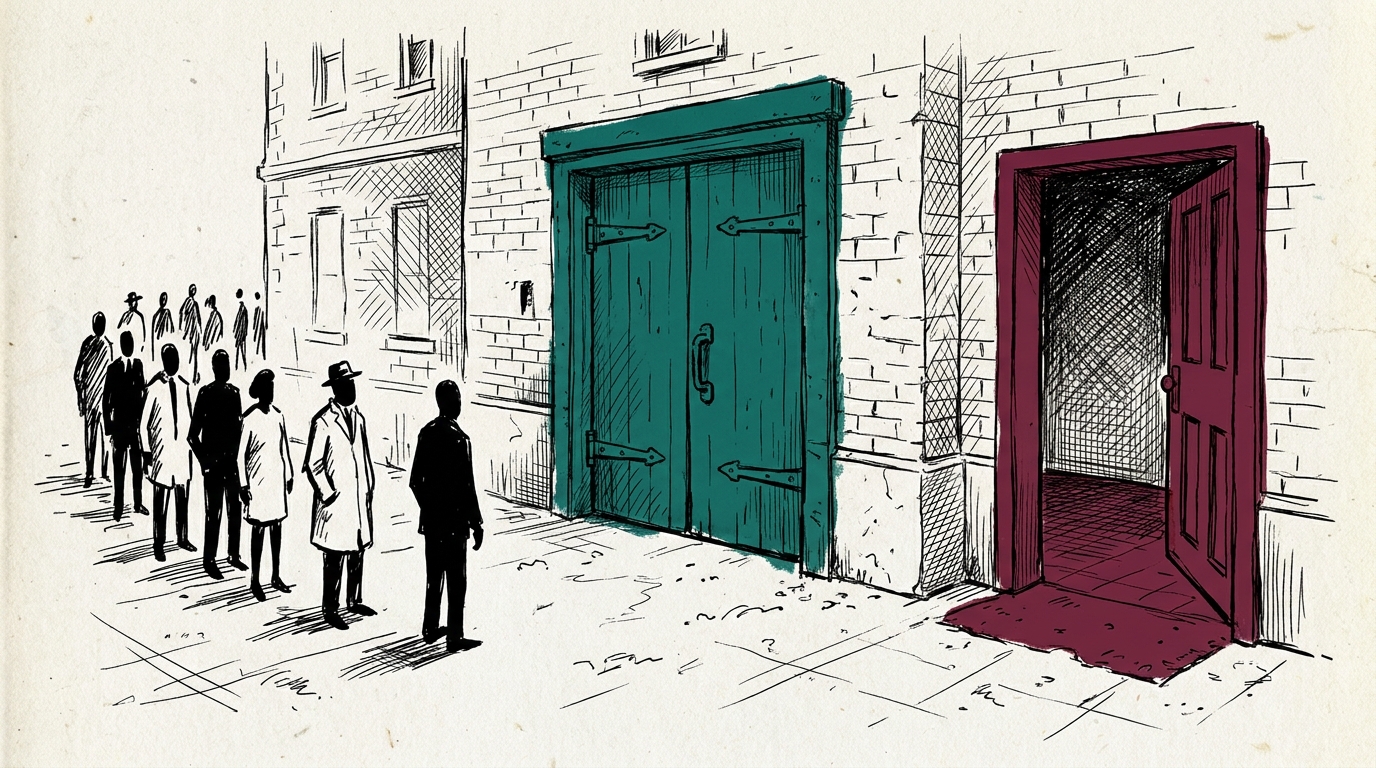
The workers AI displaces are precisely the categories the unemployment system cannot see.

EconomicAssessed
Key takeaway

Three quarters of displaced workers never appear in the claims data policymakers depend on.

Fortune and Columbia University research confirmed that roughly 75% of unemployed Americans never file for unemployment insurance 1. Severance packages delay filing. Recent graduates lack sufficient work history to qualify. Contractors are categorically ineligible.

Initial jobless claims fell to 202,000 for the week ending 28 March, a 10-month low 2. New York's updated WARN Act, the world's first law requiring companies to disclose AI's role in mass layoffs, produced zero AI attributions from 162 companies covering 28,300 workers after nearly a year . The nine-senator coalition pushing for expanded BLS data collection is demanding better measurement from agencies whose existing tools are structurally blind to what they are meant to measure.

The National Bureau of Economic Research survey confirmed another dimension: executives use AI only 1.5 hours per week on average, yet project a 0.7% employment decline over three years . Workers at the same firms expect a 0.5% increase. Those planning the cuts and those absorbing them hold irreconcilable forecasts.


Deep Analysis

In plain English

In the US, when you lose your job you can apply for unemployment benefits. Those application numbers are published weekly and are one of the most widely watched economic indicators. Politicians and journalists use them to judge whether the job market is in trouble. The problem is that about 75% of people who are unemployed never apply. If you get a severance package, you often wait until it runs out. If you are a freelancer or contractor, you are not eligible. If you just graduated and have not worked long enough, you cannot apply. These are exactly the kinds of people most likely to be affected by AI job displacement: well-paid tech workers with severance, contractors, and new graduates. They are invisible to the data that policymakers rely on.

Deep Analysis
Root Causes

The US unemployment insurance system was designed in 1935 for industrial workers in continuous employment. It requires sufficient recent earnings, excludes the self-employed and contractors, and has not been updated to reflect the rise of gig work, project-based employment, or high-earning knowledge workers who receive severance packages on exit.

The specific worker profile that AI is displacing in 2026 fits the non-filing demographic almost precisely. Senior software engineers at Oracle and Salesforce with severance packages will wait months before filing. Recent graduates without two years of employment history cannot file.

Contractors and freelancers are categorically ineligible. The system's design was never a problem when the workers it could not see were a minority. It becomes a structural failure when the invisible cohort is the one at the centre of the displacement wave.

What could happen next?
  • Policymakers relying on jobless claims as their primary AI displacement signal will persistently under-respond to the scale of the problem, delaying support programmes until the financial distress of displaced tech workers becomes visible through consumer credit defaults rather than benefit filings.

First Reported In

Update #4 · AI leads US layoffs as cuts go uncounted

Bloomberg· 4 Apr 2026
Read original
Different Perspectives
Salesforce, Synopsys and TD Bank Group
Salesforce, Synopsys and TD Bank Group each filed quarterly disclosures in late August booking restructuring charges, or none at all, without naming AI as a cause. Their silence matters because Challenger's tracker shows AI as a stated reason fell to fourth place in August even as the year-to-date AI-cut total still leads at 116,175.
Singapore, South Korea, Taiwan and Indonesia
Singapore launched its Skills and Workforce Development Agency on 16 September, giving citizens six months of free premium AI tools, while South Korea ring-fenced its AI tax windfall in a new Future Response Fund. Taiwan kept funding its AI build past NT$190bn and Indonesia rewired vocational training around AI literacy, betting state-built skills beat a market-led adjustment.
ver.di, CGT Fonction Publique and CCOO
Germany's ver.di banked a 3.3% pay rise on 1 September and opened talks on a Tarifvertrag Transformation covering dismissal bans and reskilling, while France's CGT rejected Paris's AI negotiating timetable the same week. Spain's CCOO went further on 21 September, proposing to tax companies by the jobs they generate rather than wait for the next bargaining round.
BIS General Manager and Federal Reserve governors
The BIS's General Manager said on 10 September that AI displacement remains limited, even as the BIS's own survey found nearly 80% of firms plan to automate roles. Two Federal Reserve governors made the same point in July, arguing the labour-market data does not yet show a mass-firing event.
Bank of Canada, ONS and ECB
The Bank of Canada found the job-finding gap between AI-exposed and unexposed occupations widened from 2.2 to 13.9 percentage points since 2015-19, while separations barely moved. That framing, a hiring freeze rather than a firing wave, is echoed by the ECB's finding that euro-area AI use hit 52% of workers in 2026, concentrated among the university-educated.
Office for National Statistics
Deferred its Transformed Labour Force Survey beyond November 2027 and disclosed a May 2026 telephone-collection failure. The ONS carries no AI-attribution layer at all, so Britain sits outside this month's cohort of measuring states by its own admission.