Skip to content
You can now search across every topic, entity and event.What's new
AI: Jobs, Power & Money
24AUG

Salesforce hires 1,000 graduates, but for sales

4 min read
16:17UTC

Marc Benioff announced on 27 April that Salesforce would hire 1,000 new graduates while Agentforce annualised recurring revenue reached $800 million; the new hires are salespeople and generalists, not the engineers and support staff AI agents continue to replace.

EconomicDeveloping
Key takeaway

Salesforce's partial reverse is real but lands in sales, not the engineering or support roles AI absorbed.

Marc Benioff announced on 27 April that Salesforce would hire 1,000 new graduates 1. Agentforce, the company's enterprise AI agent platform, reached $800 million in annualised recurring revenue (up 169 per cent year-on-year) with 29,000 deals closed and 2.4 billion agentic work units delivered since launch. Salesforce had previously cut customer support headcount from 9,000 to 5,000 using AI agents and froze engineer hiring through fiscal 2026 ; Benioff was explicit that AI agents continue to do the developer and service work.

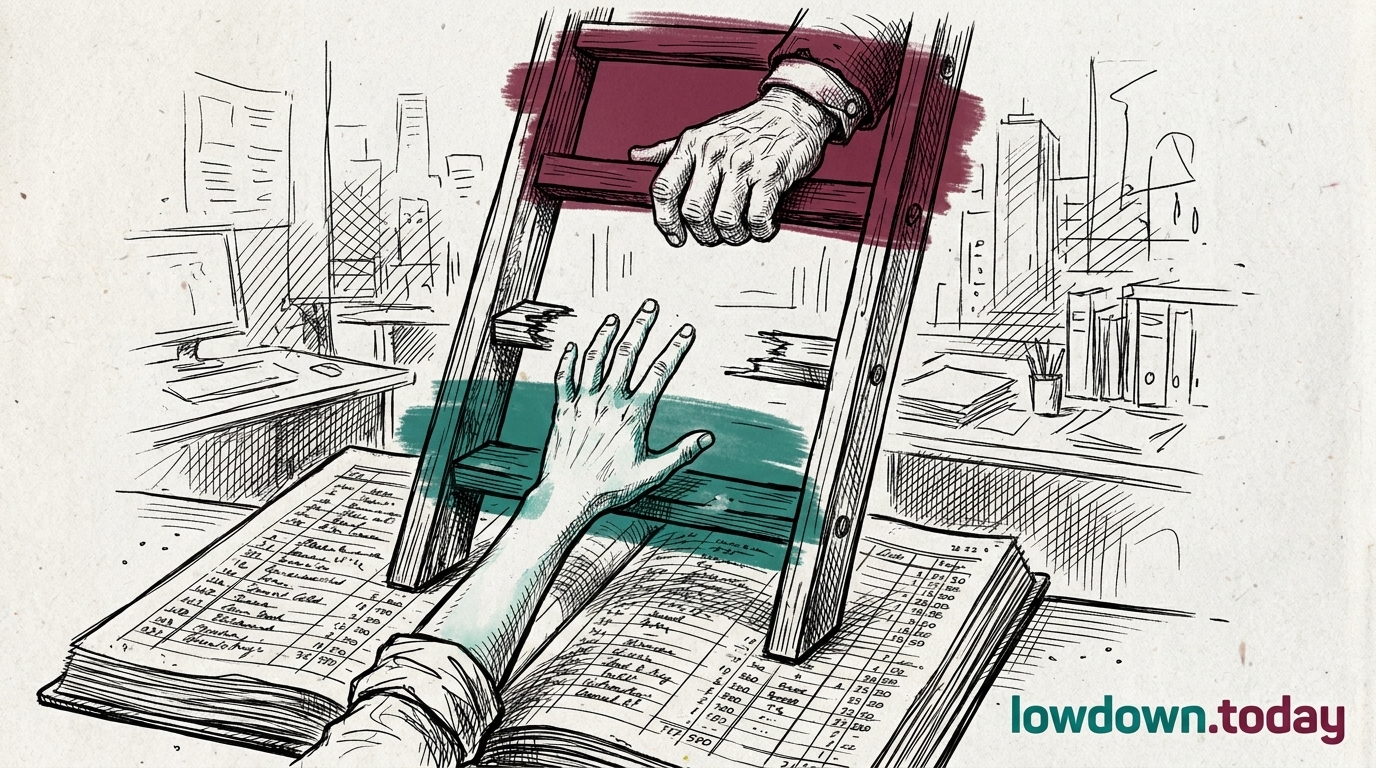
The mix matters more than the headline number. Salesforce's 1,000 graduate hires are sales and generalist roles, not the engineering or customer support functions that Agentforce now performs. Klarna's Sebastian Siemiatkowski announced rehiring under a hybrid model in March, the first major company to publicly reverse an AI-driven workforce reduction; Salesforce now provides the corporate-finance scaffolding Klarna lacked. Read together they suggest the empirical template: AI agents handle bounded, structured work; humans return for the unbounded, customer-facing, judgement-heavy roles; the net headcount lands lower than pre-cut but higher than the post-cut floor.

The template, if it holds, has implications for the displacement count. Goldman Sachs's substitution model and Stanford's JOLTS-based 34x undercount finding both treat AI substitution as a one-way function. Klarna and now Salesforce together provide evidence that the function has a partial reverse. Whether it reverses for engineers and support staff, the cohorts most directly substituted, remains the unanswered question. Agentforce's 2.4 billion completed work units gives the first publicly disclosed figure on the scale of agentic labour substitution at an enterprise software company, and argues that the substituted volume will not be re-hired.

For computer-science graduates entering the 2026 market, Benioff's 1,000 hires read deceptively well. Salesforce's offers cover commercial roles, not the engineering work AI now does. The technical pipeline that Fed enterprise software for two decades is being rerouted into sales, with engineering graduate recruitment compressed across Meta, Wipro and Salesforce.

Deep Analysis

In plain English

Salesforce makes software that helps sales teams manage their customer relationships. Its newer product, Agentforce, uses AI to handle tasks that customer service staff and software developers previously did by hand. In April 2026, Salesforce's CEO Marc Benioff announced that the company would hire 1,000 fresh graduates. That sounds like good news for jobs. But the new hires are salespeople, whose job is to sell Agentforce to other companies. Meanwhile, Salesforce previously cut its customer support team from 9,000 to 5,000 people, and has not hired a new engineer in over a year. The AI agent product itself does that work. So Salesforce is hiring humans to sell AI to other businesses, while AI handles the work those businesses would have hired humans to do. It is a pattern worth watching: the only new human jobs are in selling AI.

What could happen next?
  • Precedent

    Salesforce's 'sell AI, not deliver it' hiring model will be replicated across enterprise software companies in 2026-2027, concentrating new employment in sales and account management while engineering and support headcount continues to decline.

  • Risk

    Agentforce's $27,500 average deal value is vulnerable to price compression as Microsoft Copilot and ServiceNow compete at lower per-seat pricing, which could squeeze the economics that fund the graduate sales hiring.

First Reported In

Update #8 · Beijing court bans AI sackings as Big Tech burns cash

Fortune· 2 May 2026
Read original
Causes and effects
Different Perspectives
Office for National Statistics
Deferred its Transformed Labour Force Survey beyond November 2027 and disclosed a May 2026 telephone-collection failure. The ONS carries no AI-attribution layer at all, so Britain sits outside this month's cohort of measuring states by its own admission.
Uber India, Swiggy, Zomato and Urban Company
Named as respondents after the Karnataka High Court extended the interim welfare-fee deposit arrangement under the state's gig-worker welfare law to Uber India on 28 July, joining the other platforms already under the same order. The companies are contesting the underlying law while complying with the interim deposit terms.
Kenya State Department for ICT and the Digital Economy
Its draft AI policy, open for consultation to 4 August, proposes a pay floor for data-annotation work, where Kenyan annotators earn $1.46 to $3.74 an hour against $21 to $27 in the US, on figures relayed by the trade outlet WeeTracker. Kenya is legislating on AI labour even though the World Bank rates it among the least exposed economies.
ARAN and Italian public-sector unions
Signed the CCNL Funzioni Centrali 2025-2027 on 6 August, the first Italian national contract with a dedicated AI Title, barring fully automated employment decisions without meaningful human intervention and requiring advance union notice of AI deployment. The unions secured this through bargaining rather than waiting for legislation.
US employers reporting to Challenger, Gray & Christmas
Named artificial intelligence as the leading stated cause of job cuts for a fifth consecutive month in July, at 33% of that month's total, even as the overall cut count fell 27%. Employers kept citing AI as the reason even as scrutiny of the attribution rose.
Bank for International Settlements
Bulletin 130 reports a 0.75 percentage point average unemployment rise across high-AIPI countries between 2023 and 2025, while its own footnote 2 states the index is strongly correlated with employment shares in AI-exposed sectors it is used to predict. The bulletin calls the productivity payoff uncertain and uneven.