Skip to content
You can now search across every topic, entity and event.What's new
AI: Jobs, Power & Money
24AUG

EU waters down worker AI rights

3 min read
16:17UTC

The European Parliament approved the Digital Omnibus 423 to 57 on 16 June, downgrading the duty on employers to make staff understand the AI deployed on them from 'ensure' to 'support'.

EconomicDeveloping
Key takeaway

Downgrading one verb from 'ensure' to 'support' strips the EU's worker AI-literacy duty of any enforceable standard.

The European Parliament approved its Digital Omnibus package on 16 June by 423 votes to 57, with 174 abstentions 1. The Left bloc voted heavily against. The Digital Omnibus is a single bill amending several EU laws, including the AI Act's rules for employers, and Tuesday's vote advanced the 93-4 committee approval covered earlier this month . It pushes the AI Act's high-risk employment obligations to December 2027 for standalone systems and August 2028 for AI embedded in safety components.

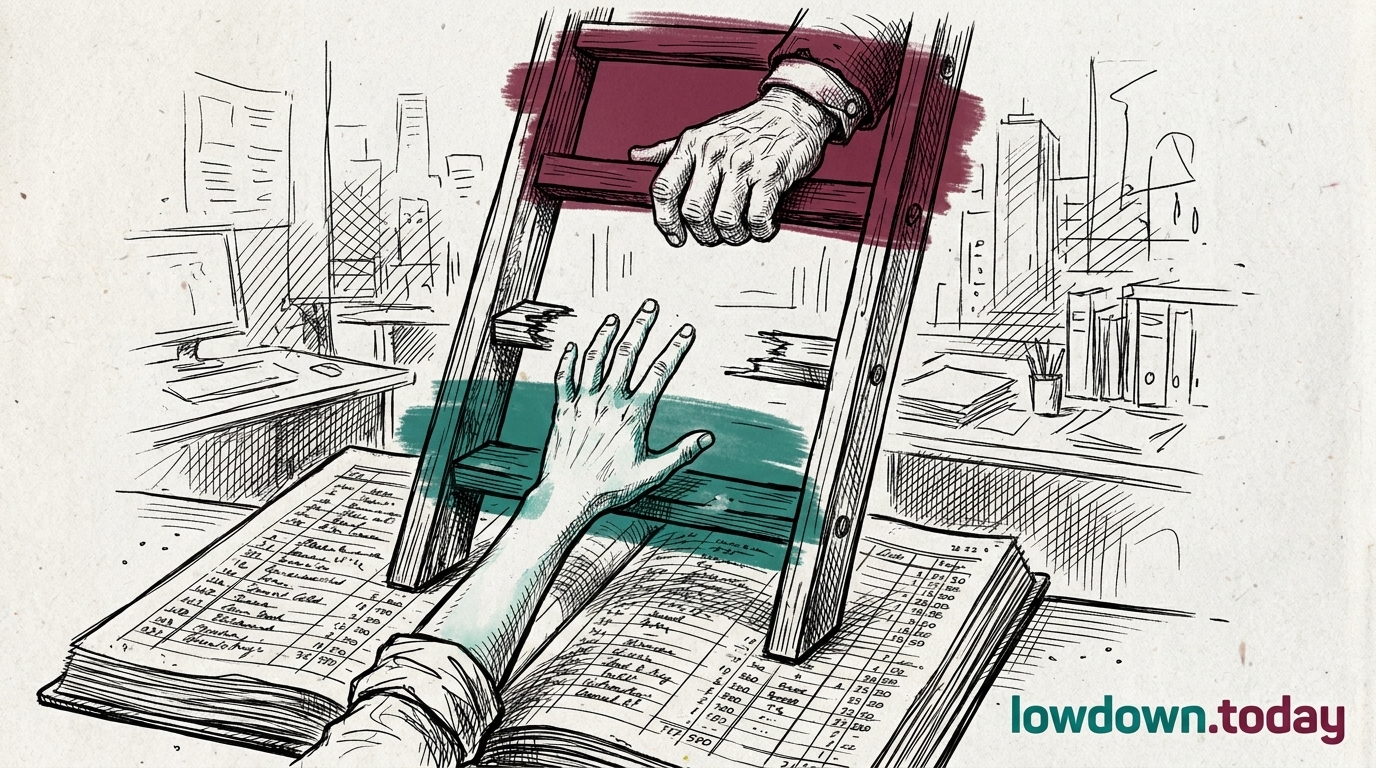
One verb carries the worker-facing cost. The employer AI-literacy duty, which would have required firms to make sure staff understood the systems deployed on them, was downgraded from "ensure" to "support" . The European Trade Union Confederation, the bloc's main labour federation, calls that a collapse of the legal threshold rather than a drafting tidy-up: "ensure" creates a duty a worker can test in court, while "support" describes an aspiration with no standard attached.

Until December 2027, a European employee in an AI-augmented but non-high-risk job has no statutory right to an explanation of the system making decisions about their work. The Council has still not formally adopted the text, which leaves one chokepoint before the August 2026 deadline. The Commission argues the delay relieves a genuine compliance burden on European business.

Deep Analysis

In plain English

The European Parliament voted on 16 June to change Europe's AI rules in a way that is important for workers. The original plan required employers to make sure their staff understood AI tools being used on them. The new version only requires employers to 'support' that understanding; a weaker commitment that is much harder to enforce in court. The European Trade Union Confederation, which represents workers across Europe, called this a fundamental weakening of workers' rights. The vote passed 423 to 57, but 174 MEPs; roughly a quarter; abstained, many because they were unhappy with the change but did not want to block the whole package. The rules still need to pass a final Council vote, expected before August.

Deep Analysis
Root Causes

The employer AI-literacy duty's dilution has two structural origins.

First, the Digital Omnibus was structurally designed as a simplification package; its legislative mandate was to reduce compliance burdens on European businesses, not to add worker protections. Grafting a worker-protection amendment (the AI literacy duty) onto a simplification vehicle meant it competed directly with the package's stated purpose.

The 174 abstentions reflect MEPs who wanted the simplification measures but were uncomfortable weakening the duty; a tension the rapporteur resolved by accepting the weaker formulation to hold the coalition together.

Second, the August 2026 adoption deadline created a compulsory schedule. The Council has still not formally adopted the text, but the August deadline means there is no time for a second reading. Any MEP who voted against the package to protect the stronger duty would have had to accept missing the deadline entirely. That asymmetric pressure explains the 423-57 result despite genuine dissent.

What could happen next?
  • Precedent

    The 'support' versus 'ensure' change establishes a drafting template for weakening EU digital worker protections through simplification vehicles; a mechanism industry lobbies may reuse in future AI governance packages.

    Long term · Assessed
  • Consequence

    Germany and France have signalled intent to legislate above the EU floor; if two of the bloc's four largest economies diverge on AI employer duties, companies with pan-European workforces face fragmented compliance requirements.

    Medium term · Reported
  • Risk

    The formal Council adoption has still not occurred. If any member state raises a qualified majority blocking minority before August 2026, the Omnibus timeline collapses and the current high-risk employment deadline (December 2027) defaults to the original 2025 AI Act schedule.

    Short term · Suggested
First Reported In

Update #14 · The AI layoffs nobody is counting

Agence Europe· 20 Jun 2026
Read original
Different Perspectives
Office for National Statistics
Deferred its Transformed Labour Force Survey beyond November 2027 and disclosed a May 2026 telephone-collection failure. The ONS carries no AI-attribution layer at all, so Britain sits outside this month's cohort of measuring states by its own admission.
Uber India, Swiggy, Zomato and Urban Company
Named as respondents after the Karnataka High Court extended the interim welfare-fee deposit arrangement under the state's gig-worker welfare law to Uber India on 28 July, joining the other platforms already under the same order. The companies are contesting the underlying law while complying with the interim deposit terms.
Kenya State Department for ICT and the Digital Economy
Its draft AI policy, open for consultation to 4 August, proposes a pay floor for data-annotation work, where Kenyan annotators earn $1.46 to $3.74 an hour against $21 to $27 in the US, on figures relayed by the trade outlet WeeTracker. Kenya is legislating on AI labour even though the World Bank rates it among the least exposed economies.
ARAN and Italian public-sector unions
Signed the CCNL Funzioni Centrali 2025-2027 on 6 August, the first Italian national contract with a dedicated AI Title, barring fully automated employment decisions without meaningful human intervention and requiring advance union notice of AI deployment. The unions secured this through bargaining rather than waiting for legislation.
US employers reporting to Challenger, Gray & Christmas
Named artificial intelligence as the leading stated cause of job cuts for a fifth consecutive month in July, at 33% of that month's total, even as the overall cut count fell 27%. Employers kept citing AI as the reason even as scrutiny of the attribution rose.
Bank for International Settlements
Bulletin 130 reports a 0.75 percentage point average unemployment rise across high-AIPI countries between 2023 and 2025, while its own footnote 2 states the index is strongly correlated with employment shares in AI-exposed sectors it is used to predict. The bulletin calls the productivity payoff uncertain and uneven.