Skip to content
You can now search across every topic, entity and event.What's new
AI: Jobs, Power & Money
17JUL

EU AI rules await their final votes

3 min read
14:01UTC

The EU Digital Omnibus still needs formal Council and Parliament votes before an August adoption target, the last step that would lock in a softened worker-facing rule, or reopen it if the timetable slips.

EconomicDeveloping
Key takeaway

Formal Council and Parliament votes against an August target will decide whether and when the rules bind.

The EU Digital Omnibus, the Brussels package bundling amendments to the AI Act, Data Act and Cybersecurity Act, still awaited formal Council and Parliament votes as of late May 2026. 1 A provisional deal struck on 7 May had already pared back the employer duty on worker AI literacy , but a provisional deal is not statute. Until both institutions ratify the text, the softened wording is a negotiated position, not a rule firms must follow.

The package targets adoption in August. That timetable matters because the votes are the last juncture at which the text can still move. Parliament can reopen clauses it conceded in trilogue, and a Council delay past the summer recess would push the AI Act's high-risk employment obligations further out without the worker-facing literacy layer Parliament had built around them. The provisional deal itself emerged only after the 28 April trilogue collapsed and reconvened in mid-May , so the negotiation has already shown it can stall.

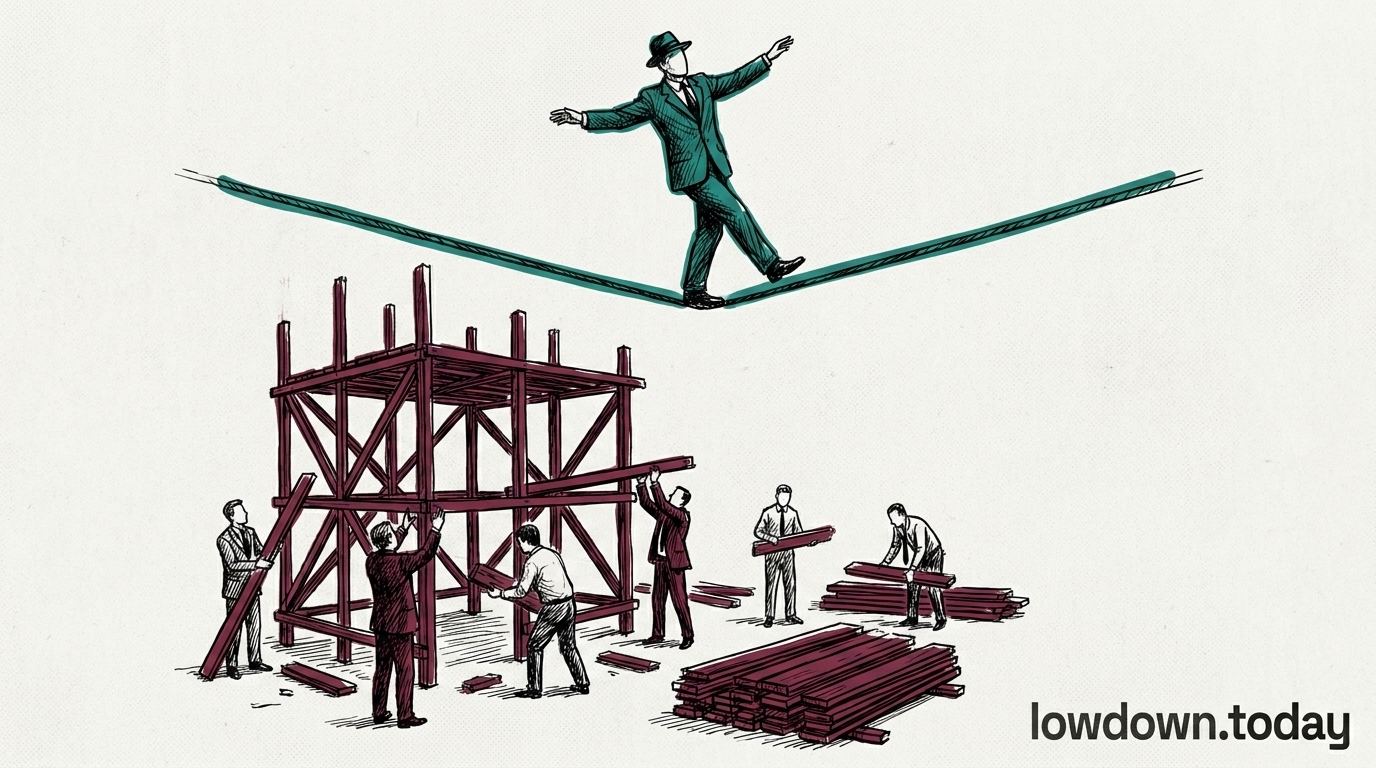
European workers feel the difference in timing, not wording. If the votes land on schedule, the weakened obligations become law in August and run alongside the AI Act's December 2027 high-risk deadline. If they slip, European workers spend longer with no statutory AI-transparency right in force while the displacement count keeps climbing. The substance was decided in trilogue; what these votes decide is whether, and when, it binds.

Deep Analysis

In plain English

The EU Digital Omnibus is a package of EU law amendments. It updates several existing laws at once, including the EU AI Act, which set rules for how AI can be used in workplaces across all 27 EU member states. One of the AI Act's original provisions required employers to ensure their workers actually understand the AI systems being used in their jobs. This obligation was designed to prevent situations where AI makes decisions about a worker's performance or eligibility for promotion without the worker being able to understand or challenge those decisions. During negotiations in May 2026, that binding obligation was weakened. Instead of ensuring workers understand AI, employers now only need to take measures to support that understanding, a phrase with no enforcement mechanism and no penalty for non-compliance. The negotiators from the European Parliament, the EU Council (representing member state governments), and the European Commission reached a provisional agreement on 7 May. A provisional agreement requires formal votes in both institutions before it takes legal effect. For it to become law, both the full European Parliament and the full Council must formally vote to adopt it. As of late May 2026, those votes have not yet happened. The adoption target is August 2026. Once it passes, the high-risk employment AI obligations take effect in December 2027. Until then, no employer AI-literacy duty exists in EU law, weakened or otherwise.

Deep Analysis
Root Causes

The Omnibus weakening of the AI-literacy obligation traces to two concurrent pressures. First, the European Parliament's March 2026 vote to delay high-risk employment deadlines reflected the same productivity-focused MEP coalition that then negotiated the Omnibus literacy weakening.

Second, the 28 April trilogue collapse created deadline pressure on all parties: with the August adoption target set by the Cypriot Presidency, a deal requiring the Parliament to accept Council positions on employer obligations was the path of least resistance.

The formal Council and Parliament votes remain the last procedural gate. Until the Council and Parliament votes conclude, employers face no enforceable obligation under the weakened text. Any MEP or member state that objects to specific provisions can still raise procedural objections in the formal vote, though a provisional deal that both institutions' lead negotiators signed is rarely rejected at the formal stage.

What could happen next?
  • Precedent

    If the Omnibus passes as provisionally agreed, the EU sets a legal precedent that employer AI-literacy obligations in employment are advisory rather than mandatory, weakening worker leverage in individual AI-system disputes.

  • Risk

    The December 2027 high-risk employment AI deadline applies without the literacy mechanism that would allow workers to verify compliance; national labour inspectorates inherit technically complex AI audit obligations they were not resourced to perform.

First Reported In

Update #10 · Rival studies split on AI's hit to jobs

AI Laws By State· 24 May 2026
Read original
Different Perspectives
Stanford's 'We Must Act Now' signatories
More than 200 academics, including 16 Nobel laureates, published a 13 July letter warning of AI-driven labour disruption, citing Daron Acemoglu's NBER estimate that AI's total factor productivity gain stays under 0.66% over ten years. The letter's own cited economics sit well below Goldman Sachs Research's 1.5-percentage-point estimate published the same week.
Germany / the Bundesrat
Germany's Bundesrat acted on the EU AI Act's employment provisions on 10 July, more than a year ahead of the Act's 2 December 2027 enforcement deadline. Germany is moving on statutory AI-employment disclosure while the US Congress and Federal Reserve have no equivalent instrument.
Indian IT services sector (TCS, HCLTech, Wipro)
TCS cut 19,271 roles and HCLTech cut 3,292 in the same reporting week that Wipro's headcount rose by 888 under its own zero-fresher-hiring pledge for FY27. The divergence shows attrition, not layoffs, is how India's outsourcers absorb AI-driven project compression while their net headcount numbers stay ambiguous.
Federal Reserve
Federal Reserve
Barr said on 14 July there is little evidence of AI displacement, citing a 43-versus-10 adoption gap by education; Cook said the next day the dire predictions have not come to fruition, her text carrying none of the bond-spread language she used in May. The Fed reads AI's labour effect through national aggregates, where four banks' cuts remain statistically invisible.
Barclays
Barclays
Barclays economist Pooja Sriram flagged a 28,000-a-month bleed in finance and information roles the same week Microsoft disputed that AI drove its own 4,800 cuts. The bank treats Challenger's AI-attribution share as a lagging indicator against faster erosion visible in raw labour-market data.
European Commission
European Commission
Brussels deferred the Digital Omnibus's Annex III employment-compliance deadline from 2 August 2026 to December 2027, even as California advanced three binding AI-hiring bills the same week. The 17-month delay leaves EU workers without the algorithmic-hiring safeguards the regulation already promises.
