Skip to content
You can now search across every topic, entity and event.What's new
AI: Jobs, Power & Money
8JUN

MIT economist: AI layoffs are a cover story

3 min read
11:04UTC

MIT Sloan's Paul Osterman told Fortune that AI attribution in layoffs is largely a cover for cuts firms had already planned, citing a 20-year pattern of technology excuses.

EconomicDeveloping
Key takeaway

Whether AI layoff labels overstate or understate the real displacement is genuinely contested.

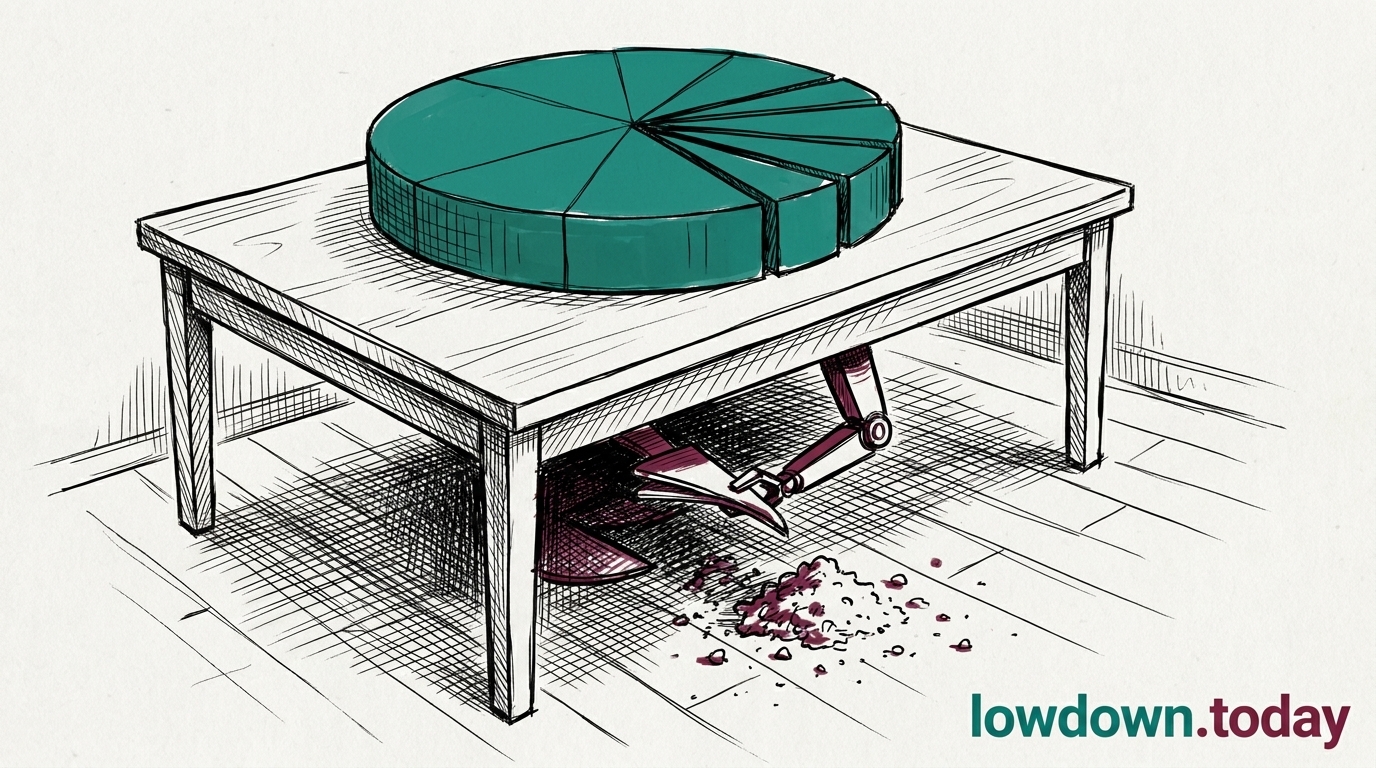
Paul Osterman, a labour economist at the MIT Sloan School of Management, told Fortune that AI attribution in layoff announcements is largely a cover story for cuts firms had already planned 1. "They've been saying that for 20 years," he said of bosses reaching for a technology excuse 2. Harvard Business Review research supports him: only 2% of layoffs at AI-citing companies followed an actual AI deployment.

Two points cut the other way. The declared AI share of stated layoff reasons jumped from under 8% in 2025 to 40% in May, faster than a gradual rebranding of routine cuts would move. And Stanford's Digital Economy Lab put the real AI labour impact at roughly 34 times Challenger's declared count, derived from a collapsed hiring rate in the Job Openings and Labor Turnover Survey (JOLTS) rather than from announced firings. The same lab documented the under-25 employment pattern that the youth figures now confirm .

Osterman's point is that the stated reason is unreliable, which can mean the named number overstates real AI displacement or that firms underreport it to avoid scrutiny. Stanford's reading treats the record 38,579 as a floor, the visible edge of a larger effect running through hires never made. Both can hold: the pattern of cutting on record revenue, repeated by Dell, HP Inc and CrowdStrike in late May , shows firms shedding staff for reasons the single stated cause does not fully capture. The argument is over whether the headline AI figure is too high or too low, not over whether the displacement is happening.


Deep Analysis

In plain English

Paul Osterman, a professor at MIT's business school who studies how labour markets work, told Fortune magazine that when companies say they are cutting jobs because of AI, they are often using AI as an excuse for cuts they were already planning for other reasons. He described this as a 20-year pattern where technology gets blamed for restructuring that has deeper commercial or financial causes. Separate research from Harvard Business Review found that only 2% of companies that cited AI as the reason for layoffs had actually deployed an AI system before making the cuts. This does not mean AI is not affecting employment. Separate research from Stanford found that a large number of jobs are not being created because of AI, even if fewer jobs are being explicitly cut. Both dynamics can exist at the same time.

First Reported In

Update #12 · Jobs report says fine, layoff report says no

Fortune· 8 Jun 2026
Read original
Different Perspectives
Office for National Statistics
Deferred its Transformed Labour Force Survey beyond November 2027 and disclosed a May 2026 telephone-collection failure. The ONS carries no AI-attribution layer at all, so Britain sits outside this month's cohort of measuring states by its own admission.
Uber India, Swiggy, Zomato and Urban Company
Named as respondents after the Karnataka High Court extended the interim welfare-fee deposit arrangement under the state's gig-worker welfare law to Uber India on 28 July, joining the other platforms already under the same order. The companies are contesting the underlying law while complying with the interim deposit terms.
Kenya State Department for ICT and the Digital Economy
Its draft AI policy, open for consultation to 4 August, proposes a pay floor for data-annotation work, where Kenyan annotators earn $1.46 to $3.74 an hour against $21 to $27 in the US, on figures relayed by the trade outlet WeeTracker. Kenya is legislating on AI labour even though the World Bank rates it among the least exposed economies.
ARAN and Italian public-sector unions
Signed the CCNL Funzioni Centrali 2025-2027 on 6 August, the first Italian national contract with a dedicated AI Title, barring fully automated employment decisions without meaningful human intervention and requiring advance union notice of AI deployment. The unions secured this through bargaining rather than waiting for legislation.
US employers reporting to Challenger, Gray & Christmas
Named artificial intelligence as the leading stated cause of job cuts for a fifth consecutive month in July, at 33% of that month's total, even as the overall cut count fell 27%. Employers kept citing AI as the reason even as scrutiny of the attribution rose.
Bank for International Settlements
Bulletin 130 reports a 0.75 percentage point average unemployment rise across high-AIPI countries between 2023 and 2025, while its own footnote 2 states the index is strongly correlated with employment shares in AI-exposed sectors it is used to predict. The bulletin calls the productivity payoff uncertain and uneven.