Skip to content
Briefings are running a touch slower this week while we rebuild the foundations.See roadmap
2026 FIFA World Cup
10APR

Final-match ticket ceiling reaches $10,990 in three weeks

4 min read
16:41UTC

Lowdown Editorial Desk

SportDeveloping
Key takeaway

Two jurisdictions now hold open files on the ticket reallocation; FIFA has not explained it.

The top official price for a final-match Front Category 1 ticket reached $10,990 by 13 April, confirmed in coverage by US News and beIN Sports 1. Three weeks earlier, on 22 March, the cheapest final seat was advertised at $4,185 ; the official maximum has risen by 163% in the intervening period, driven entirely by the post-closure creation of premium tiers FIFA has so far refused to address publicly. The USMNT opener's Front Category 1 ceiling was $4,105 as of 9 April , giving a sense of how far the final-match curve diverges from the rest of the competition.

The legal architecture around the price is now two-jurisdictional. A Washington DC law firm opened a formal consumer protection investigation in April, the first US domestic action to run alongside the Football Supporters Europe (FSE) and Euroconsumers Article 102 complaint filed on 24 March . The European Commission's 30-day window to formally acknowledge that filing closes on 23 April; as of 15 April no DG COMP case number has been published, and Brussels has issued no on-the-record acknowledgement.

The legal claim is narrow and specific. The complaint is not against dynamic pricing as a category. It is the misrepresentation argument: FIFA's own September documentation described Category 1 seats as 'the highest-priced seats, located primarily in the lower tier'; after sales closed, those buyers were reassigned to corner and behind-goal positions to clear the prime inventory for the new Front Category tiers now being marketed. EU Directive 2005/29/EC asks what a reasonable buyer understood at the moment of purchase, which is a tighter test than an antitrust pricing case.

FIFA's silence on the Front Category tiers, since they appeared in the inventory, is now itself part of the evidentiary record on both fronts. A regulator looking at the file in 12 months' time will see the moment the price ceiling moved, the moment the complaints were filed, and the absence of any FIFA statement explaining the reclassification.


Deep Analysis

In plain English

FIFA is selling tickets to the 2026 World Cup final for up to $10,990 each. That price has jumped 163% in just three weeks. To put it plainly: a seat at the final now costs roughly what many people earn in four months. FIFA is using 'dynamic pricing', a system where prices rise as demand increases, like airline seats. The problem is that FIFA is not an airline. It is the sole seller of tickets to an event it controls entirely, which means there is no competition to keep prices down. Two separate legal complaints have now been launched: one in the US (Washington DC consumer protection law) and one in the EU (competition law). Both are arguing, in different legal languages, that FIFA is abusing its position as the only ticket seller.

Deep Analysis
Root Causes

Dynamic pricing in 2026 was made structurally possible by two decisions FIFA made before the tournament cycle: the introduction of the Front Category tier, which created a premium price band outside the existing category structure, and the shift to phase-based sales that allowed FIFA to monitor demand elasticity between sales windows and reprice accordingly.

The Article 102 complaint rests on FIFA's dominant position: as the sole licensor of World Cup tickets, FIFA faces no competitive constraint on pricing, unlike a concert promoter or airline operator who must compete for customer attention. This dominant-position framing is what distinguishes the EU complaint from a general consumer protection case.

What could happen next?
  • Consequence

    The EU Article 102 complaint, if acknowledged by DG COMP before the 23 April deadline, could pressure FIFA to introduce a price cap for remaining ticket inventory, though any injunction would take months to secure.

    Short term · 0.3
  • Precedent

    A successful DC consumer protection finding would establish that FIFA's ticketing constitutes a 'trade practice' subject to US state consumer law, opening all future US-hosted FIFA events to similar regulatory oversight.

    Long term · 0.45
  • Risk

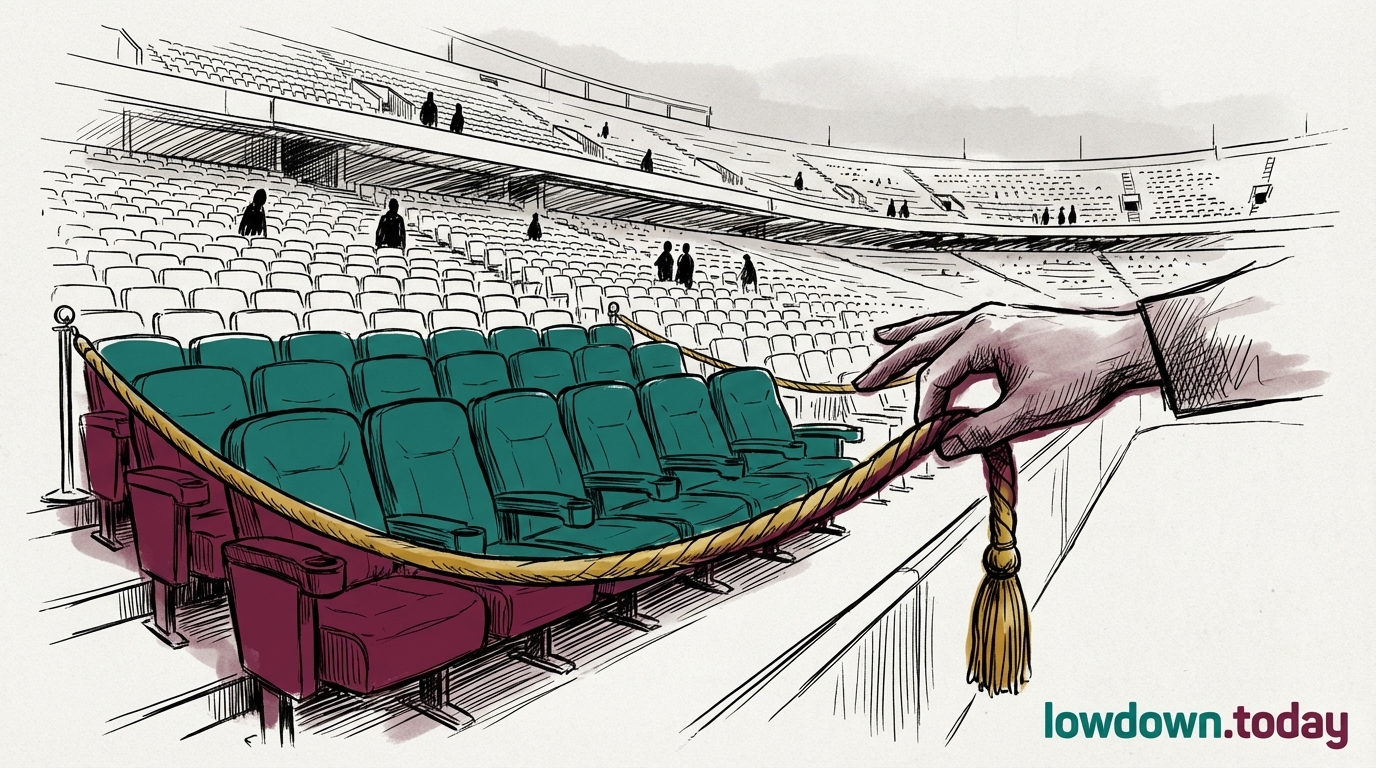
    Empty premium seats at the final, if the $10,990 price point results in unsold inventory, would be a global broadcast image problem for FIFA at the precise moment of maximum audience.

    Medium term · 0.25
First Reported In

Update #7 · 57 Days to Go: Iran said yes in Antalya

All About Lawyer· 15 Apr 2026
Read original
Causes and effects
This Event
Final-match ticket ceiling reaches $10,990 in three weeks
The official top-tier price has tripled in three weeks and now sits behind two parallel legal investigations on opposite sides of the Atlantic, while FIFA still issues no public statement on the new tier structure.
Different Perspectives
Giovanni Malagò / Italian Serie A clubs
supports
FIFA
FIFA
silent
UNITE HERE Local 11
UNITE HERE Local 11
challenges
Thomas Tuchel / The Football Association
supports
Didier Deschamps / Fédération Française de Football
supports
Carlo Ancelotti / Brazilian Football Confederation
supports


