Skip to content
You can now search across every topic, entity and event.What's new
2026 FIFA World Cup
25JUL

Brussels gives no case number on Article 102 file

3 min read
11:57UTC

The European Commission's competition directorate has still not registered a case number on the Football Supporters Europe Article 102 complaint, 18 days past its procedural acknowledgement deadline.

SportDeveloping
Key takeaway

Brussels has missed its own clock on the only EU-level review of FIFA pricing before kickoff.

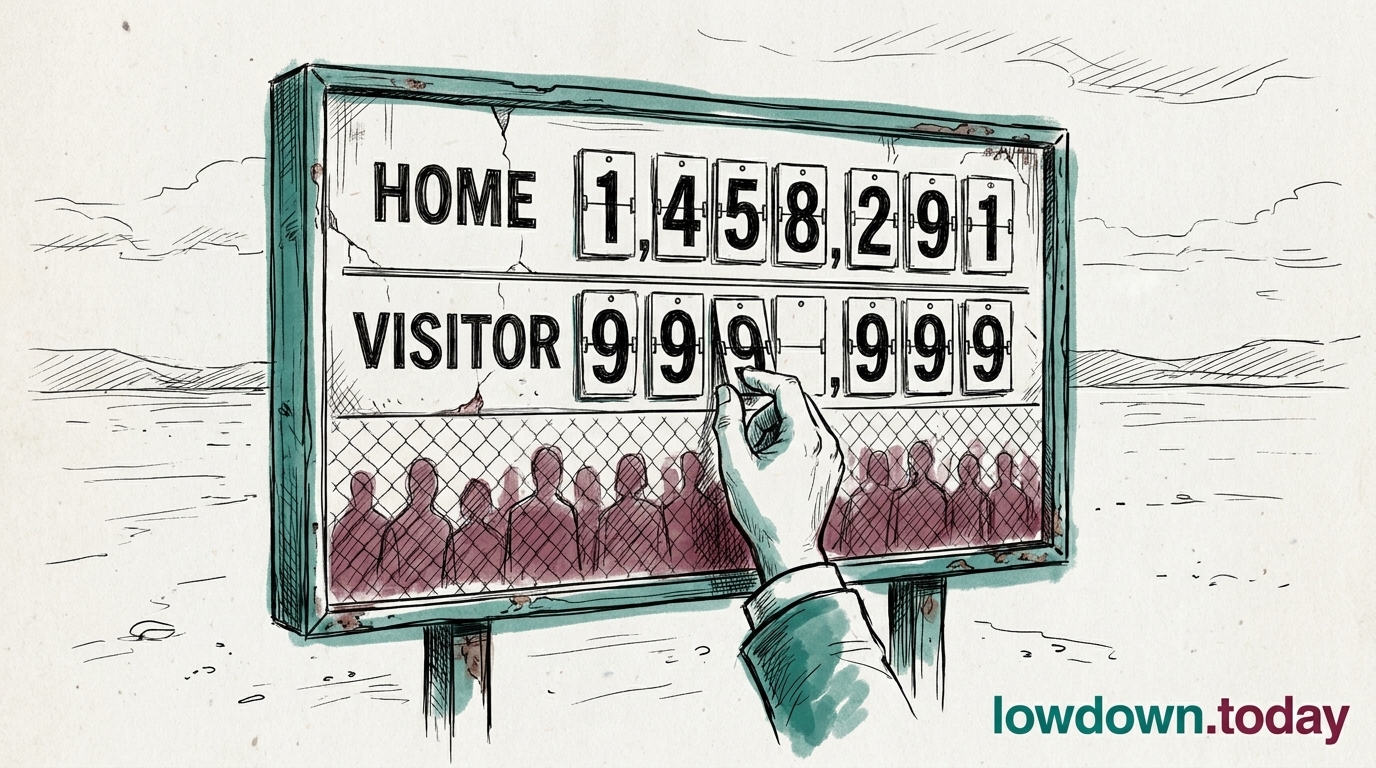
As of 11 May, the European Commission's competition directorate (DG COMP, the Brussels-based body that enforces EU antitrust law) has still not registered a case number on the Football Supporters Europe and Euroconsumers Article 102 TFEU complaint, more than two weeks past the procedural acknowledgement deadline of 23 April . 18 days have passed since that deadline elapsed. A Member of European Parliament (MEP, an elected representative in the EU's legislature) question E-001336/2026, filed by Brando Benifei and 24 colleagues, remains unanswered.

Article 102 of the Treaty on the Functioning of the European Union prohibits abuse of a dominant market position. The FSE complaint argues FIFA's dynamic pricing and resale architecture meet that test for the 2026 tournament. Procedural acknowledgement is not a substantive ruling; it is the administrative step that opens the file. Brussels has not done it.

DG COMP has no statutory deadline that forces a case-number assignment; the 23 April figure is the directorate's own published service standard. Missing it carries no legal consequence, only a political one. The 25 MEPs who co-signed Benifei's question represent five parliamentary groups across the centre-left and Greens; their parliamentary procedure question forces a written Commission response within six weeks but does not compel action on the underlying complaint. The forum that could review FIFA pricing before the 11 June opener is the same forum sitting on it.


Deep Analysis

In plain English

European fans and a consumer group called Football Supporters Europe filed a formal competition complaint against FIFA in Brussels on 24 March, arguing that FIFA has a monopoly on World Cup tickets and has abused it through extreme price rises. The body that handles EU competition complaints, DG COMP, was supposed to acknowledge the complaint within 30 days. That deadline passed on 23 April. As of today, 11 May, DG COMP has still not registered a case file. Twenty-five elected MEPs have filed a formal question demanding to know why. The tournament starts on 11 June.

Deep Analysis
Root Causes

DG COMP's procedural delay has two components. First, the market definition problem: EU competition law requires the Commission to define the relevant market before applying Article 102. For a single event like a World Cup, the question of whether tickets compete with other sports events, other entertainment, or form their own market is genuinely novel.

Second, the institutional calendar: DG COMP's Competition Commissioner Margrethe Vestager left office in November 2024; her successor Teresa Ribera took office in December 2024 with a portfolio covering competition, climate and industrial policy. Her directorate's capacity is compressed by multiple simultaneous investigations.

The Benifei MEP question (E-001336/2026) forces a written response within six weeks of filing, which means a Commission response is due by approximately mid-June. The response will be bureaucratic in form (stating the complaint is under review), but creates a public record of the delay.

What could happen next?
  • Consequence

    If DG COMP does not open a formal case before the 11 June opener, the tournament's full commercial cycle runs without EU oversight; any subsequent remedy applies only to future tournaments.

    Short term · 0.8
  • Opportunity

    The Benifei MEP question forces a written Commission response by approximately mid-June, creating a parliamentary record of the delay that FSE and Euroconsumers can use in any subsequent enforcement action.

    Short term · 0.75
  • Risk

    DG COMP's failure to act within its own service standard sets a precedent that sports event complaints can be deferred past their commercial window; future complainants will face the same timing problem.

    Long term · 0.7
First Reported In

Update #10 · Tehran names the players

Al Jazeera· 11 May 2026
Read original
Different Perspectives
Real Madrid
Real Madrid
Operating internally on the basis Rodri joins, according to David Ornstein's reporting, despite no talks having taken place with Manchester City. The gap between internal planning and actual negotiation is itself notable.
Manchester City
Manchester City
Unwilling to sell Rodri, with manager Enzo Maresca stating he returns to the club after back surgery. No club-to-club talks with Real Madrid are taking place, contradicting the framing of a deal in motion.
CONMEBOL
CONMEBOL
Backs the move to a 64-team 2030 tournament co-hosted across South America. Has not engaged publicly with FIFPRO's workload or heat-threshold objections drawn from this tournament's data.
FIFA
FIFA
Points to its 30 June technical and officiating reviews as the authoritative account of the tournament's football, including Collina's rejection of bias claims. Has not publicly responded to the renewed compensation call or disputed FIFPRO's heat-threshold figures.
FIFPRO
FIFPRO
Measures a four-degree gap between its own 28C postponement threshold and FIFA's 32C cooling-break trigger, breached in 19% of matches played. Cites a 70-83 match workload projection to oppose the 64-team 2030 format.
Human Rights Watch
Human Rights Watch
Documents 54 immigration-custody deaths before kickoff and two since, and revives the compensation duty FIFA's own advisers identified after Qatar 2022 and never acted on. Treats the pattern as unresolved FIFA liability, not a closed file.


