Skip to content
You can now search across every topic, entity and event.What's new
2026 FIFA World Cup
2JUL

Riot police, tear gas at Azteca gates

3 min read
10:39UTC

Around 2,000 demonstrators, many of them relatives of Mexico's missing, fought riot police at the Azteca perimeter minutes before kickoff. Police answered flares and stones with tear gas as Shakira sang inside.

SportDeveloping
Key takeaway

Families of Mexico's 130,000-plus missing brought their grief to the Azteca gates and met tear gas.

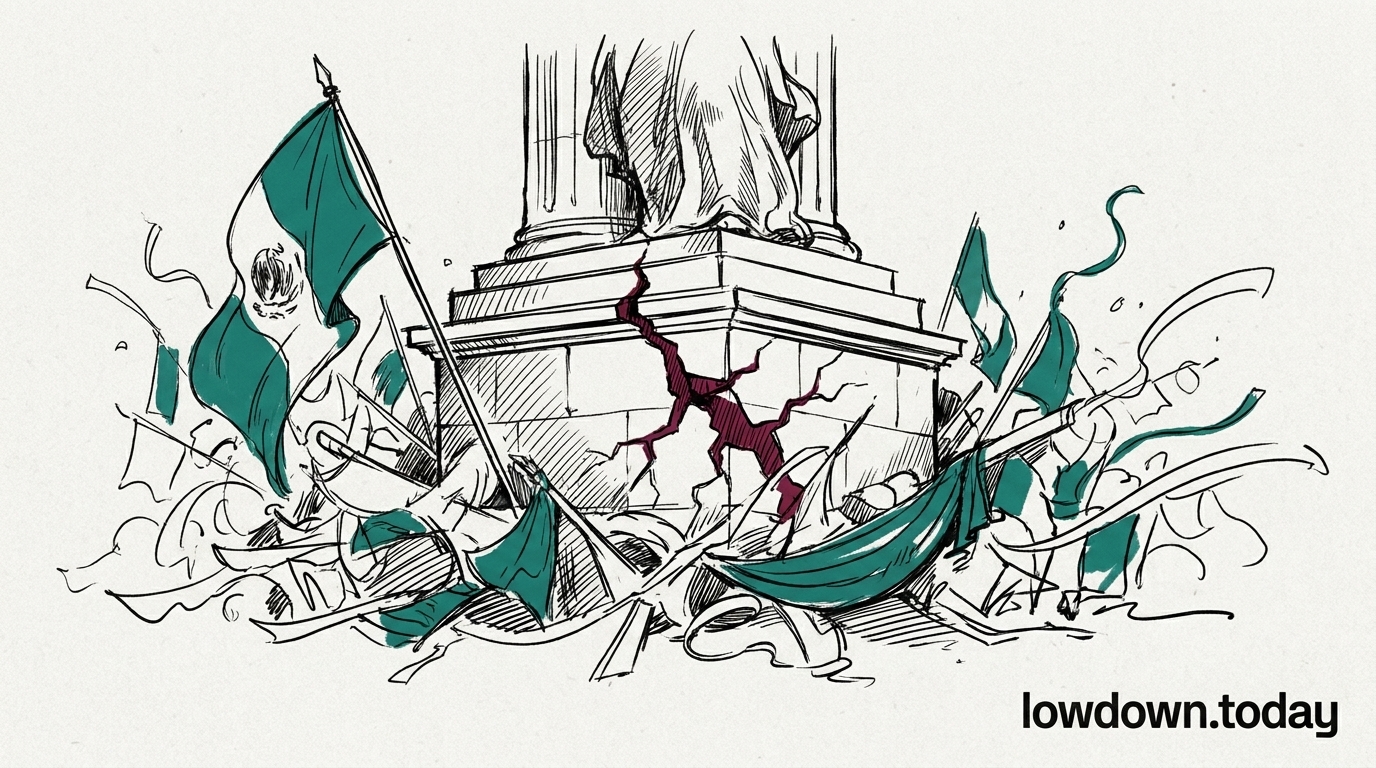
Around 2,000 demonstrators converged on the Estadio Azteca perimeter minutes before Thursday 11 June's kickoff, throwing flares and stones at riot police, who answered with tear gas 1. Many in the crowd were relatives of the more than 130,000 people recorded as missing in Mexico, alongside anti-government groups, and they reached the gates as the opening ceremony played out inside. The protest had begun that morning when the teachers' union occupied the Zócalo fan zone in the city centre .

This was the day the friction moved from the square to the gates. Eight separate protests were planned across the capital, spanning education, transport, health and farming, while inside the stadium Shakira and Burna Boy performed the official anthem 'Dai Dai' 2. The split screen, families of the disappeared outside the perimeter and a global pop ceremony within it, framed the contradiction the host nation has carried towards this tournament.

President Claudia Sheinbaum said everything was under control and pointed to 18 alternative fan venues, a containment posture rather than a clearance order. No arrest figures were released, and the match itself proceeded without disruption inside the ground, the protest and the football running in parallel a few hundred metres apart. The grievance, the toll of the missing, does not resolve with a fan zone; it has simply found a louder stage.


Deep Analysis

In plain English

About 2,000 protesters gathered outside the Estadio Azteca in Mexico City just before the World Cup opening match on 11 June. They threw flares and stones at riot police, who responded with tear gas. The protesters were primarily relatives of more than 130,000 people who have gone missing in Mexico, most as a result of drug cartel violence. They chose the World Cup opening ceremony to draw global attention to a crisis that rarely receives international news coverage. Earlier in the day, Mexico's teachers' union had occupied the Zócalo fan zone in the city centre as a separate protest. President Claudia Sheinbaum said the situation was under control and pointed to 18 alternative fan venues the government had arranged.

Deep Analysis
Root Causes

Mexico's 130,000-plus missing persons crisis has two structural drivers. Cartel territorial violence generates enforced disappearances as a control mechanism, with the Jalisco New Generation Cartel (CJNG) and Sinaloa Cartel both using disappearance as a tool against rivals, informants, and community organisers.

The second driver is a collapse in state forensic capacity: the National Search Commission identified in its 2025 annual report that over 52,000 unidentified remains sit in forensic storage nationwide, with many forensic laboratories lacking DNA sequencing capacity to match them to families.

The timing of the Zócalo occupation by the CNTE teachers' union earlier that morning was not coincidental. The teachers' union has historic ties to disappeared-persons networks in Guerrero state, dating to the 2014 Ayotzinapa case where 43 student teachers were disappeared. The morning-to-stadium escalation followed a coordinated plan in which the CNTE provided the initial media hook and the MNDM provided the stadium-perimeter presence.

What could happen next?
  • Risk

    If protests continue through Mexico's next home match, the global media narrative risks shifting from the tournament to the disappeared-persons crisis, a framing that damages Mexico's reputation as a co-host.

  • Precedent

    The MNDM's use of World Cup broadcast reach as a rights-amplifier establishes a template for civil society groups in future host nations facing governance deficits during mega-events.

First Reported In

Update #19 · Mexico finally win an opener, on the ninth try

CBS News· 12 Jun 2026
Read original
Different Perspectives
Spain
Spain
Spain face France on Tuesday for the second semi-final place, the last unresolved tie in the bracket.
France
France
France already through to the other semi-final, await Tuesday's result against Spain to know who plays the England-Argentina winner in the final.
Switzerland
Switzerland
Switzerland reached their first World Cup quarter-final since 1954 and led Argentina before Breel Embolo's second yellow card left them a man down for the last half-hour. They expect the run to raise expectations for the next cycle rather than close a chapter.
Norway
Norway
Norway leaned on Erling Haaland to reach a first modern-era quarter-final, and he nearly took them further before a disallowed goal and England's late double ended the run. Their tournament closes as the best World Cup performance in the country's history.
Argentina national team
Argentina broke down a 10-man Switzerland late, extending Scaloni's run of reaching every semi-final he has managed since 2019. Messi will make his first World Cup appearance against England, a fixture Argentine coverage framed around that unbroken run rather than the personal narrative.
England
England
England needed a 93rd-minute Bellingham winner to see off Norway, the third straight knockout tie settled in its closing stages rather than controlled. They travel to Atlanta as favourites but with Declan Rice a fitness doubt and Jarell Quansah suspended.


