Skip to content
2026 FIFA World Cup
24MAR

Fans file EU competition case vs FIFA

4 min read
19:01UTC

Football Supporters Europe and Euroconsumers filed an Article 102 TFEU complaint with the European Commission on 24 March, alleging six abuses in FIFA's monopoly control over World Cup ticketing.

SportAssessed
Key takeaway

The first EU competition complaint against FIFA's ticketing model targets the April 2026 sales phase specifically, with interim price-freeze remedies calibrated to take effect before the tournament opens if the Commission moves quickly.

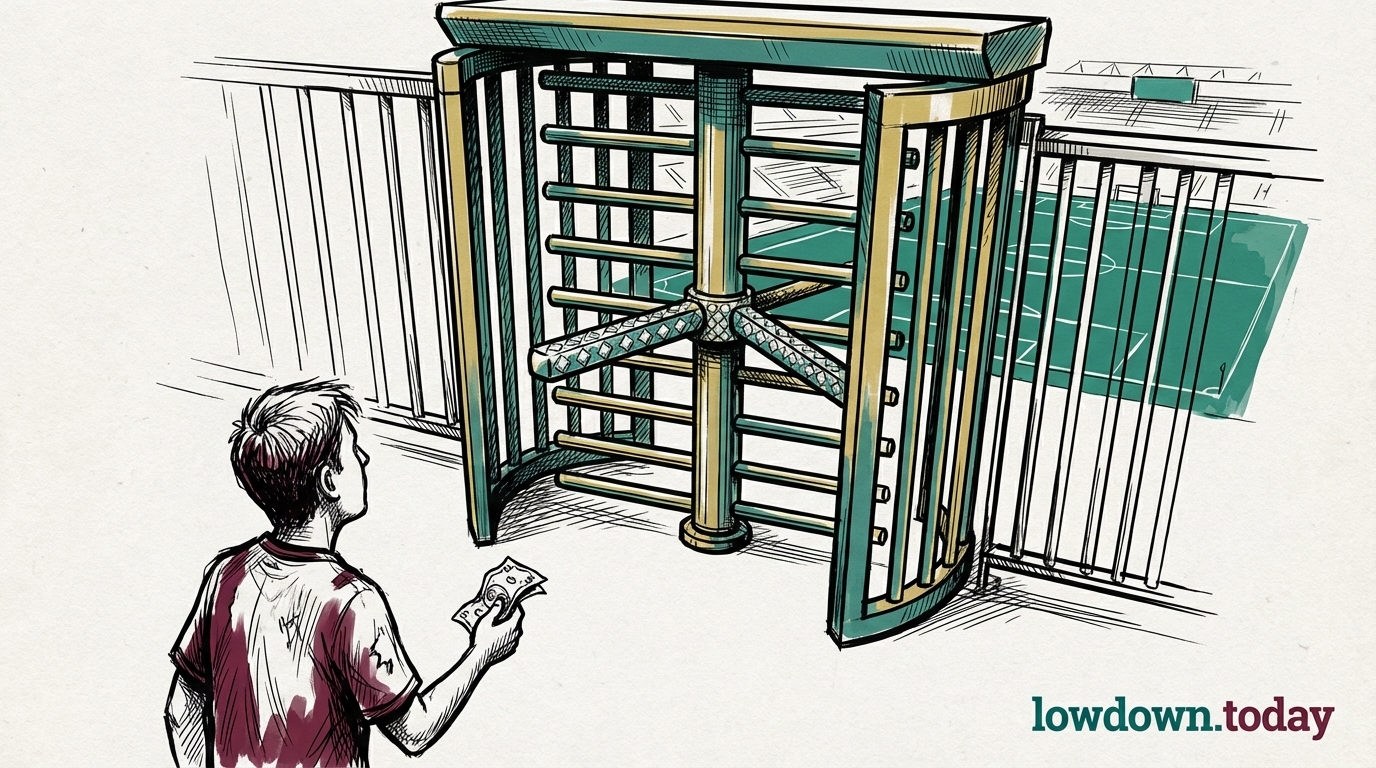
Football Supporters Europe (FSE) and Euroconsumers filed a formal competition complaint with the European Commission on 24 March, alleging FIFA abuses its monopoly over World Cup ticketing in violation of Article 102 of the Treaty on the Functioning of the European Union 1. The complaint identifies six specific abuses: excessive pricing, bait advertising of $60 tickets that represent roughly 1–2% of available inventory , uncapped Dynamic pricing, opacity on seat locations, artificial urgency tactics, and 15% resale fees charged to both buyer and seller 2. No fan organisation has previously used EU treaty law against football's governing body.

The pricing data in the complaint is specific. The cheapest openly available final ticket costs $4,185 — seven times the equivalent at Qatar 2022 ($595) and 42 times the cheapest Euro 2024 final seat (€95). On FIFA's own resale marketplace, where dynamic pricing debuted for this tournament , FSE documented a single Category 3 final seat listed at $143,750 — more than 41 times its $3,450 face value 3. FIFA takes 30% of every resale transaction 4. Some tickets rose 25% between sales phases with no published cap or methodology.

Article 102 prohibits dominant undertakings from imposing unfair purchase prices or applying dissimilar conditions to equivalent transactions. FIFA's position is structurally analogous to cases the Commission has brought against Google and Apple — a single entity controlling access to a product with no substitute. No rival organisation sells World Cup tickets. FSE's Ronan Evain said FIFA's "failure to engage stakeholders has left us no option but to file" 5. Euroconsumers' Marco Scialdone accused FIFA of "treating football like a private luxury by exploiting its monopoly" 6. The remedies sought are specific: a price freeze at December 2025 levels for the April 2026 sales phase and mandatory publication of seat availability 48 hours before each window opens.

The complaint arrives in a politically charged environment. Sixty-nine US Members of Congress already wrote to FIFA demanding lower prices . EU sports commissioner Glenn Micallef publicly criticised FIFA president Gianni Infantino after a Brussels meeting produced no concrete steps on fan safety or access . Whether the Commission accepts the complaint is discretionary, but a refusal to investigate would leave the institution exposed to the charge that it applies competition law to technology firms while granting sporting monopolies a pass. If it proceeds, FIFA faces its first formal defence of ticketing economics under EU competition law — in a jurisdiction where fines can reach 10% of global turnover.


Deep Analysis

In plain English

Article 102 of the EU's founding treaty prohibits companies with a dominant market position from abusing that position to harm consumers. FIFA is the only body that can organise a World Cup, making it a legal monopoly. Fan groups are arguing FIFA used that monopoly to charge whatever it liked, conceal available seats, and extract large cuts from ticket resales — all without competitive check. Filing with the European Commission is equivalent to making a formal antitrust complaint to a regulator: the Commission can investigate, order changes, and impose fines. The critical next question is whether the EC chooses to open a formal investigation, which would force FIFA to justify every pricing decision under legal scrutiny for the first time in the sport's history.

Deep Analysis
Synthesis

The complaint represents the convergence of two trends: fan organisations professionalising their advocacy into formal legal instruments, and EU competition doctrine expanding its reach into sports governance after *Superleague*. FIFA faces a structural problem it cannot resolve through stakeholder engagement alone — its dynamic pricing model is legally incompatible with EU consumer-protection norms regardless of what it agrees to say in meetings.

Root Causes

FIFA's shift to dynamic resale pricing for 2026 — a model borrowed from concert and airline ticketing — was implemented without any consumer-protection framework, because FIFA's Swiss legal domicile historically insulated it from national regulators. The structural gap is the absence of any multilateral agreement governing World Cup ticket sales across jurisdictions: FIFA has treated ticketing as a private commercial matter rather than a public event-access question requiring regulatory compliance.

Escalation

The Commission faces no statutory deadline to respond and has full discretion over whether to investigate. A full Article 102 inquiry typically runs 12–24 months — well beyond the tournament. FSE's remedy request is accordingly calibrated for interim relief: a price freeze at December 2025 levels for the April sales window. If the Commission signals it is considering formal proceedings, FIFA may face political pressure to freeze prices without a ruling. If the Commission declines, the refusal itself hands Micallef's office (ID:1356) and the 69 Congressional signatories (ID:1365) a new line of criticism: that EU institutions protect consumers from technology monopolies but not sporting ones.

What could happen next?
  • Meaning

    Short term · Assessed
  • Meaning

    Short term · Assessed
  • Meaning

    Short term · Assessed
First Reported In

Update #2 · Fans file EU antitrust case against FIFA

Football Supporters Europe· 24 Mar 2026
Read original
Different Perspectives
EU Sports Commissioner Glenn Micallef
Publicly criticised Infantino after a Brussels meeting produced no safety guarantees for European fans — an institutional escalation that treats FIFA as answerable to European political authorities on operational security.
Iraq national team
Iraq national team
Coach Graham Arnold argued that closed airspace, shuttered embassies and stranded personnel make squad assembly physically impossible, requesting postponement rather than accepting what would be the first conflict-caused qualification forfeit.
Football Supporters Europe (FSE)
Views FIFA's ticketing monopoly as an abuse of market dominance requiring regulatory intervention — the first fan organisation to invoke EU competition law against a sports governing body.
US Immigration and Customs Enforcement
Positions itself as integral to tournament security infrastructure and has not excluded enforcement operations near match venues, despite three Congressional bills seeking restrictions.
Jalisco state government
Insists Guadalajara's World Cup matches will proceed as planned regardless of the February cartel violence, rejecting any possibility of FIFA relocating fixtures.
Jamaica Football Association
Publicly uneasy about playing in Guadalajara three months after cartel violence forced cancellation of an international sporting event in the same city.