Skip to content
Briefings are running a touch slower this week while we rebuild the foundations.See roadmap
2026 FIFA World Cup
9JUN

24 MEPs name Digital Fairness Act

3 min read
09:45UTC

Brando Benifei's E-001336/2026 asks the Commission a deliberate three-part question: is this Article 102, is it a 2005 directive breach, and should primary legislation close it.

SportDeveloping
Key takeaway

Benifei's question opens a legislative route through the Digital Fairness Act alongside the competition complaint track.

Twenty-four Members of the European Parliament led by Brando Benifei, the Socialists and Democrats (S&D) group coordinator on the internal market committee, submitted written question E-001336/2026 to the European Commission on 31 March, last updated 13 April 1. Benifei's question is the first time a Commission-level legislative instrument has been proposed as a remedy for World Cup ticketing.

Benifei's question is structured in three parts. First, whether FIFA's dynamic pricing and dark patterns breach Article 102 TFEU, the abuse-of-dominant-position provision, and the 2005 Unfair Commercial Practices Directive. Second, whether the Commission will prioritise enforcement before the 11 June opener. Third, whether the upcoming Digital Fairness Act, primary legislation still in draft, should include a ban on dynamic pricing for live events. DG COMP, the Commission's competition directorate, has not answered as of 19 April.

Article 102 cases against sports governing bodies sit in an unsettled area of EU law, which is why the Football Supporters Europe (FSE) and Euroconsumers complaint filed on 24 March carries uncertain legal weight. The Digital Fairness Act runs on a different track: binding future tournaments by statute rather than by case law . The 24 co-signatories give the file a visible European political constituency FIFA cannot dismiss as a single-country campaign, and Benifei's question enters the EP record for the next Digital Fairness Act debate whether DG COMP answers or not.


Deep Analysis

In plain English

Twenty-four members of the European Parliament (MEPs : the elected representatives who make EU law) have asked the European Commission (the EU's executive body, similar to a government) a formal question about FIFA's ticket pricing. They want to know whether FIFA's approach : where prices can rise with no cap after you've bought a ticket, and where the seats you're allocated turn out to be different from what the original maps showed : breaks European consumer and competition law. They also asked whether the new Digital Fairness Act, a piece of EU legislation being drafted right now, should include a permanent ban on this kind of variable pricing for live events. The Commission has not yet replied. The deadline for a response is not fixed by law, but a question from 24 MEPs typically receives a response within six to eight weeks.

Deep Analysis
Root Causes

Article 102 TFEU prohibits abuse of a dominant market position. The structural difficulty the Commission faces is that FIFA's ticketing monopoly was never challenged under competition law before 2026, partly because major sports governing bodies have historically received informal exemptions under EU sport policy (Article 165 TFEU).

FSE and Euroconsumers' complaint therefore requires the Commission to make a market-definition argument it has never made: that FIFA constitutes a dominant undertaking in the market for access to World Cup tickets.

Benifei's E-001336/2026 opens a second route that avoids the market-definition problem entirely. The Unfair Commercial Practices Directive 2005/29/EC applies to any trader regardless of dominance, and FIFA's retroactive reassignment of seat locations after purchase : acknowledged via its 'maps were indicative' statement : is a straightforward bait-and-switch under Article 6 of the Directive.

The MEPs are signalling that the Commission has an existing legal instrument that does not require the untested dominance argument.

First Reported In

Update #8 · Three clocks running against kickoff

European Parliament· 19 Apr 2026
Read original
Different Perspectives
Norwegian Football Federation
NFF president Lise Klaveness sent a letter of support backing FairSquare's Article 15 ethics complaint against Infantino, explicitly noting Norway was acting alone as a deliberate signal. The filing converted an external NGO campaign into the first internal federation action against the FIFA president, arriving in the same fortnight as Platini's Paris criminal complaint.
US Customs and Border Protection
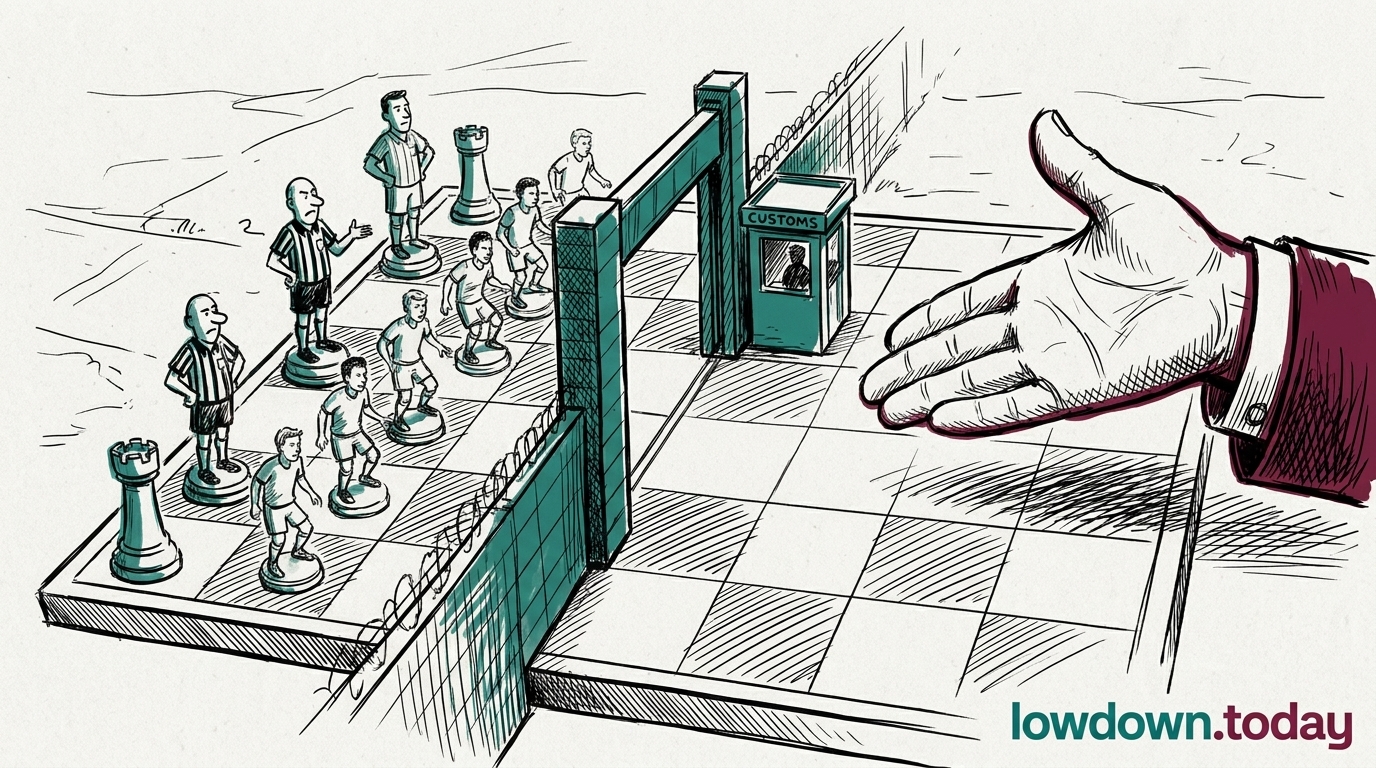
CBP barred FIFA-appointed referee Artan at Miami on 7 June and detained Iraq striker Hussein for seven hours at O'Hare on 8 June, citing vetting concerns in both cases without disclosing specific grounds. Neither a valid visa nor FIFA accreditation constrained the port-of-entry determination under 8 USC 1182.
Canada Soccer
Canada Soccer
Canada reached the 11 June squad lock with two unresolved slots: Flores's ACL rupture confirmed and Bombito's tibia fracture publicly disputed by coach Jesse Marsch against TSN reporting. The co-host's inability to finalise 26 players two days before its own opener against Bosnia underlines the medical attrition compressing the whole pre-tournament window.
FFIRI / Iran
FFIRI / Iran
Iran's federation flew its 26-player squad to Tijuana without visas for 14 support staff, running World Cup preparation by remote coordination across a border rather than withdraw and forfeit $10.5m in prize money. The Tijuana arrangement reflects a calculated decision to participate under degraded conditions while building a post-tournament legal record through a pending Article 4 complaint.
FIFA
FIFA
FIFA invoked its standard host-agreement disclaimer on each access denial, stating it is not involved in host-country immigration processes and that the host government ultimately determines entry. Infantino's 'no Plan B' confirmation on Iran means FIFA has formally accepted the Tijuana split-delegation as the operational baseline, with no contractual remedy in play.
Andrea Abodi / Italian Sports Ministry
Abodi's ANAC referral on Malagò's FIGC eligibility set a 15 June deadline, meaning Italy's federation leadership crisis peaks at the midpoint of the group stage. Malagò holds more than 50 percent of the assembly bloc but cannot take office while the pantouflage cooling-off challenge is formally live.


