Skip to content
Briefings are running a touch slower this week while we rebuild the foundations.See roadmap
2026 FIFA World Cup
6JUN

Italy Miss Third Consecutive World Cup

3 min read
12:17UTC

Four-time world champions Italy lost 4-1 on penalties to Bosnia and Herzegovina on 31 March, extending an absence from world football's biggest stage to a minimum of 16 years. No former champion has ever achieved this record.

SportAssessed
Key takeaway

Italy's third consecutive absence is a structural failure, not a sporting one.

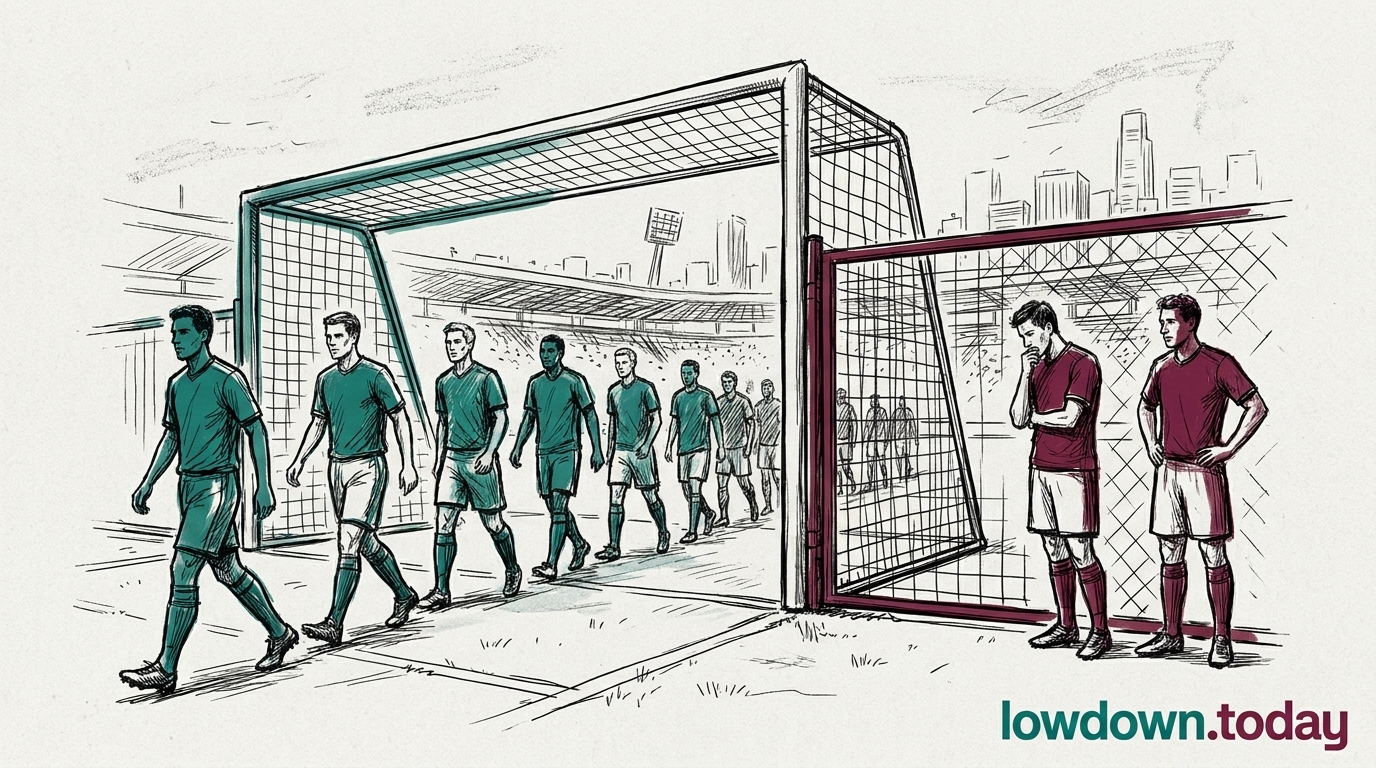
Italy lost 4-1 on penalties to Bosnia and Herzegovina on 31 March after a 1-1 draw, with Alessandro Bastoni's red card in the 41st minute leaving the four-time champions a man short for the entire second half and extra time. Moise Kean had given Italy the lead on 15 minutes; without a full complement, the structural weaknesses were exposed before the shootout confirmed them. The result means Italy will not appear at a World Cup until at least 2030, a minimum absence of 16 years from a nation that won the tournament in 1982, 1994, 2006 and nearly every decade in between.

Gabriele Marcotti of ESPN identified the analytical heart of the failure: manager Gennaro Gattuso had fewer than 15 training sessions with the squad across ten months of his tenure . That works out to roughly one session per month, which means no Italian coach can build a functioning team under the current federation structure, regardless of talent available. Italy's recurring collapses in qualifying are not bad luck; they are the predictable consequence of a system that offers its national team almost no preparation time.

The Gazzetta dello Sport called it 'The Third Apocalypse,' and that phrase captures the scale of institutional failure rather than sporting misfortune. Italy have now been eliminated in back-to-back playoff shootouts, losing to North Macedonia in 2022 and now to Bosnia with ten men. The pattern points directly at FIGC and the conditions governing the national team's preparation, not at the quality of the squad.

The fallout arrived within hours: Sports Minister Andrea Abodi demanded FIGC president Gabriele Gravina resign and called for Italian football to be rebuilt. Senator Claudio Lotito, president of Lazio and a member of Giorgia Meloni's ruling coalition, filed a formal Senate petition for Gravina's removal. Lega Calcio called the result 'an unacceptable disgrace.' Gravina refused to step down. A board meeting next week will determine whether he survives, but the political pressure now carries the weight of the entire Italian state.


Deep Analysis

In plain English

Italy are a four-time world champion: they won the World Cup in 1934, 1938, 1982, and 2006. Missing one tournament was considered a crisis. They have now missed three in a row. The reason is not simply bad luck or poor players. Italy's football federation (FIGC) has given the national team manager fewer than 15 training sessions with the squad across ten months. That works out to roughly one session per month: not enough to build any team, let alone a World Cup contender. After the loss, Italy's Sports Minister and a senator both demanded the federation president resign. He refused. A board meeting next week will decide whether he keeps his job, but whoever runs FIGC will inherit the same problem that caused all three absences.

Deep Analysis
Root Causes

Three structural causes sit beneath the immediate sporting failure. First, Serie A's fixture calendar and commercial agreements constrain national team access to fewer windows than any other major footballing nation manages. Fewer than 15 training sessions in ten months is the arithmetic result.

Second, FIGC's governance structure gives club presidents disproportionate influence over federation policy, creating a conflict of interest between Serie A's commercial interests and the national team's preparation needs. Lotito's simultaneous role as club president and senator exemplifies the overlap.

Third, Italy has cycled through six managers since Conte left in 2014. Continuity is impossible when the federation replaces coaches after each disappointment rather than addressing the conditions that make success structurally improbable.

What could happen next?
  • Gravina faces removal by FIGC board next week; even survival leaves him governing under siege from government, Senate and clubs simultaneously.

    1 week · High
  • Whoever leads FIGC next will face the same Serie A calendar conflict that denied Gattuso adequate preparation time; personnel change alone cannot resolve it.

    12 months · High
  • Italy's earliest possible return to a World Cup is 2030; if the 2030 co-host bid (Spain, Portugal, Morocco) means automatic entry as host, Italy would need to qualify through UEFA for 2034.

    4 years · Assessed
First Reported In

Update #4 · 48 Teams, Four Debutants, One Missing Champion

Sky Sports· 1 Apr 2026
Read original
Causes and effects
This Event
Italy Miss Third Consecutive World Cup
Italy's third consecutive elimination confirms a structural collapse in Italian football that one result, one coach or one resignation cannot fix; it lands at the precise moment the 48-team format expands to give more nations more chances.
Different Perspectives
FIFA
FIFA
FIFA remains publicly silent on every open dispute touching the tournament: no response to the UNITE HERE ICE-moratorium demand since April, no on-record comment on the Iran visa reversal, no intervention on the FIGC election. Its governance architecture, which routes bilateral matters to governments and domestic federation matters to national bodies, structurally precludes a direct answer on all three.
Andrea Abodi / Italian Sports Ministry
Abodi's ANAC referral is the first formal institutional step in his challenge to Malagò, converting a legal argument into a timed procedural clock, with both bodies reportedly receiving the request with "considerable frustration". The 15 June deadline means Italy's federation crisis will peak mid-tournament regardless of the ruling's direction.
Mauricio Pochettino / USMNT
Pochettino confirmed the 4-3-3 with Reyna and Pulisic starting against Germany, resolving the formation question at the cost of a 3-1 defeat that exposed the defensive axis. His public frustration over Richards's fitness, "I got a little annoyed", frames the 11 June deadline as an emotional as well as a tactical decision.
FFIRI / Mehdi Taj
FFIRI / Mehdi Taj
FFIRI confirmed the squad's clearance but stated five federation staffers were blocked under a "false pretences" finding, and denied separately reported player rejections, insisting the playing group travels intact. Taj's 5 June deadline expired; the approval arrived the same day, meeting the form of the demand while leaving the delegation short.
US State Department / UNITE HERE Local 11
Unnamed US officials approved Iran's squad visas via Ankara without a formal State Department statement, leaving Taremi's individual file unconfirmed; at the same venue system, UNITE HERE Local 11's 96% strike mandate among 2,000 SoFi workers, following FIFA's silence since 7 April, means US immigration enforcement runs as two parallel pressure tracks through the opener.
France (FFF)
France (FFF)
Manager Didier Deschamps confirmed William Saliba will play, reversing the 'very doubtful' briefing from earlier in the week and deferring any surgery until after the tournament. France recovers its first-choice central defender for the group stage at a point when rivals were adjusting their tactical assessments.