Skip to content
Briefings are running a touch slower this week while we rebuild the foundations.See roadmap
2026 FIFA World Cup
5JUN

Democrats move to ban ICE at World Cup

4 min read
08:45UTC

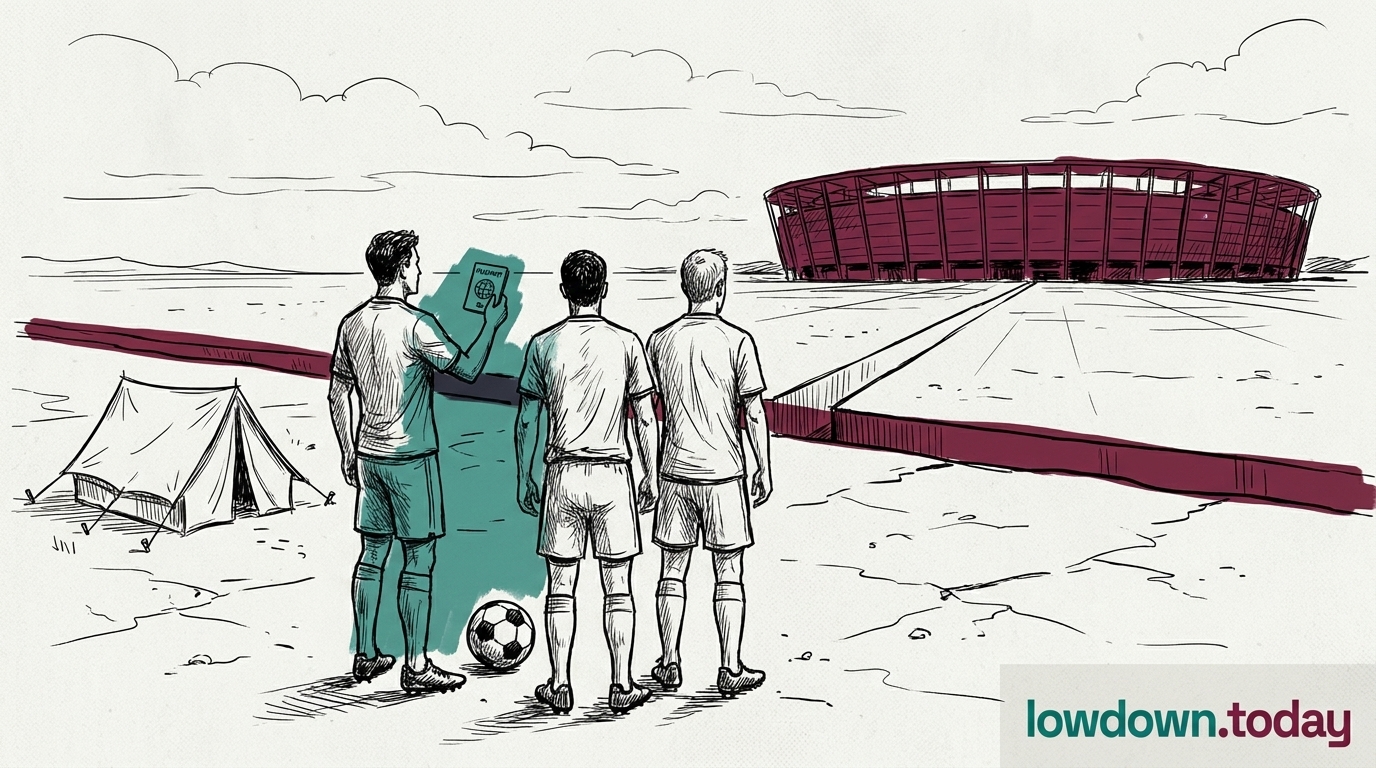
Three House bills would prohibit immigration enforcement near stadiums, fan zones and public transit during the tournament — but all face near-certain defeat in the Republican-controlled chamber.

SportAssessed
Key takeaway

Three separate Democratic bills reveal a fractured legislative strategy driven by political positioning over law-making.

Three House Democrats introduced separate bills in March to prohibit Immigration and Customs Enforcement operations near World Cup venues during the tournament window of 11 June to 19 July. Rep. Eric Swalwell's 'Safe Passage to the World Cup Act' targets enforcement on public transit routes serving stadiums 1. Rep. Nellie Pou's 'Save the World Cup Act' covers stadiums and designated fan zones 2. Rep. LaMonica McIver's bill would block federal agencies from activating Section 287(g) agreements — which deputise local police to enforce immigration law — during match days 3.

None will pass. No Republican co-sponsor has signed on to any of the three bills, and without bipartisan support in the House, none will reach a floor vote. The Trump administration, which has made immigration enforcement a central domestic priority, has given no indication it would accept carve-outs for sporting events.

The bills address a practical concern rather than an abstract one. The tournament will funnel millions of spectators through public transit, urban fan zones and stadium perimeters across 16 US host cities. Section 287(g), the programme McIver's bill targets, is already active in jurisdictions that include host-city metropolitan areas — it allows local officers to check immigration status during routine encounters. The fear among immigrant communities, articulated by the American Immigration Council and immigration advocacy organisations, is that enforcement activity near venues will deter attendance not only by undocumented residents but by legal immigrants and naturalised citizens wary of profiling 4.

That three representatives introduced three separate bills rather than one unified measure suggests these are as much political messaging as legislation — each tailored to a different constituency and a different slice of the enforcement apparatus. Their practical effect, if they remain stalled, is to place on the Congressional record a position that the administration's immigration posture is incompatible with hosting an event built on international movement. Whether ICE conducts visible operations near stadiums during the tournament will be a decision made by the executive branch, not one settled by legislation.


Deep Analysis

In plain English

Three separate Democratic members of Congress have each introduced their own bill to stop immigration enforcement agents from operating near World Cup stadiums, fan zones, and public transport routes during the tournament. The bills will almost certainly fail because Republicans control the House. Their real purpose is political: they force Republican opponents to publicly vote against protecting World Cup fans from immigration enforcement, generating news coverage and constituent pressure. The fact that there are three separate bills covering different locations — rather than one unified measure — suggests either poor co-ordination between the sponsors or a deliberate strategy to maximise media attention across multiple news cycles, at the cost of appearing fractured to potential allies.

Deep Analysis
Synthesis

Three separate bills rather than one unified Democratic proposal reveal a legislative strategy optimised for political positioning rather than law-making. Each bill's distinct venue scope — transit, stadiums, fan zones — reflects individual sponsors' constituent priorities rather than co-ordinated legislative design. This fragmentation weakens the collective political signal and makes it easier for Republicans to dismiss each bill individually. The pattern mirrors Democratic immigration-enforcement responses in prior Congresses, where similar fragmentation produced sustained media coverage but minimal legislative output.

Root Causes

Section 287(g) agreements — targeted specifically by Rep. McIver's bill — deputise local law enforcement as federal immigration agents, creating enforcement capacity inside host cities without requiring ICE to deploy its own officers directly. Democratic advisers appear to have identified 287(g) as the most operationally likely enforcement mechanism near venues. Critically, 287(g) agreements are contractual between DHS and local governments and can be activated or expanded without Congressional approval, meaning the McIver bill addresses a vulnerability that only executive action can fully close.

Escalation

The bills' near-certain defeat does not resolve the political dynamic — it may intensify it. A single publicly documented ICE enforcement action near a World Cup venue would generate international media coverage disproportionate to the individual incident.

The political logic could incentivise enforcement rather than restraint: the administration may view visible ICE presence near World Cup venues as a signal to its political base, treating the diplomatic cost as acceptable. This makes the chilling effect on Latino attendance a near-certainty regardless of whether any formal enforcement occurs.

What could happen next?
  • Risk

    A single documented ICE enforcement action near a World Cup venue triggers disproportionate international condemnation and potential boycott threats from affected nations and fan groups.

    Immediate · Suggested
  • Consequence

    A chilling effect on Latino fan attendance in major US host cities depresses commercial revenues for FIFA sponsors and local hospitality and retail businesses.

    Short term · Assessed
  • Precedent

    Failure of all three bills establishes that US immigration enforcement has no sporting-event carve-out, regardless of diplomatic implications for future hosted tournaments.

    Long term · Assessed
  • Opportunity

    Republican co-sponsorship of any bill would represent a rare bipartisan limit on immigration enforcement and significantly shift the political calculus around tournament-period enforcement.

    Short term · Suggested
First Reported In

Update #1 · Iran splits on World Cup boycott

Newsweek· 22 Mar 2026
Read original
Causes and effects
This Event
Democrats move to ban ICE at World Cup
The bills are legislatively doomed but force a public debate over whether US immigration enforcement is compatible with hosting an event that depends on the free movement of millions of international visitors.
Different Perspectives
France (FFF)
France (FFF)
Manager Didier Deschamps confirmed William Saliba will play, reversing the 'very doubtful' briefing from earlier in the week and deferring any surgery until after the tournament. France recovers its first-choice central defender for the group stage at a point when rivals were adjusting their tactical assessments.
Canada Soccer
Canada Soccer
Canada must submit its Flores replacement to FIFA before the 11 June 3pm ET deadline; Austin FC's Jayden Nelson is the favoured choice after Flores ruptured his ACL. Canada's Toronto opening ceremony on 12 June will feature Palestinian singer Elyanna, a booking that sets a political tone for the co-host's public face at the tournament.
Mexico (co-host)
Mexico (co-host)
Mexico certified Iranian visas and confirmed the Tijuana base camp on 3 June, acting as operational host for a team the northern co-host has not cleared. Guadalajara's Estadio Banorte still has no FIFA clearance after concrete fell from seats in Liga MX matches.
FIFA
FIFA
FIFA's Ethics Committee has taken no action on the Infantino complaint in six months, and FIFA has answered neither the NY/NJ subpoena nor the EU Article 102 filing. It approved Iran's Tijuana base camp but cannot issue a US visa; Infantino's April guarantee that Iran 'will be at the World Cup' was a commitment against authority he does not hold.
Norwegian Football Federation
NFF president Lise Klaveness submitted a letter of support for FairSquare's Article 15 complaint before 2 June, writing 'we are sending this letter alone' in a deliberate signal that the move was unilateral rather than coordinated. Norway's backing gives other federations a template for post-tournament solidarity without requiring them to act before kickoff.
US State Department
US State Department
Rubio restated on 3 June that IRGC-linked individuals will not embed in the delegation; waiver authority sits with the Secretary himself, not consulates, which is why Taremi's 2010-2012 service can hold the whole squad without a formal denial. The same government withholding entry from Iran is spending $1.47bn to protect the tournament.


