Skip to content
Briefings are running a touch slower this week while we rebuild the foundations.See roadmap
2026 FIFA World Cup
5JUN

ICE director confirms Cup security role

4 min read
08:45UTC

Acting ICE director Todd Lyons told Congress that the agency would be 'a key part of the overall security apparatus' at the 2026 World Cup and declined to rule out immigration enforcement near match venues.

SportAssessed
Key takeaway

With all three Democratic restriction bills certain to fail, ICE's presence within the World Cup security apparatus at US venues is confirmed policy, with no legal mechanism available to separate immigration enforcement from fan protection during the tournament.

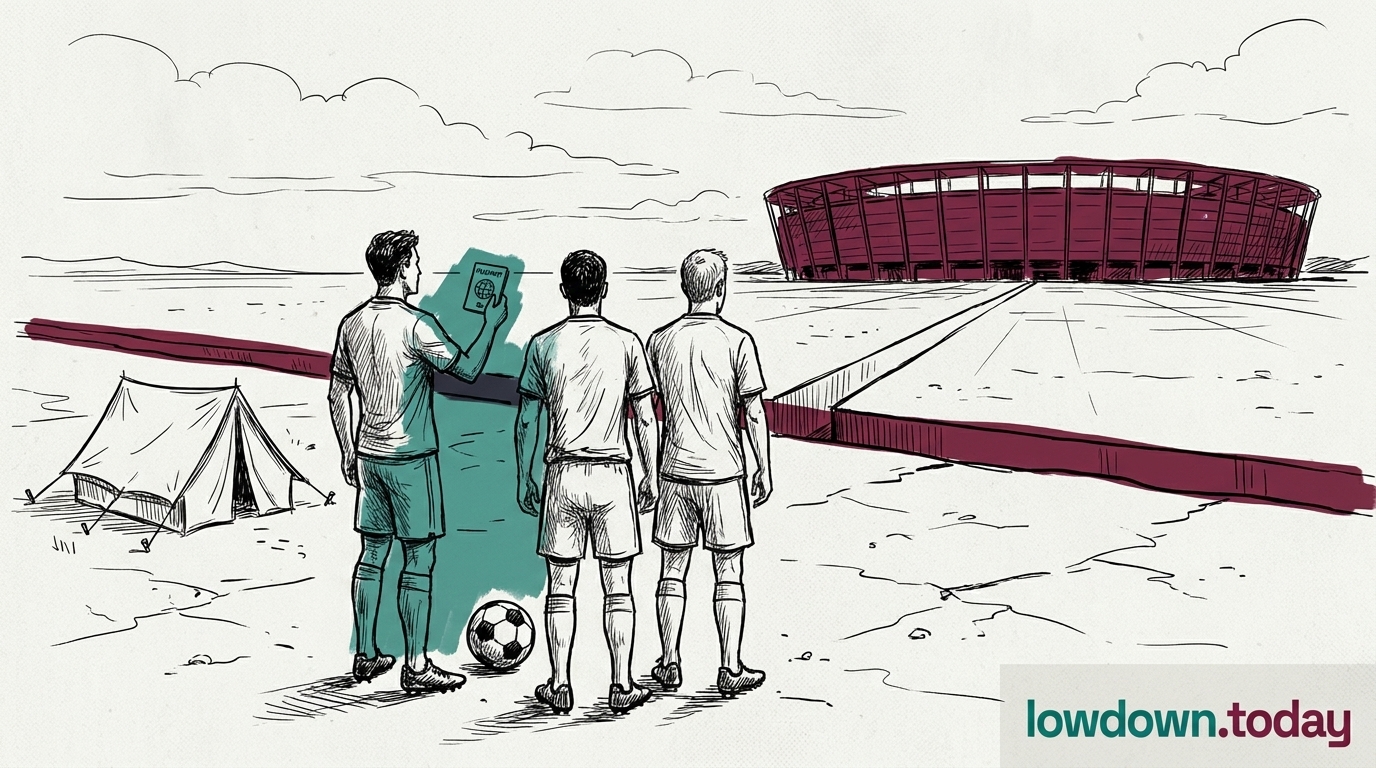
ICE acting director Todd Lyons told Congress that ICE would be "a key part of the overall security apparatus" for the 2026 World Cup and declined to rule out immigration enforcement near match venues 1. The testimony converts months of speculation into stated policy: the agency responsible for immigration enforcement will operate within the same security structure that protects fans at 16 US venues between 11 June and 19 July.

Three Democratic bills — from Representatives Swalwell, Pou and McIver — would restrict ICE operations near stadiums, fan zones and public transit during the tournament . All three face near-certain defeat in the Republican-controlled House. The practical result is that no legislative barrier exists to enforcement at or around venues. For fans from Haiti, Iran, Senegal and Côte d'Ivoire, already barred from US entry under the expanded travel ban , Lyons's testimony changes nothing — they cannot attend regardless. The wider effect falls on fans from the twelve additional qualified nations facing immigration restrictions, on US residents with uncertain status, and on the general atmosphere inside and around American grounds.

FIFA's decision to cancel anti-discrimination messaging at the 2025 Club World Cup — documented by Human Rights Watch 2 and not reinstated for 2026 — removes the symbolic framework previous tournaments used to signal inclusion. Human Rights Watch, Amnesty International, the ACLU and the Sport & Rights Alliance wrote on 12 March that most US host committees have not released required Human Rights Action Plans and no child safeguarding policy exists . England's official LGBTQ+ fan group, Three Lions Pride, has already announced a boycott, calling conditions in the US "unsafe and unacceptable" .

FIFA's official position remains that it is "confident host governments will ensure safety" . What Lyons's testimony makes concrete is the nature of that safety apparatus: one built around an agency whose core mission is immigration enforcement, operating without restriction at venues designed to welcome a global public. The gap between FIFA's rhetoric of universal access and the enforcement reality at US grounds is NOW a matter of Congressional record.

Deep Analysis

In plain English

ICE is the US government agency responsible for immigration enforcement. Its acting director told Congress it would operate as part of the World Cup security operation and would not commit to staying away from match venues. For millions of fans attending US matches — including diaspora communities with complex immigration histories — this creates genuine uncertainty. Even if ICE does not actively enforce near stadiums, the possibility alone may deter attendance. The travel ban already prevents supporters from Haiti, Iran, Senegal, and Côte d'Ivoire from entering the US for matches. Athletes and officials from those countries remain exempt. This creates a situation where a team's fans cannot follow their national side to games their players are legally permitted to contest.

Deep Analysis
Synthesis

FIFA's simultaneous removal of anti-discrimination messaging and its silence on ICE enforcement represents a coherent, if unacknowledged, commercial calculus: the US market's broadcast and sponsorship value outweighs reputational costs from access restrictions. This marks a tangible retreat from the human rights framework FIFA adopted after Qatar and establishes a precedent for future host agreements in politically complex markets.

Root Causes

The conflict originates in FIFA's hosting agreement with the United States, which was negotiated before the current administration's immigration enforcement posture was established. FIFA's statutes require host nations to guarantee non-discriminatory access, but the hosting contract contains no enforcement mechanism against domestic law enforcement operations. The expansion of the travel ban in December 2025 and ICE's stated security role represent a structural gap between FIFA's contractual obligations and the legal authority of the host government — one FIFA has managed through press statements rather than formal dispute or contract invocation.

Escalation

The legislative pathway to restrict ICE near venues is closed under Republican-controlled House arithmetic. The practical escalation risk is a single enforcement incident — even one arrest near a venue — that would immediately internationalise the story and force FIFA into a public response it has so far avoided. The chilling effect on attendance is already operational without any such incident occurring.

What could happen next?
  • Meaning

    statement

    Short term · Confidence
  • Meaning

    Short term · Assessed
  • Meaning

    Short term · Assessed
First Reported In

Update #2 · Fans file EU antitrust case against FIFA

Sky Sports· 24 Mar 2026
Read original
Different Perspectives
France (FFF)
France (FFF)
Manager Didier Deschamps confirmed William Saliba will play, reversing the 'very doubtful' briefing from earlier in the week and deferring any surgery until after the tournament. France recovers its first-choice central defender for the group stage at a point when rivals were adjusting their tactical assessments.
Canada Soccer
Canada Soccer
Canada must submit its Flores replacement to FIFA before the 11 June 3pm ET deadline; Austin FC's Jayden Nelson is the favoured choice after Flores ruptured his ACL. Canada's Toronto opening ceremony on 12 June will feature Palestinian singer Elyanna, a booking that sets a political tone for the co-host's public face at the tournament.
Mexico (co-host)
Mexico (co-host)
Mexico certified Iranian visas and confirmed the Tijuana base camp on 3 June, acting as operational host for a team the northern co-host has not cleared. Guadalajara's Estadio Banorte still has no FIFA clearance after concrete fell from seats in Liga MX matches.
FIFA
FIFA
FIFA's Ethics Committee has taken no action on the Infantino complaint in six months, and FIFA has answered neither the NY/NJ subpoena nor the EU Article 102 filing. It approved Iran's Tijuana base camp but cannot issue a US visa; Infantino's April guarantee that Iran 'will be at the World Cup' was a commitment against authority he does not hold.
Norwegian Football Federation
NFF president Lise Klaveness submitted a letter of support for FairSquare's Article 15 complaint before 2 June, writing 'we are sending this letter alone' in a deliberate signal that the move was unilateral rather than coordinated. Norway's backing gives other federations a template for post-tournament solidarity without requiring them to act before kickoff.
US State Department
US State Department
Rubio restated on 3 June that IRGC-linked individuals will not embed in the delegation; waiver authority sits with the Secretary himself, not consulates, which is why Taremi's 2010-2012 service can hold the whole squad without a formal denial. The same government withholding entry from Iran is spending $1.47bn to protect the tournament.




