Skip to content
Briefings are running a touch slower this week while we rebuild the foundations.See roadmap
2026 FIFA World Cup
5JUN

FEMA deploys $1.47bn on World Cup

3 min read
08:45UTC

Homeland Security Secretary Markwayne Mullin declared the World Cup threat level 'extremely high' as FEMA deployed $1.47bn in grants across host cities and states, with more than $221m earmarked for counter-drone systems and 400-plus agencies coordinating.

SportDeveloping
Key takeaway

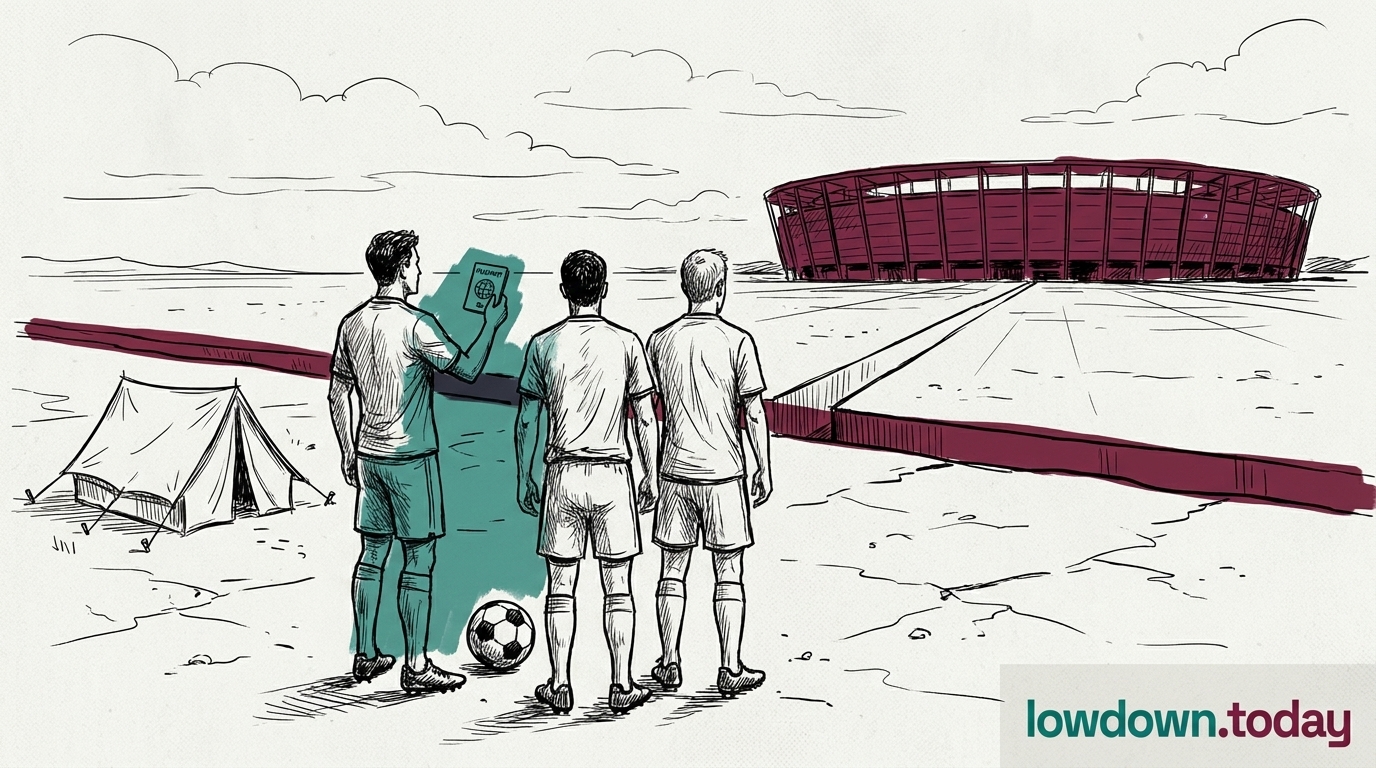
The US is spending $1.47bn to protect a tournament it is simultaneously keeping Iran's team waiting to enter.

Homeland Security Secretary Markwayne Mullin called the World Cup threat level "extremely high" 1. FEMA (the Federal Emergency Management Agency) deployed $1.47bn in grants: $625m to 11 host cities and $846m to nine states. More than $221m of that, over 15% of the pot, is earmarked for counter-drone systems known as C-UAS (Counter-Unmanned Aircraft Systems), after 60 officers from 30 jurisdictions trained in drone mitigation at an FBI facility in Huntsville.

The scale of the C-UAS spend marks the airspace over a stadium as a frontline rather than a backdrop. counter-drone authority is legally constrained: only specific federal agencies may interdict aircraft, so the $221m buys capability local police cannot lawfully deploy without federal cover. That is why Andrew Giuliani's inter-city intelligence sharing across 400-plus coordinating agencies matters as much as the hardware.

The spend sits oddly against the lead story. The same government deploying $1.47bn to protect the tournament is withholding entry from one of its 48 teams. Labour pressure runs underneath it: roughly 2,000 hospitality workers at the Los Angeles venue held a strike-authorisation vote this week over the role of immigration enforcement in tournament operations , the result still to come.

Deep Analysis

In plain English

The US government agency called FEMA (the Federal Emergency Management Agency, which usually handles disasters and emergencies) has deployed $1.47bn; that's $1,470 million; to protect the World Cup. Most of that money goes to the 11 US cities hosting matches and to state governments for police, emergency services, and security equipment. A big chunk of the money, over $221 million, is specifically for counter-drone systems. Drones have become a serious concern at large outdoor events because small commercial drones can carry cameras or even small payloads. The government trained 60 officers from 30 different police forces at an FBI facility in Huntsville, Alabama, to deal with drone threats. The US Homeland Security Secretary said the threat level is 'extremely high'; which is the highest category. More than 400 separate law enforcement agencies are involved in coordinating security across the tournament.

Deep Analysis
Root Causes

The extreme-high threat assessment reflects two converging factors. Iran's unresolved visa situation (event 00) means the same government characterising the threat as extreme is also withholding entry documents from one of the 48 competing nations, creating a political context in which any security incident involving Iranian nationals would be interpreted through a geopolitical lens.

The Iran-Israel conflict (Operations Roaring Lion/Epic Fury, 28 February 2026) killed the Iranian Supreme Leader and triggered a succession crisis; the IRGC's external operations directorate is in an uncertain command state, making threat assessment genuinely harder than at previous tournaments.

What could happen next?
  • Risk

    The C-UAS legal-authority gap means that if a drone is detected, the chain of escalation to a federally-authorised interdiction agency adds response time that may not be available in a fast-moving incident.

  • Consequence

    UNITE HERE Local 11's strike-authorisation vote (ID:3841) runs inside the same security perimeter this $1.47bn funds; a labour disruption at the LA venue would force federal security resources to manage an internal rather than external threat.

First Reported In

Update #14 · 6 Days to Go: Iran flies on a visa it doesn't have

ESPN· 5 Jun 2026
Read original
Causes and effects
This Event
FEMA deploys $1.47bn on World Cup
The security operation scales the airborne threat from background concern to frontline priority, while the same government running it withholds entry documents from one of the 48 competing squads.
Different Perspectives
France (FFF)
France (FFF)
Manager Didier Deschamps confirmed William Saliba will play, reversing the 'very doubtful' briefing from earlier in the week and deferring any surgery until after the tournament. France recovers its first-choice central defender for the group stage at a point when rivals were adjusting their tactical assessments.
Canada Soccer
Canada Soccer
Canada must submit its Flores replacement to FIFA before the 11 June 3pm ET deadline; Austin FC's Jayden Nelson is the favoured choice after Flores ruptured his ACL. Canada's Toronto opening ceremony on 12 June will feature Palestinian singer Elyanna, a booking that sets a political tone for the co-host's public face at the tournament.
Mexico (co-host)
Mexico (co-host)
Mexico certified Iranian visas and confirmed the Tijuana base camp on 3 June, acting as operational host for a team the northern co-host has not cleared. Guadalajara's Estadio Banorte still has no FIFA clearance after concrete fell from seats in Liga MX matches.
FIFA
FIFA
FIFA's Ethics Committee has taken no action on the Infantino complaint in six months, and FIFA has answered neither the NY/NJ subpoena nor the EU Article 102 filing. It approved Iran's Tijuana base camp but cannot issue a US visa; Infantino's April guarantee that Iran 'will be at the World Cup' was a commitment against authority he does not hold.
Norwegian Football Federation
NFF president Lise Klaveness submitted a letter of support for FairSquare's Article 15 complaint before 2 June, writing 'we are sending this letter alone' in a deliberate signal that the move was unilateral rather than coordinated. Norway's backing gives other federations a template for post-tournament solidarity without requiring them to act before kickoff.
US State Department
US State Department
Rubio restated on 3 June that IRGC-linked individuals will not embed in the delegation; waiver authority sits with the Secretary himself, not consulates, which is why Taremi's 2010-2012 service can hold the whole squad without a formal denial. The same government withholding entry from Iran is spending $1.47bn to protect the tournament.




