Skip to content
Welcome, thoughtbot's Giant Robots listeners!Start here
2026 FIFA World Cup
29MAY

FIFPRO says one match in five was too hot

2 min read
15:10UTC

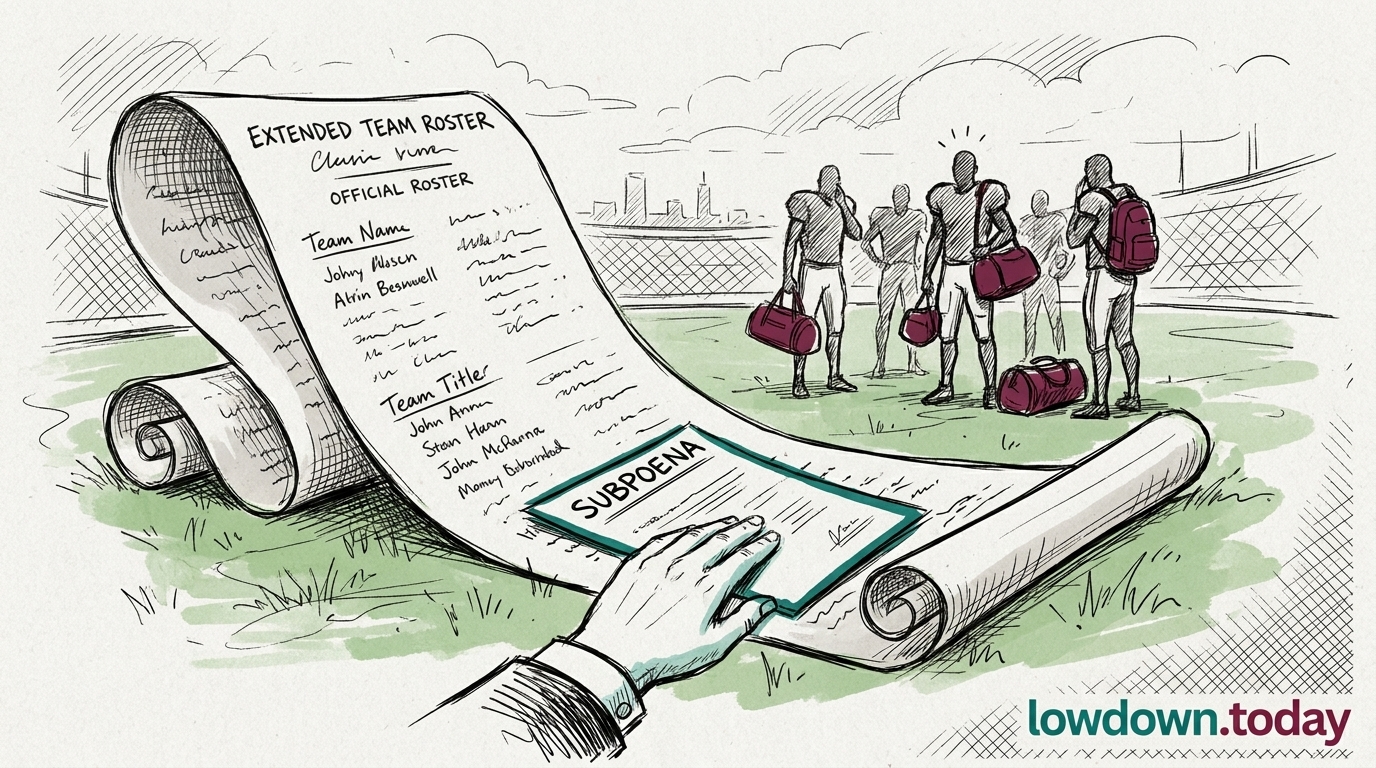
FIFPRO logged 19% of matches at a wet bulb globe temperature of 28C or above, the point at which the union recommends postponing play. FIFA does not mandate cooling breaks until 32C.

SportDeveloping
Key takeaway

FIFPRO's heat numbers become the workload case against a 64-team 2030 World Cup.

FIFPRO, the worldwide union for professional footballers, recorded that 19% of the tournament's matches were played at a wet bulb globe temperature (WBGT) of 28C or above, the level at which the Union recommends postponing play, in data current to 16 July⁠1. WBGT measures more than the air: it folds heat, humidity, wind and radiant sun into a single index, so a small movement on it carries a much larger change in the physiological load a player is carrying. Nine matches, across the group stage and the knockouts, were flagged as played in severe heat.

Four degrees separate the two organisations. FIFA does not mandate cooling breaks until WBGT reaches 32C, while FIFPRO's threshold for stopping play altogether sits four degrees lower. Six venues were rated extremely high risk: Atlanta, Dallas, Houston, Kansas City, Miami and Monterrey. Talks on a written protocol have run since early July, with FIFPRO pressing for predetermined rules on delaying matches, rescheduling them or moving kick-off times rather than calls taken game by game⁠2. Afternoon kick-offs in a North American summer exist to reach European evening audiences, so a fixed medical threshold would take that decision out of the schedule's hands.

The medical argument now sits inside the argument about 2030. Gianni Infantino called the 48-team format a success and said 64 teams would be examined once the tournament finished; Alejandro Dominguez, president of the South American Football Confederation (CONMEBOL), has pushed the same expansion on centenary grounds. FIFPRO opposes it on workload, projecting that elite internationals would face between 70 and 83 matches a season across club and country. Heat exposure scales with matches played, which turns a dispute about cooling breaks into a dispute about format.


Deep Analysis

In plain English

FIFPRO, football's global players' union, tracked how hot conditions were during this year's World Cup using WBGT (wet bulb globe temperature), a measure that combines heat, humidity and sunlight into one number. FIFPRO found that 19% of the tournament's 104 matches were played at 28C WBGT or higher, the point at which it recommends postponing a match, and nine matches were played in what it calls severe conditions. FIFA, the sport's governing body, only requires cooling breaks once WBGT hits 32C, four degrees above FIFPRO's own recommended limit. FIFPRO is raising this now partly because FIFA and South American football's governing body are discussing an even bigger, 64-team World Cup for 2030, which would mean more matches for the same players.

Deep Analysis
Root Causes

FIFA's 32C threshold comes from its own medical committee rather than an external body, so FIFA effectively sets and enforces its own heat-safety standard without independent sign-off.

The expanded calendar FIFPRO opposes, up to 83 matches a season under a proposed 64-team 2030 format, follows from FIFA's revenue model, where each added match round generates additional broadcast and hospitality income, creating an incentive that runs against player workload limits.

Escalation

FIFPRO is escalating a workload argument, not just a heat complaint, by tying its 28C data directly to opposition against the 64-team 2030 proposal.

What could happen next?
  • Risk

    FIFPRO's heat data strengthens its case against a 64-team 2030 format, which would add matches to an already crowded calendar.

  • Consequence

    Six venues rated extremely high heat risk create pressure on FIFA to either lower its 32C threshold or reschedule future US matches to cooler kickoff times.

First Reported In

Update #48 · World Cup review counts deaths, not goals

ESPN· 25 Jul 2026
Read original →
Different Perspectives
Council on Foreign Relations
CFR's analysis identified 18.75% of the 48-team field facing access barriers — the only available quantification after the State Department admitted it has none. The explicit contrast with South Africa 2010's visa waiver for all ticket holders positions the US as a regressive host by historical standards.
New York commuters / Assemblyman Bhalla
Bhalla framed Penn Station's closures as a class issue: 'For the 99 percent that can't afford to attend the games, it would be nice to at least know how you're going to get home from work.' Eight closures lock 650,000 daily commuters out for tournament traffic, with one on a Monday rush hour.
French Football Federation
The FFF called an 11:00 CEST press conference for 28 July, at its Paris headquarters, following an extraordinary executive committee meeting, at which Zinedine Zidane is expected to be presented as head coach succeeding Didier Deschamps. As of this writing no communique confirms the appointment, contract length or start date.
Morocco
Morocco
Morocco is pushing for the 2030 final at its Grand Stade Hassan II in Casablanca, a planned 115,000-seat venue that would be the world's largest football stadium on completion. The venue is contested by a Spanish petition for the Santiago Bernabeu, and FIFA has fixed neither the venue nor the tournament's proposed 64-team format.
FIFA
FIFA
FIFA's first tournament report, published 27 July, itemises nearly 300,000 accredited personnel, 73,700 security staff and 300,000 square metres of custom-grown turf, with no revenue or cost figure attached. As a Swiss association answering to its own Congress rather than a treasury, FIFA has followed the same operational-before-financial sequence it used after Qatar 2022.
Javier Tebas / La Liga
La Liga president Javier Tebas said on 21 July that FIFA's system is rotten from the root and that Gianni Infantino's time as president has, in his words, concluded. Tebas has no vote in FIFA's process, so days after the IOC declined jurisdiction over a separate ethics complaint, he used the only instrument he has.


