West Nile virus
Mosquito-borne virus, carried by birds, that can cause severe neurological disease.
West Nile virus infected 1,765 people locally across 16 European countries by 30 September 2026, ECDC said; on 3 September the count already stood at 1,086 against a ten-year average of 736 for that date.
Last refreshed: 4 October 2026
Timeline for West Nile virus
Infected 1,765 people in Europe by 30 September
Pandemics and Biosecurity: Europe's West Nile cases reach 1,765Background
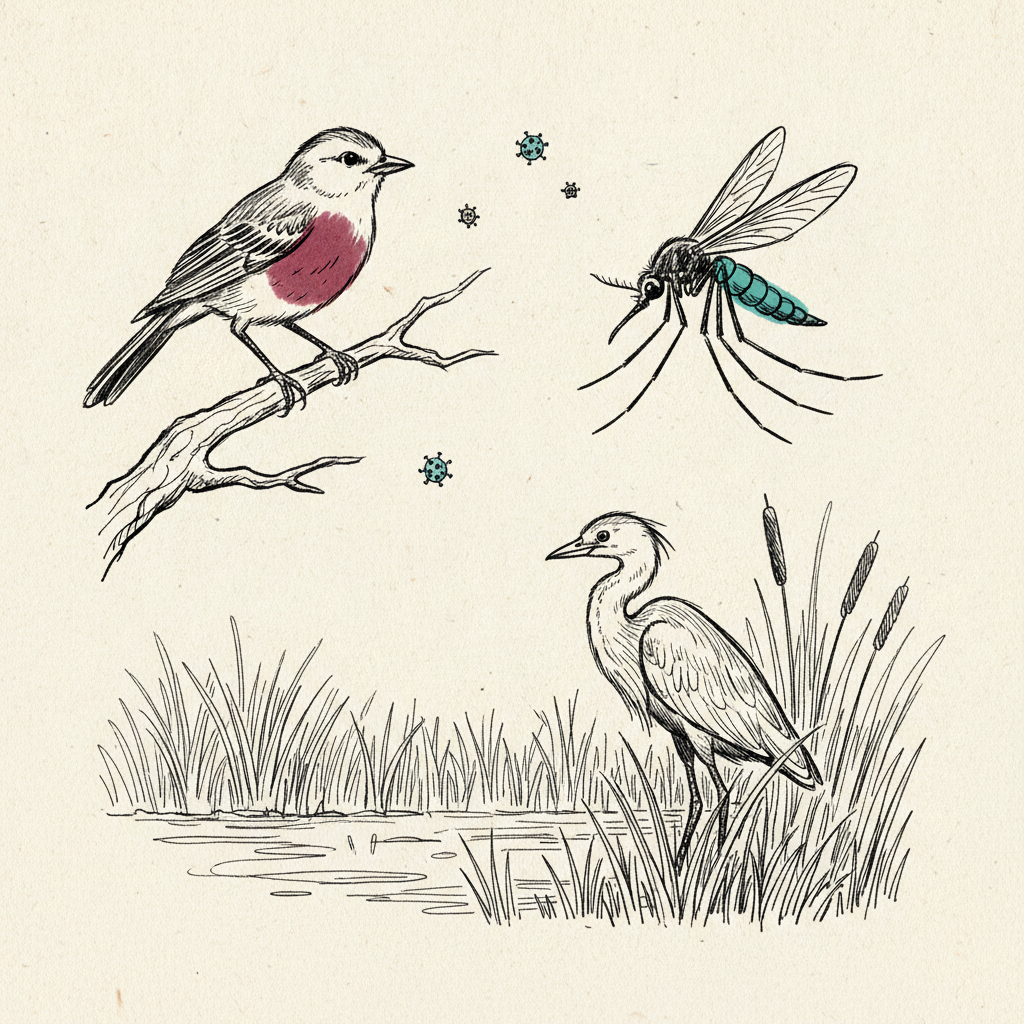
West Nile virus lives in wild birds and reaches people through the bites of Culex mosquitoes. West Nile virus can cause severe neurological disease. Warm weather speeds mosquito breeding and shortens the time before a mosquito can pass the virus on, so long, hot summers stretch the European season into October.
The 2026 European season ran FAR above the decade's norm. By 3 September Greece had recorded 284 cases and 24 deaths, and the Netherlands had its first human cases since 2020, one of them fatal. Growth came in the north and south-east rather than in Italy, whose 516 cases by that date were fewer than at the same point in 2018, 2022 or 2025. North Macedonia reported an "unprecedented" 55 cases and seven deaths, 53 of them around Skopje.
Animal surveillance tracks the spread ahead of human cases. Belgium had no human cases by 3 September but recorded 14 outbreaks in horses and 26 in birds across eight regions. Switzerland reported its first locally acquired infection, in a horse in Aargau. ECDC's figures put the season's case-fatality ratio near 6%, against a ten-year average of 10%, which may mean wider testing is finding more mild cases.