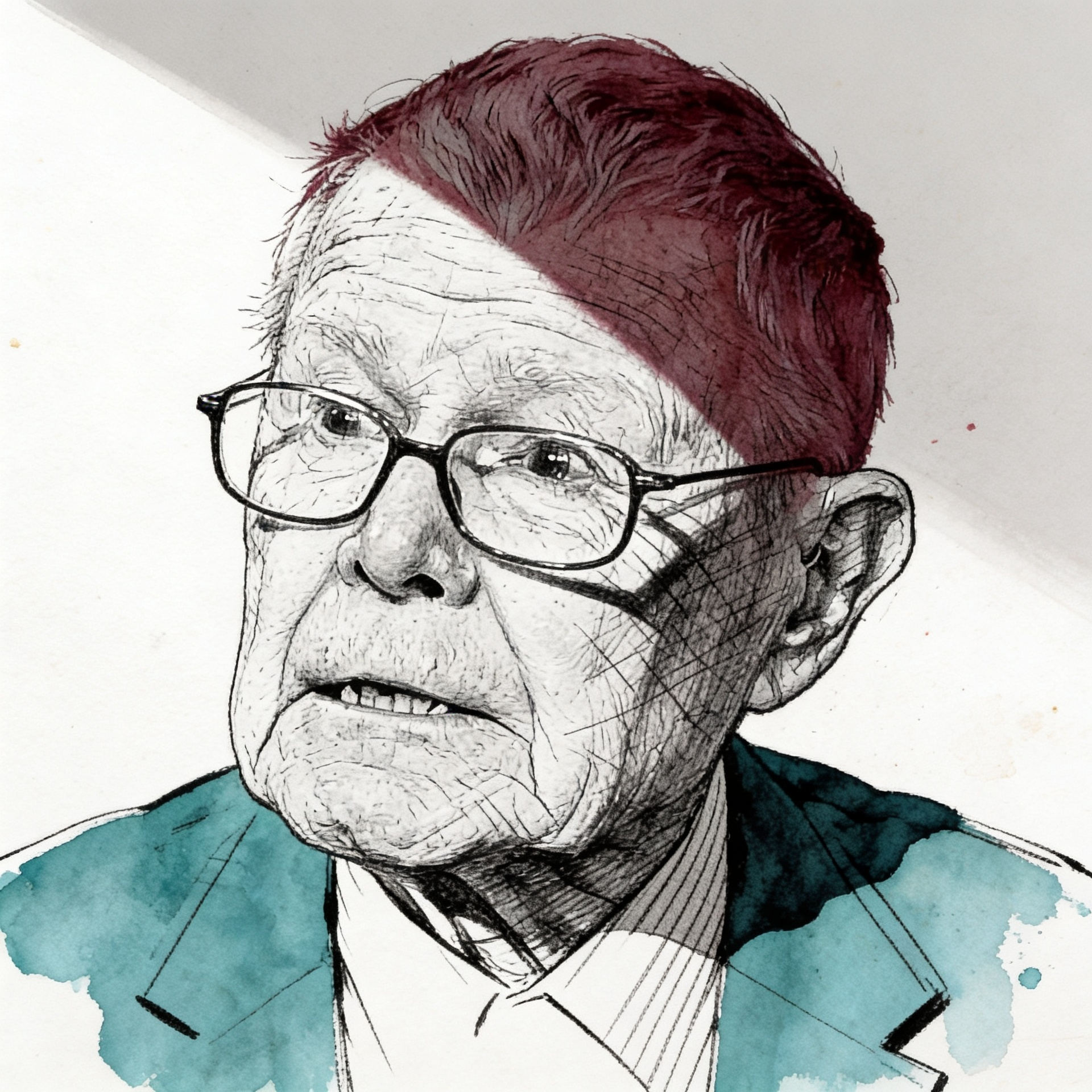
What would Schelling say about Trump's Iran threats — costly signals or bluffs?
Timeline for Thomas Schelling
Mentioned in: White House signs no Iran instrument on day 71
Iran Conflict 2026Mentioned in: Trump: war ends when Iran 'cries uncle'
Iran Conflict 2026Mentioned in: Iran rejects deal; June truce was a trap
Iran Conflict 2026Mentioned in: Trump on embassy threat: 'Find out soon'
Iran Conflict 2026Background
Thomas Schelling (1921-2016) was an American economist and Nobel laureate (Economics, 2005) whose work on strategic interaction, deterrence, and the theory of costly signalling remains foundational to political Science and international relations. His books, including The Strategy of Conflict (1960) and Arms and Influence (1966), introduced concepts such as focal points, commitment devices, and the role of credibility in coercive bargaining that continue to be applied to nuclear deterrence, sanctions, and crisis diplomacy.
Schelling's costly-signalling framework holds that threats and offers are credible only when their source has incurred a real cost — military deployment, economic commitment, or political capital — that would be lost if the threat was not carried out. This framework was invoked in May 2026 analysis of Trump administration Iran rhetoric: analysts asked whether The White House's Truth Social threats and the tanker strikes constituted genuine costly signals or performative escalation that Iran could safely discount.
Schelling died in December 2016 and cannot comment on the current crisis, but his intellectual legacy is the standard analytical lens through which presidential coercive diplomacy towards Iran is evaluated.
What is Thomas Schelling's costly signalling theory?
Why do analysts cite Schelling in the Iran crisis?
When did Thomas Schelling die?
