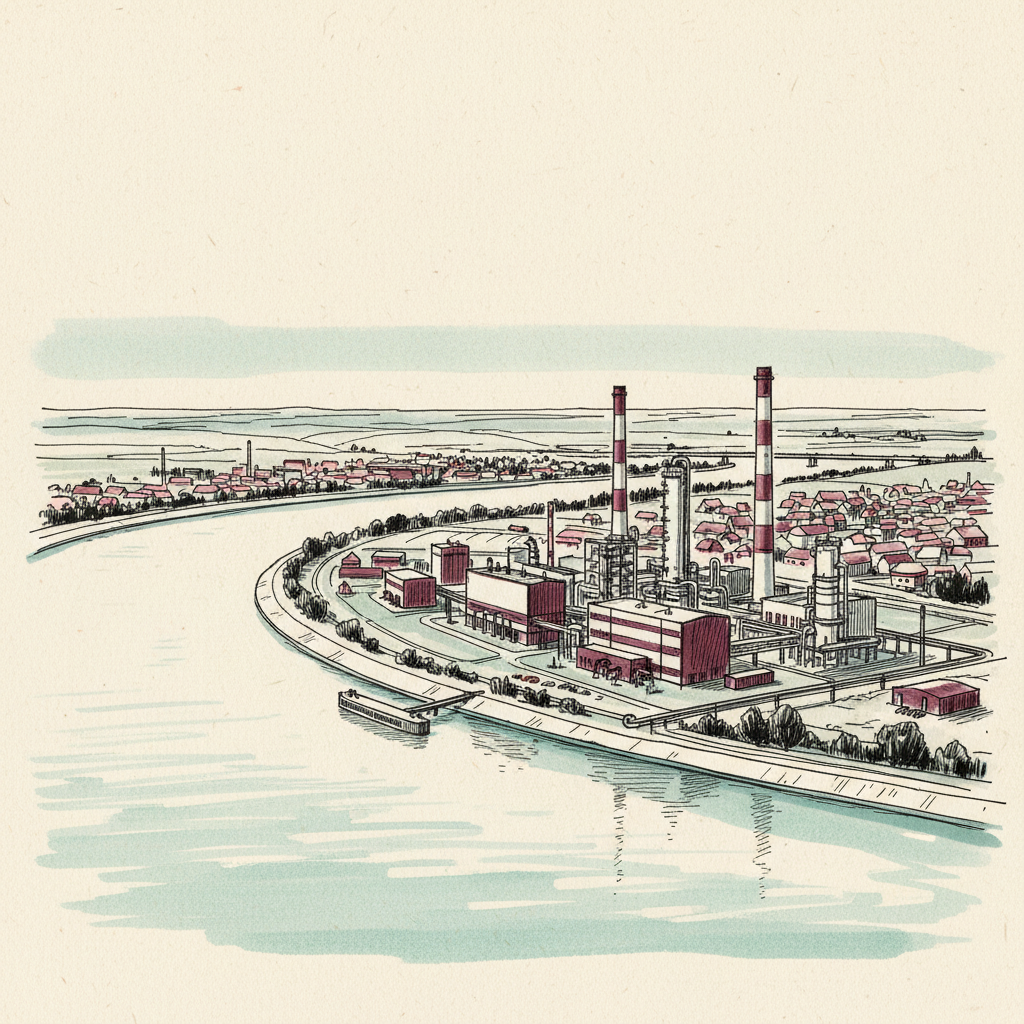
Százhalombatta
Hungarian town south of Budapest; site of MOL's Danube Refinery, primary Druzhba crude destination.
Last refreshed: 29 April 2026
Why can Hungary not simply stop importing Russian oil via Druzhba?
Timeline for Százhalombatta
Mentioned in: Hungary infringed over MOL ECT arbitration
European Energy MarketsDruzhba restart unblocks EUR 90bn EU loan
European Energy MarketsWhat is at Százhalombatta and why does it matter for Hungarian oil supply?
How dependent is Hungary on Russian oil from the Druzhba pipeline?
Background
Százhalombatta is a town on the Danube approximately 30 km south of Budapest, home to MOL's Danube Refinery — Hungary's largest refinery and the primary destination of Russian crude delivered via the Druzhba pipeline. When Ukraine restarted Druzhba flows on 22 April 2026 after months of disruption following late-January damage, MOL took first deliveries on 23 April with crude destined for Százhalombatta.
The Danube Refinery at Százhalombatta has a processing capacity of approximately 8 million tonnes per annum and supplies about 40% of Hungary's transport fuel demand. MOL has invested in equipment to process heavy sour Ural crude specifically, making the refinery structurally dependent on Druzhba-grade supply. Alternative crude sourcing via the Adriatic pipeline (Omišalj–Sisak–Nagykanizsa) or Croatian routes requires different crude grades and incurs higher unit costs.
Százhalombatta's strategic energy significance makes it a focal point of Hungarian government positions on Druzhba policy. The town is also the site of a petrochemical complex and a gas-fired power station operated by MVM. Hungary's ability to receive Druzhba crude at Százhalombatta is directly linked to the government's willingness to sustain political relationships that enable pipeline access — a dynamic visible in the April 2026 loan-veto linkage.