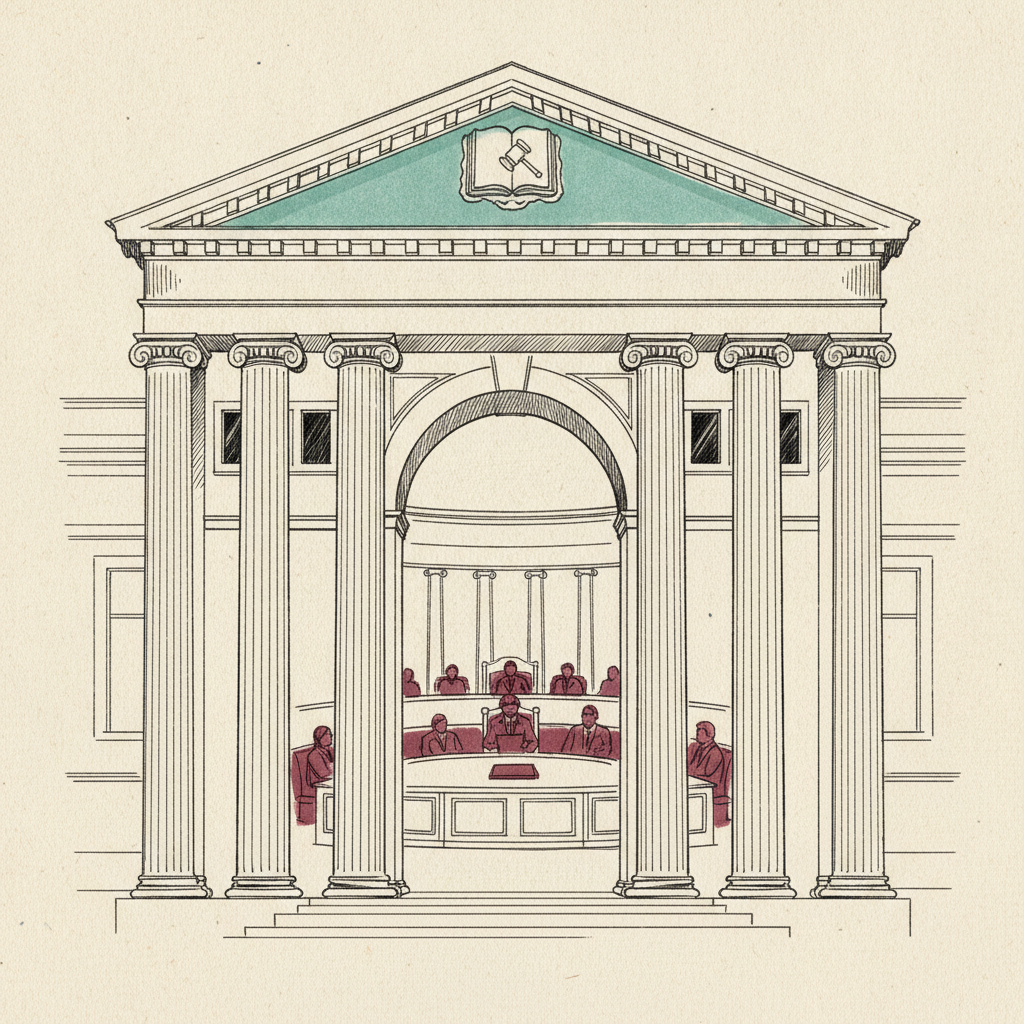
Supreme Popular Court
Cuba highest court of appeal, the Tribunal Supremo Popular.
Cuba's Supreme Popular Court rejected artist Luis Manuel Otero Alcántara's early-release appeal in April 2026, and on 14 July the Madrid-based OCDH named its president among three officials answerable for his continued detention past his formal sentence-end date.
Last refreshed: 26 July 2026 · Appears in 1 active topic
Why did Cuba's top court reject Otero Alcántara's early release before his sentence even ended?
Timeline for Supreme Popular Court
Mentioned in: State TV smears the exiled artist
Cuba DispatchOCDH names who is answerable for him
Cuba DispatchMentioned in: State Security rang about his US visa
Cuba DispatchMentioned in: Otero vanishes a day before release
Cuba DispatchBackground
The Tribunal Supremo Popular is Cuba's highest court, seated in Havana's old town and holding final say over criminal, civil, Labour, economic and military cases nationwide. It sits in six chambers: penal, civil and administrative, offences against State Security, Labour, economic, and military.
Its president is elected by the National Assembly of People's Power on the recommendation of the Council of State's president, with no fixed term. the Court is constitutionally described as functionally Independent, but is hierarchically subordinate to the Assembly and the Council of State rather than a separate branch of government, which is why analysts treat its rulings as an extension of executive policy rather than Independent judicial review.
That structure matters directly for how political cases move through Cuba's justice system: without an Independent judiciary able to check the executive's charging decisions, the Court's state-security and criminal chambers function as the forum through which political prisoners, whose numbers monitoring groups have logged at record highs through 2026, are processed rather than protected.
Court closed his last legal route
In April 2026 the Court denied Otero Alcántara's bid for early release, a ruling that left 9 July 2026 standing as his sentence's own end date and shut off his last legal route to release before a US dissident-release deadline. He disappeared from Guanajay prison the day before that date arrived.
The 14 July OCDH dictamen went further than the April ruling: alongside the Havana Provincial Prosecutor's Office and the Penitentiary Legality Control Directorate, it put the Court's own president among those institutionally answerable for the continued detention, with no judicial basis identified, and called for an immediate ex officio review. The finding carries no binding force, but it draws the judiciary itself into a human-rights indictment over a case its own April ruling helped shape.
What is Cuba's highest court?
Did Cuba's Supreme Court free Luis Manuel Otero Alcántara?
Is Cuba's judiciary independent of the government?
Where is Cuba's Supreme Popular Court based?
Why did OCDH criticise Cuba's Supreme Popular Court in July 2026?


