Shamonda virus
Insect-borne livestock virus; caused the first documented human infection, fatal, in France in 2026.
France notified WHO on 20 October 2026 of the first documented human Shamonda infection: an older man in rural eastern France who had not travelled developed encephalitis on 23 September and died on 8 October.
Last refreshed: 21 November 2026 · Appears in 1 active topic
A cattle virus killed a man in France: is Shamonda a new human threat?
Timeline for Shamonda virus
Caused fatal encephalitis in a French patient
Pandemics and Biosecurity: France reports first human Shamonda caseBackground
Shamonda virus caused its first documented human infection in 2026. France notified WHO on 20 October of an older man with a weakened immune system in rural eastern France, with no travel history, who developed encephalitis on 23 September and died on 8 October. His strain was 99% identical to one circulating in Switzerland, and WHO is investigating whether infected cattle shed the virus in milk.
An orthobunyavirus in the Simbu serogroup, Shamonda shares a species with Schmallenberg virus. It was first isolated from cattle in Nigeria in the 1960s and has since turned up in Africa, Japan and Europe. Its first European detection came in summer 2026, and by 20 October French animal cases spanned 54 departments, mostly in cattle.
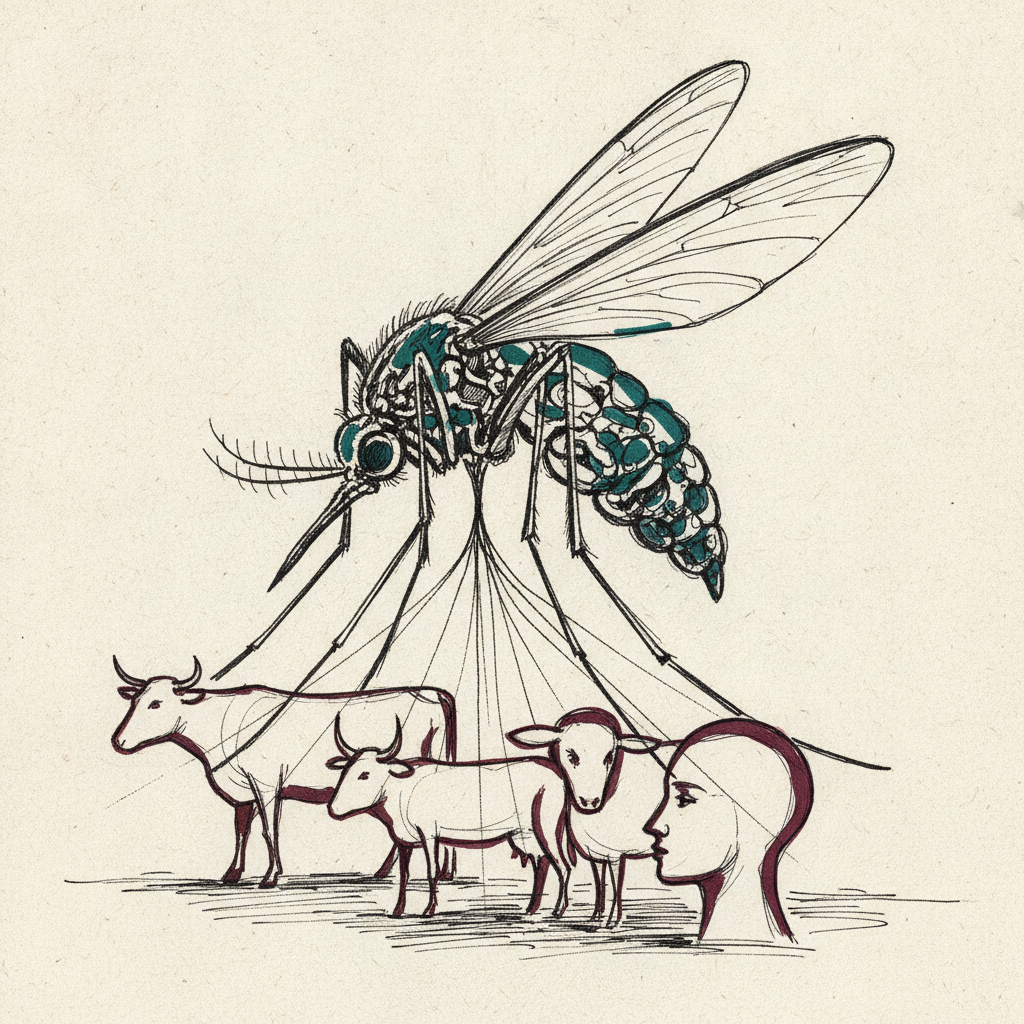
Biting midges appear to carry the virus, which is not thought to pass directly between animals. WHO says a single human case is too few to judge the risk to the public and has asked for joint human and animal surveillance.
What is Shamonda virus?
Has anyone died from Shamonda virus?
How does Shamonda virus spread?
Is Shamonda virus a risk to people in Europe?

Written with AI from Lowdown's published reporting. Not individually reviewed by an editor. Updated 21 November 2026. Editorial standards.