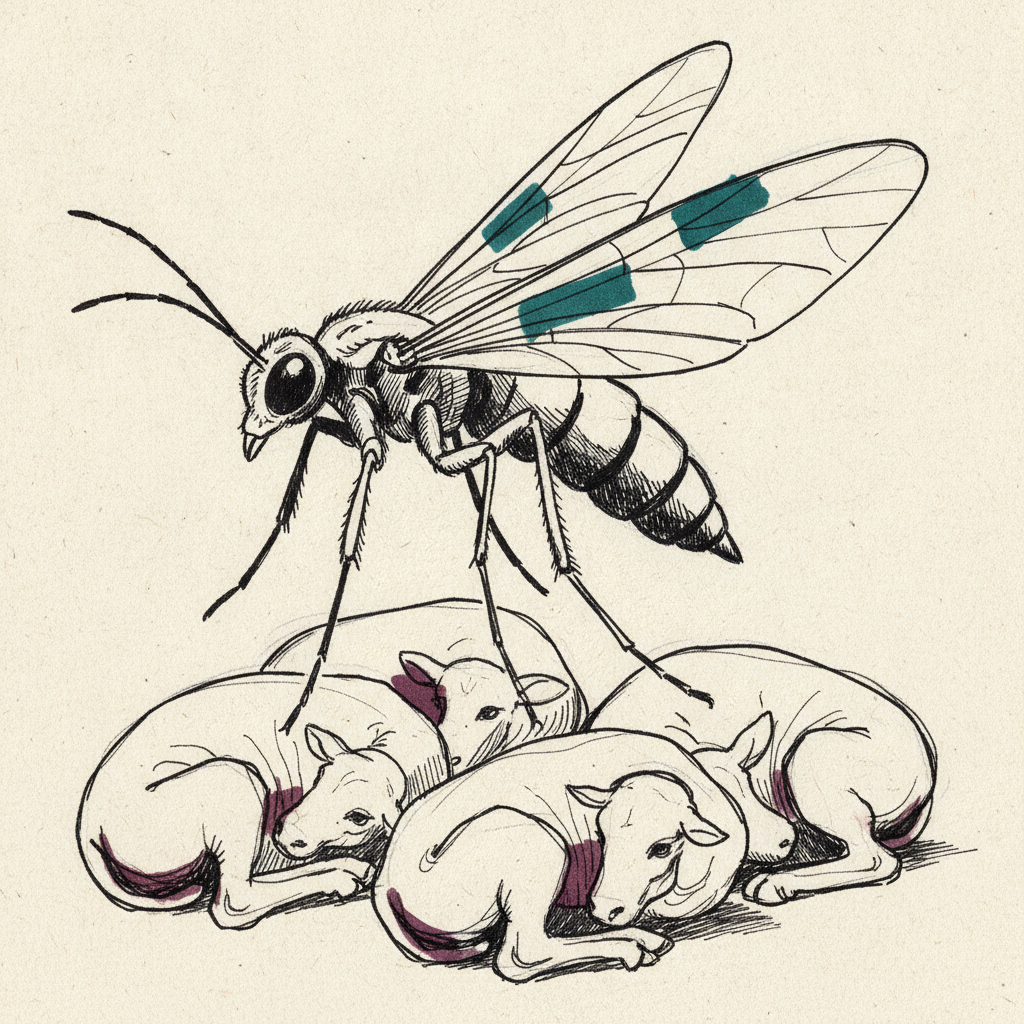
Schmallenberg virus
Midge-borne livestock virus causing birth defects in lambs and calves; Shamonda's close relative.
Shamonda virus, Schmallenberg virus's closest relative, killed a man in eastern France on 8 October 2026 in the first documented human Shamonda infection, which WHO reported on 2 November.
Last refreshed: 21 November 2026 · Appears in 1 active topic
Its cousin just killed a man in France: should UK farmers worry about Schmallenberg?
Timeline for Schmallenberg virus
Mentioned in: France reports first human Shamonda case
Pandemics and BiosecurityBackground
Schmallenberg virus belongs to the same species as Shamonda virus, its closest relative. WHO reported on 2 November 2026 that Shamonda had caused its first documented human infection, killing a man in eastern France on 8 October. The case put a livestock virus familiar to European farmers back into public-health reporting.
First identified in Europe in 2011, Schmallenberg is carried by biting midges and infects sheep, cattle, goats and deer. Infection during pregnancy can cause abortion, stillbirth and deformed lambs and calves, with bent limbs, twisted spines and brain damage. It reached the UK in the 2012 to 2013 season, when APHA confirmed it on 656 holdings.
Schmallenberg is not notifiable in the UK, and AHDB reports no public health or food safety risk from it. No vaccine was commercially available in Great Britain as of February 2024.
What is Schmallenberg virus?
Can humans catch Schmallenberg virus?
How does Schmallenberg virus affect lambs and calves?
Is Schmallenberg virus notifiable in the UK?







Written with AI from Lowdown's published reporting. Not individually reviewed by an editor. Updated 21 November 2026. Editorial standards.