Salmonella Stanley ST2045
A specific Salmonella sequence type behind a 10-country EU foodborne cluster of 83 cases, with chicken products suspected.
Last refreshed: 9 June 2026 · Appears in 1 active topic
Which chicken product is driving Salmonella across ten European countries at once?
Timeline for Salmonella Stanley ST2045
Salmonella cluster crosses ten EU borders
Pandemics and BiosecurityBackground
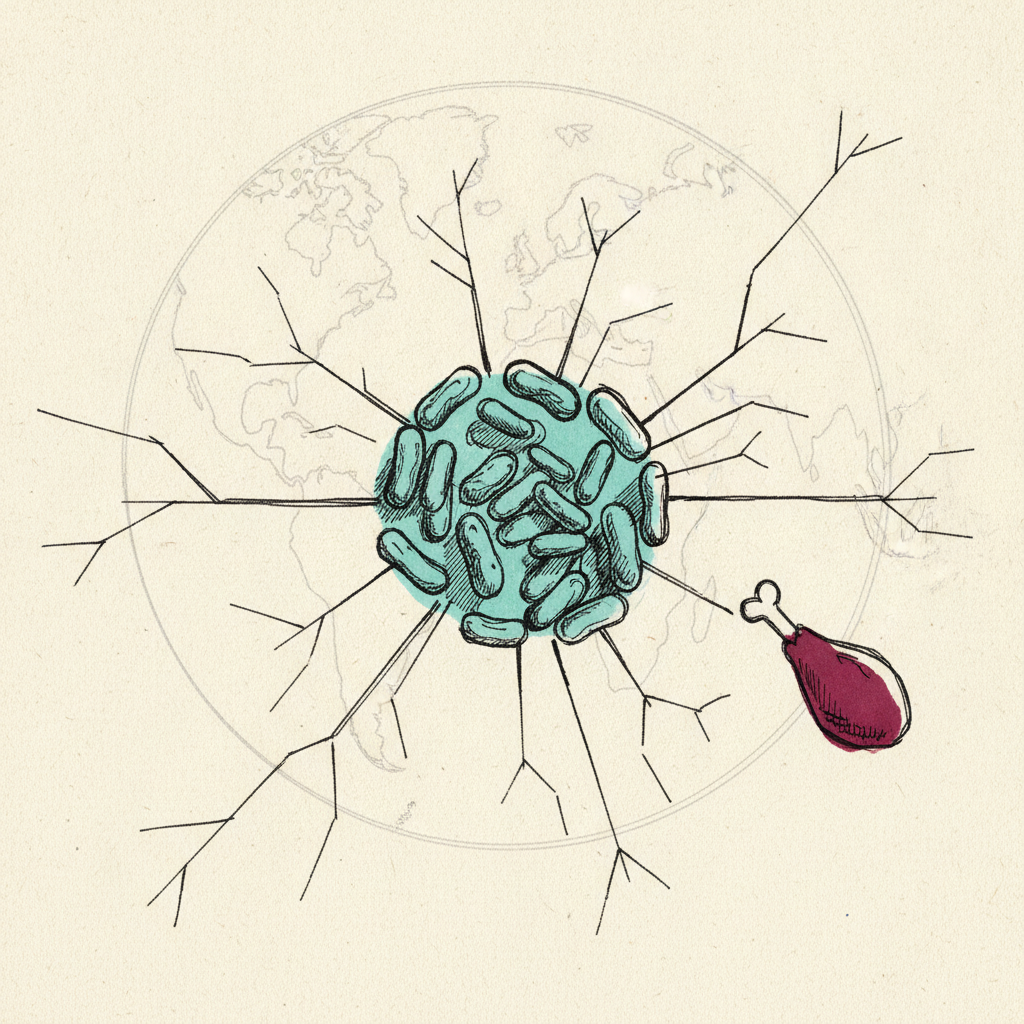
ECDC is tracking a cluster of 83 cases of Salmonella Stanley ST2045 across 10 EU countries since late December 2025, with the cluster still active as of the Week 23 report (30 May to 5 June 2026). Children and young adults are disproportionately represented among cases. The suspected vehicle is chicken-flavoured instant noodles or processed chicken products sharing a common ingredient, pointing to a single supply chain across borders rather than ten separate contamination events. A joint ECDC and EFSA Rapid Outbreak Assessment is due 1 July 2026.
Salmonella Stanley ST2045 is a multi-locus sequence type (MLST) designation identifying a genetically distinct strain of Salmonella enterica subsp. enterica serovar Stanley. MLST typing resolves below-serovar diversity, allowing epidemiologists to distinguish genuine outbreak clusters from background incidental cases of the same serovar. ST2045 is the variant linked to a Danish reference strain against which the 10-country isolates have been clustered. Salmonella infection typically causes self-limiting gastroenteritis; severe outcomes are more likely in young children, elderly patients, and the immunocompromised.
The ten countries with confirmed clustering isolates include Austria, Czechia, Denmark, Estonia, France, Germany, Lithuania, the Netherlands, and the United Kingdom. The geographic spread across member states confirms a distributed food supply origin, not localised kitchen contamination. Instant noodles and convenience chicken products are the suspect vehicle because the affected age profile (children and young adults) aligns with frequent consumption of those product categories. The EFSA and ECDC assessments due in July will name the specific product or ingredient once the supply-chain trace is complete.