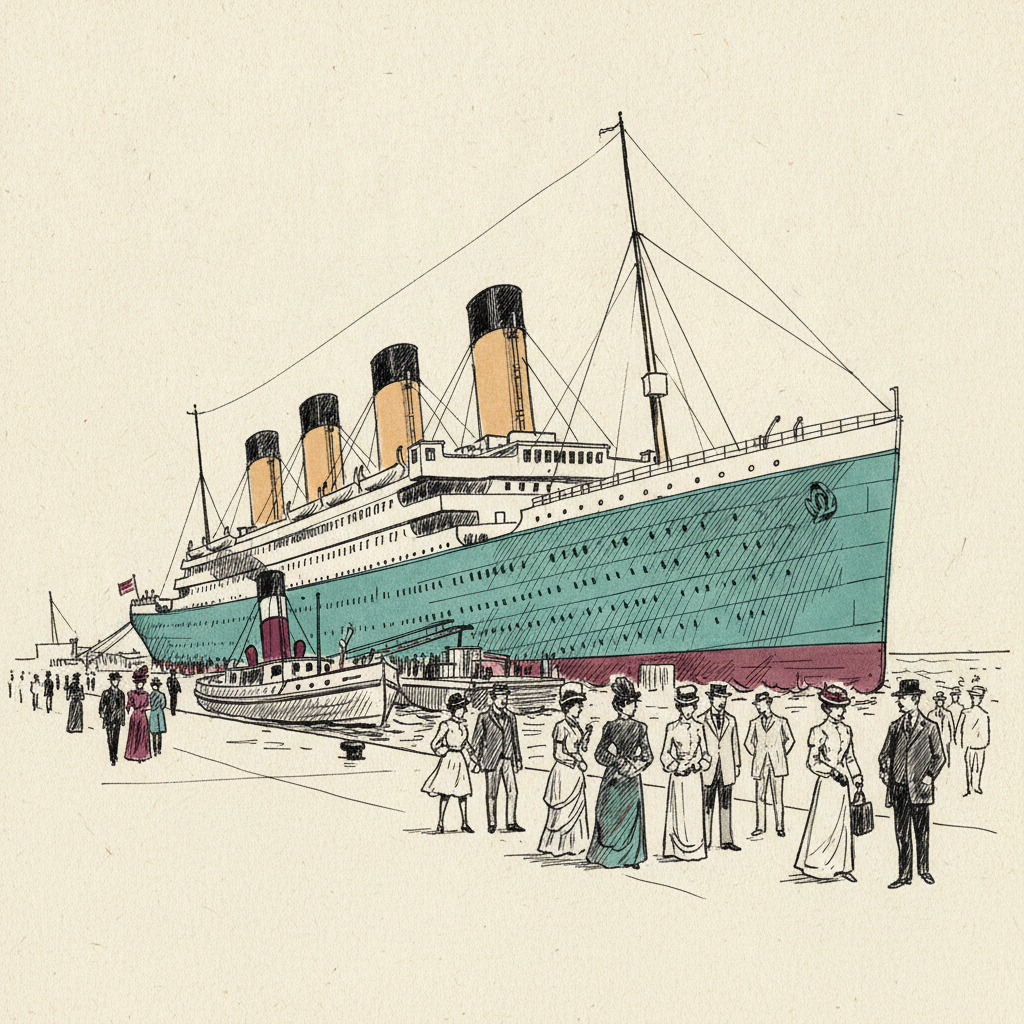
RMS Titanic
British liner lost in April 1912
The Titanic sank on 15 April 1912 with more than 1,500 deaths, and the first Safety of Life at Sea Convention followed in 1914. In September 2026 DNV and Fassmer began rule-making for uncrewed naval ships before any disaster.
Last refreshed: 7 October 2026
Timeline for RMS Titanic
Mentioned in: DNV and Fassmer aim to class robot ships
Autonomous Systems: Land & SeaBackground
RMS Titanic was a White Star Line passenger liner built by Harland and Wolff in Belfast. On its maiden voyage from Southampton to New York it struck an iceberg and sank on 15 April 1912. More than 1,500 people died.
The disaster led to the first International Convention for the Safety of Life at Sea, adopted in London in 1914, the first attempt at international rules for ship safety. The convention, revised in 1974, still sets the minimum standards for merchant ships.
The Titanic remains the reference case for safety rules that arrive only after a new kind of ship fails. Rule-making for uncrewed vessels is trying to run the other way: in September 2026 the classification society DNV and the German yard Fassmer agreed to work towards DNV sign-off for crewless naval and state ships, using rules DNV brought into force in January 2025.