Fassmer
Family-owned German shipyard in Berne, Lower Saxony, founded in 1850.
Fassmer and the classification society DNV agreed, in a memorandum made public on 10 September 2026, to work towards approval in principle for crewless naval and government ships.
Last refreshed: 7 October 2026 · Appears in 1 active topic
Will DNV approve a Fassmer robot warship design in principle?
Timeline for Fassmer
Signed a memorandum with DNV
Autonomous Systems: Land & Sea: DNV and Fassmer aim to class robot shipsBackground
Fassmer is a German shipyard that, since a DNV memorandum made public on 10 September 2026, has been seeking class approval for crewless government ships.
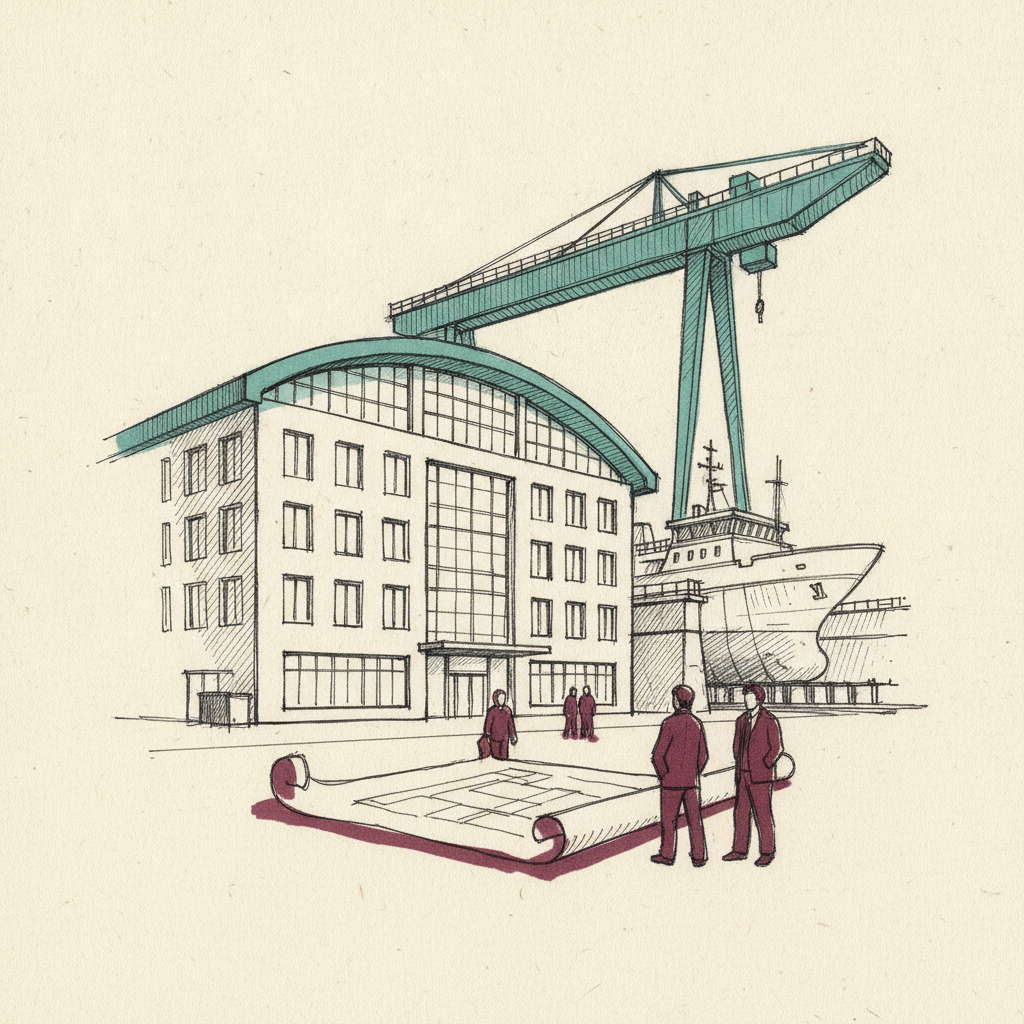
Johannes Fassmer founded the business in 1850 as a one-man boatbuilding workshop in Berne-Bardenfleth, Lower Saxony. It remains family-owned, now in its fifth generation, and marked its 175th anniversary in September 2025. The yard builds patrol boats, offshore patrol vessels, research ships, ferries and naval vessels, and makes lifeboats, deck equipment and composite structures.
Fassmer's mix of state customers, from navies and coastguards to research institutes, places it among the German yards most exposed to any shift towards crewless government ships. The DNV work gives it a class framework for that shift before any buyer has placed an order.
Fassmer seeks class approval for autonomy
The Berne yard put its name to a memorandum with DNV, Norway's classification society, during SMM, Hamburg's maritime trade fair; the deal was made public on 10 September 2026. Its aim is approval in principle for crewless and remotely piloted state vessels, assessed under the DNV rulebook for such ships that took effect in January 2025. Rasmus Stute of DNV described autonomy as a growing pillar of defence work.
DNV's approval in principle would be an early classification step, not an order. The memorandum names no vessel and no customer. For Fassmer, whose order book rests on patrol boats, research ships and naval vessels, it is preparation for selling crewless versions of those hulls to government buyers once demand arrives.

