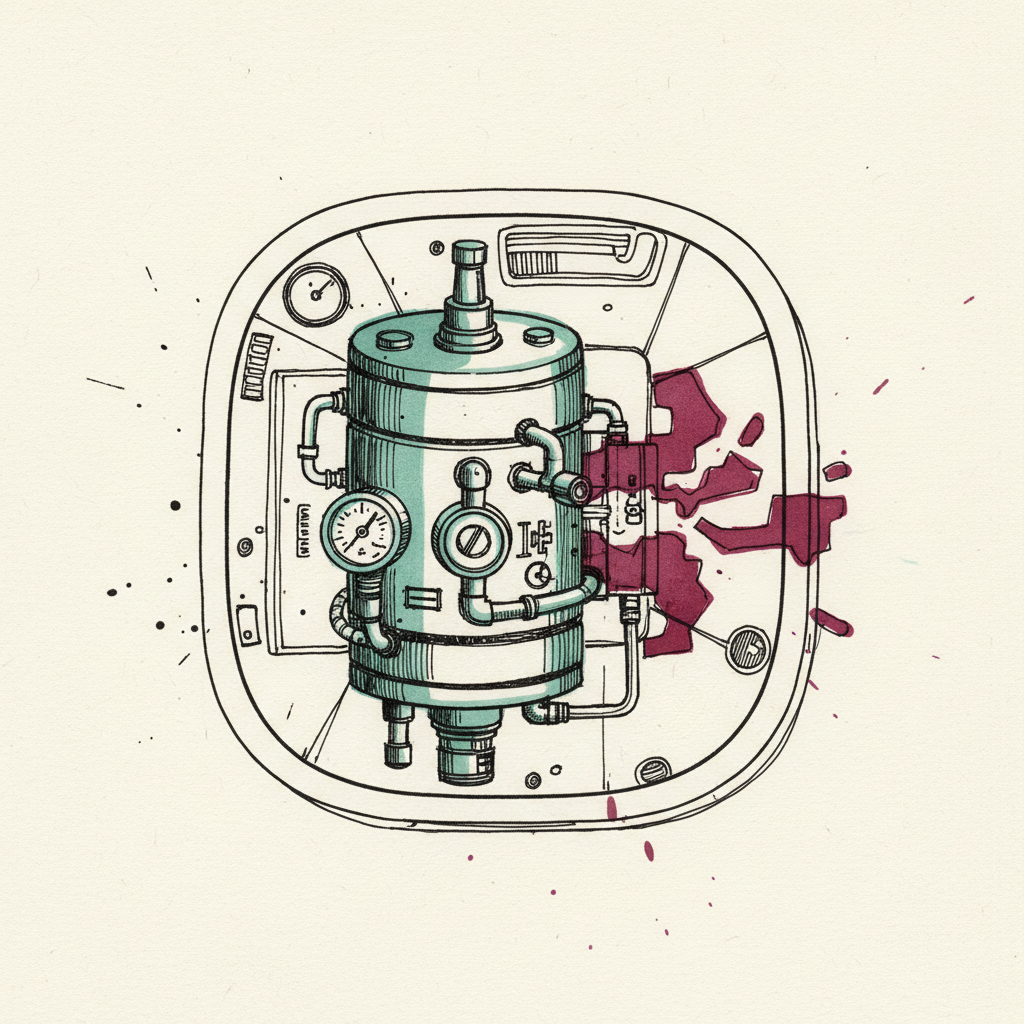
Pressure Control Assembly
Orion cabin pressure regulator that leaked during Artemis II; requires redesign before Artemis III.
Last refreshed: 14 April 2026 · Appears in 1 active topic
How many hardware failures does it take before Artemis III's schedule slip becomes unavoidable?
Timeline for Pressure Control Assembly
Mentioned in: Five open Orion items, no fix dates
Artemis II Moon MissionMentioned in: ESA press release skips valve anomaly
Artemis II Moon MissionLeaked during mission and was committed for necessary changes without timeline
Artemis II Moon Mission: Three Orion reworks named in one callBackground
The Pressure Control Assembly (PCA) is the Orion spacecraft's cabin pressure regulator. At the POST-splashdown press conference on 11 April 2026, NASA mission managers disclosed that the PCA had leaked during the Artemis II flight and requires redesign before Artemis III. The PCA is one of five open hardware items that must be resolved before NASA can certify the next mission: the others are the European Service Module pressurisation valve leaks, the wastewater vent freeze, the O2 manifold helium leak, and the re-entry sensor calibration.
The PCA controls the flow of gases that maintain cabin atmosphere for the CREW. A leak in the assembly does not necessarily endanger the CREW during a short mission where consumables can be sized around the loss rate, but on a long-duration lunar transit such as Artemis III, any uncontrolled cabin pressure loss becomes a mission-critical risk. The redesign requirement signals that the Artemis II flight was the first real-world pressure test of the assembly under operational conditions.
The PCA disclosure was one of three new hardware rework items named in a single press conference, adding to two items already known (O2 manifold helium leak and the radiation shelter cancellation), bringing the total Artemis II-to-Artemis III open items to five. NASA's associate administrator acknowledged the Artemis III schedule carries float but declined to quantify it.