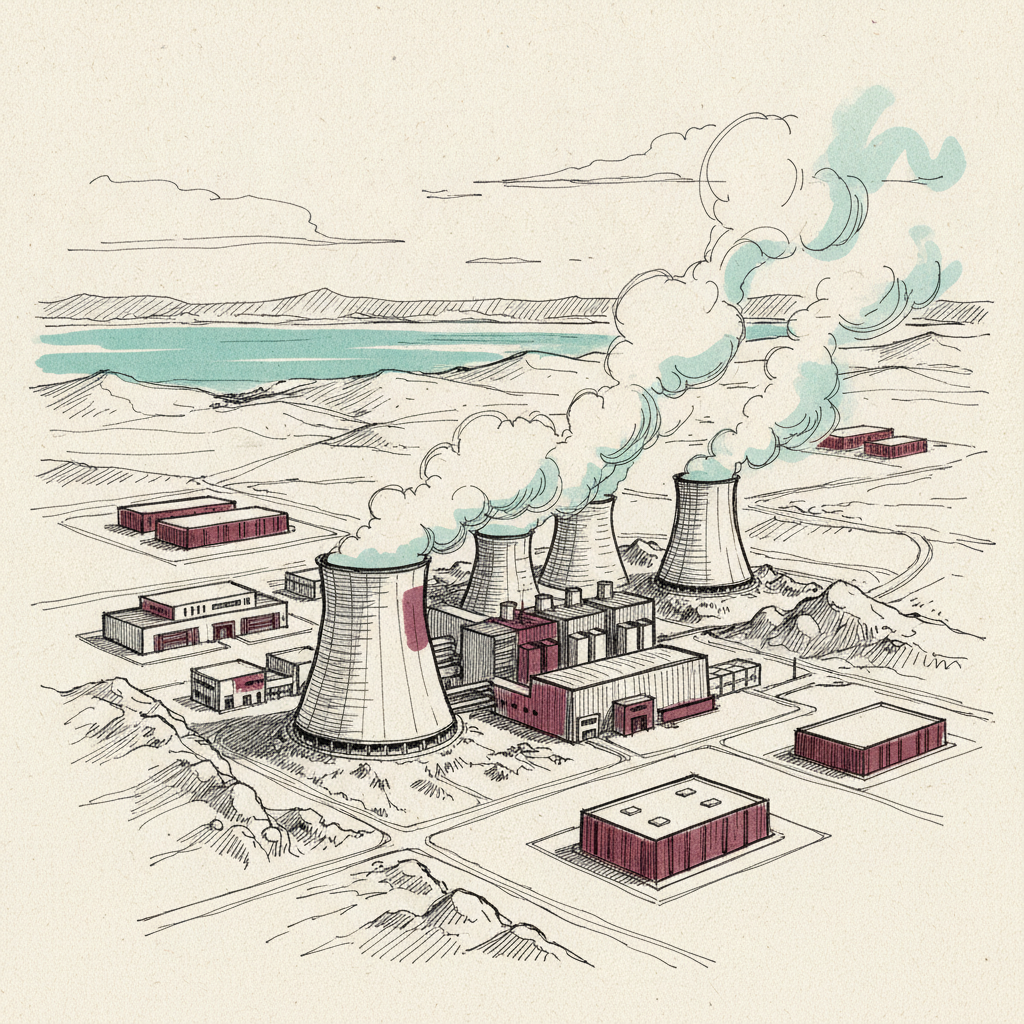
Olkaria
Geothermal field in Kenya's Rift Valley, chosen for a stalled Microsoft-G42 data-centre campus.
Kenya halted the $1 billion Microsoft-G42 campus at Olkaria in May 2026, as a 1 GW site would have needed about a third of national generating capacity; by June a refused capacity-payment guarantee had stalled it too.
Last refreshed: 18 October 2026 · Appears in 1 active topic
With the May deadline lapsed and guarantee declined, is the Olkaria campus finished?
Timeline for Olkaria
Mentioned in: World Bank offers shared GPUs to states
Data Centres: Boom and BacklashMentioned in: FiveNines hired for Casablanca AI site
Data Centres: Boom and BacklashKenya's AI campus turned on a guarantee
Data Centres: Boom and BacklashRemained suspended at the 1 GW threshold that would draw a third of Kenya's installed capacity
Data Centres: Boom and Backlash: Kenya halts $1bn Olkaria over powerBackground
Olkaria is Kenya's main geothermal field, in the Great Rift Valley just south of Lake Naivasha and within Hell's Gate National Park, about 120 km from Nairobi. Most of its plants, including Olkaria I and II, belong to KenGen, the Kenya Electricity Generating Company; Olkaria III is owned by a subsidiary of Ormat Technologies. Geothermal plants run year-round, unlike solar or wind, which is why Microsoft and G42 chose the field for a $1 billion data-centre campus announced in May 2024.
Kenya's government halted that campus in early May 2026. At its full 1 GW, the site would have drawn a third of the country's installed capacity of about 3 GW, and President Ruto said building it would mean switching off half the country. By mid-June the first-phase target of May 2026 had lapsed with no ground broken. The consortium had also asked Kenya Power and Lighting Company for a sovereign guarantee to pay for contracted power whether or not the campus drew it, and the government declined. Financing remained unresolved and no new construction date had been set.
The stalled campus is now the reference case for African AI projects, where one hyperscale site can equal a large share of a National Grid. A 20 MW AI site planned near Casablanca in October 2026 still had its permits and grid connection to win.
Reference
Where is the Olkaria geothermal field in Kenya?
Has construction started on the Olkaria data centre?
Why was the Microsoft G42 data centre in Kenya suspended?
How much of Kenya's electricity does the Olkaria campus need?
Who runs the Olkaria geothermal plants?
Written with AI from Lowdown's published reporting. Not individually reviewed by an editor. Updated 18 October 2026. Editorial standards.