New Mexico
Arid US Southwest state whose acequia water-rights tradition now shapes its data-centre opposition.
New Mexico's acequia water-rights tradition, not grid costs, drives its escalating string of local data-centre moratoriums, the newest passed in Sierra County on 21 July 2026.
Last refreshed: 4 August 2026 · Appears in 3 active topics
Why does New Mexico's data-centre opposition centre on water rights, not power bills?
Timeline for New Mexico
Mentioned in: 212 MW Edinburgh appeal now needs an EIA
Data Centres: Boom and BacklashNew Mexico moratorium has no bill text
Data Centres: Boom and BacklashMentioned in: Lakeland halts big power users, 4-3
Data Centres: Boom and BacklashMentioned in: GE Vernova backlog hits 116 GW
Data Centres: Boom and BacklashMentioned in: Sabato moves three races for governor
US Midterms 2026Background
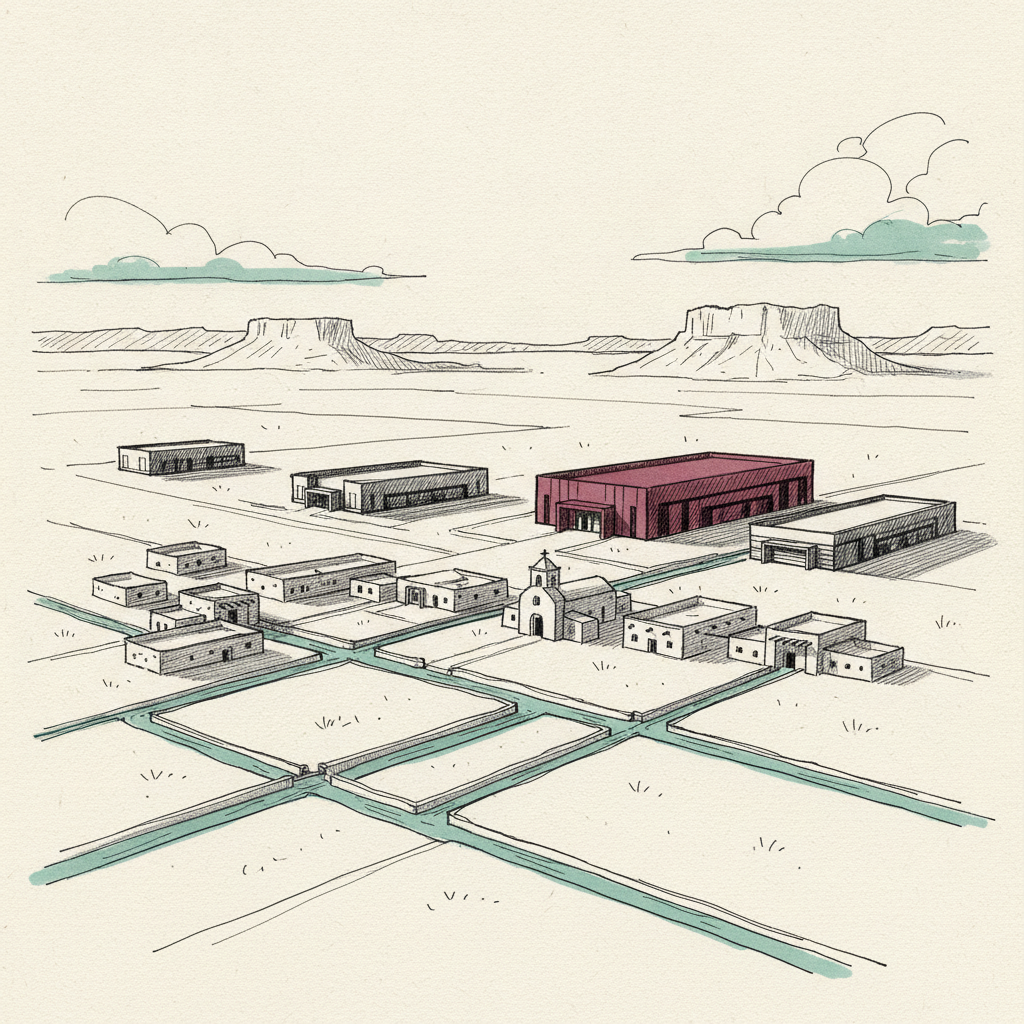
New Mexico is a US Southwest state admitted to the Union in 1912; its capital is Santa Fe. Water in the state is governed partly by acequias, communal irrigation ditches introduced under Spanish colonial rule that predate state water law and still control sharing in many rural and mountain communities. That tradition has made New Mexico a distinct front in the US data-centre backlash, framed around water rights rather than the grid-cost complaints common elsewhere.
Santa Fe County adopted an 18-month moratorium at a 1 MW threshold, the lowest recorded nationally, on 2 July 2026. Sierra County followed with its own 18-month moratorium on 21 July, the state's third county to act, targeting a solar-powered proposal near Spaceport America. State lawmakers are now pursuing what would be the first statewide data-centre moratorium bill in the US, for 2027.
Separately, Land Commissioner Stephanie Garcia Richard has twice rejected a gas pipeline meant to power the Project Jupiter data-centre campus at Santa Teresa, most recently on 15 July 2026, though construction on the campus itself continues regardless.

