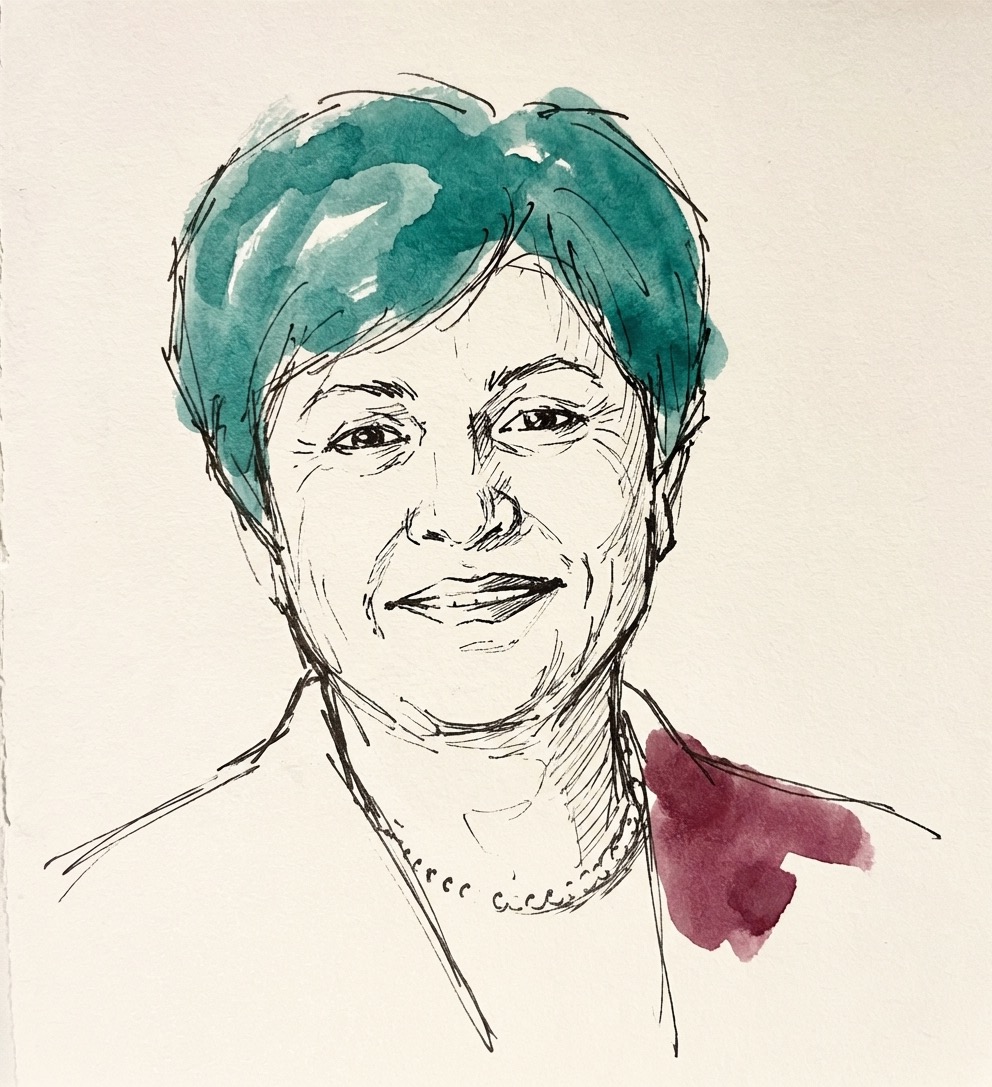
Kristalina Georgieva
Bulgarian economist, managing director of the International Monetary Fund since October 2019.
Last refreshed: 18 October 2026 · Appears in 1 active topic
How far could Houthi strikes on Saudi Arabia hurt the world economy?
Timeline for Kristalina Georgieva
Mentioned in: TSMC holds $60-64bn capex, lifts outlook
AI: Jobs, Power & MoneyCalled AI a slow-moving tsunami for young graduates
AI: Jobs, Power & Money: Georgieva sees an AI 'tsunami' for youthWarned of spillover from attacks on Saudi Arabia
Iran Conflict 2026: Mentioned in: Houthi strikes kill 13 at Riyadh airportIMF: AI stocks heading to dot-com levels
AI: Jobs, Power & MoneyMentioned in: Morgan Stanley dismisses AI bubble fears
AI: Jobs, Power & MoneyBackground
Kristalina Georgieva warned on 14 October 2026, at the IMF and World Bank Annual Meetings in Bangkok, that attacks on Saudi Arabia "have potentially negative spillovers for everybody, everywhere". She added that "the Saudi economy is important for the region and the world." Days earlier Houthi missiles had killed 13 people and wounded over 300 at Riyadh's King Khalid International Airport.
Georgieva, Born in Sofia in 1953, has led the IMF since 1 October 2019 and began her second term on 1 October 2024. She was chief executive of the World Bank from January 2017 to September 2019, and earlier served at the European Commission as commissioner for international cooperation, humanitarian aid and crisis response, then as vice-president for budget and human resources. She holds a PhD in economic Science from Sofia's University of National and World Economy.
Earlier in 2026 she warned that AI valuations were heading toward levels last seen in the dot-com boom, with the Shiller price-to-earnings ratio at 40 against a 1999 peak of 45. Morgan Stanley disputed the bubble case, citing corporate cash reserves about three times those of past bubbles.
Who is Kristalina Georgieva?
What did Georgieva say about the AI bubble in 2026?
Is the AI market in a bubble, according to the IMF?
What did Kristalina Georgieva do before the IMF?
How much are US tech firms spending on AI in 2026?
Who is the head of the IMF in 2026?
What did the IMF say about the Houthi attacks on Saudi Arabia?
What did Georgieva say about an AI bubble in 2026?




Written with AI from Lowdown's published reporting. Not individually reviewed by an editor. Updated 18 October 2026. Editorial standards.