JV Innovation
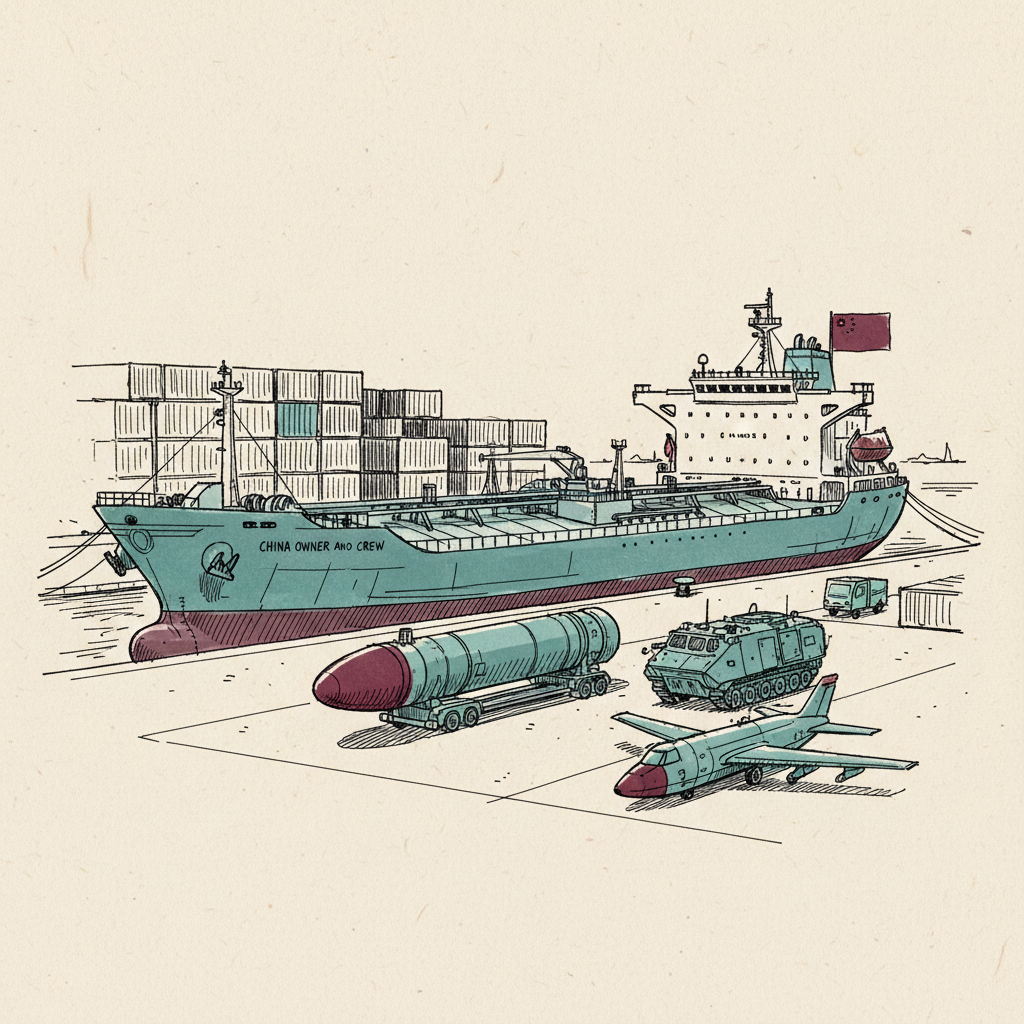
Marshall Islands-flagged, Chinese-owned oil and chemical tanker struck off UAE's Al Jeer Port on 4 May 2026; bore markings reading 'CHINA OWNER and CREW'.
Last refreshed: 9 May 2026 · Appears in 1 active topic
Why was a Chinese-owned tanker hit, and what did Beijing do about it?
Timeline for JV Innovation
Struck off UAE Al Jeer Port on 4 May; bore markings reading 'CHINA OWNER and CREW'
Iran Conflict 2026: Beijing splits MOFCOM defiance from NFRA loan haltBackground
JV Innovation is a Marshall Islands-flagged tanker owned by a Chinese company that was struck near Al Jeer Port, UAE, on 4 May 2026 in an attack China attributed to US forces. Beijing's Foreign Ministry spokesman Lin Jian confirmed the 4 May incident publicly, demanding an explanation from Washington and lodging a formal protest.
The strike on JV Innovation was the first confirmed case in the current Iran conflict of non-Iranian, Chinese-linked commercial shipping being hit, dramatically raising the diplomatic stakes. Beijing found itself caught between its public defence of the right to trade and the quiet regulatory action of the NFRA, which halted new yuan loans to OFAC-sanctioned refineries in the same week, suggesting a gap between Chinese public posture and private compliance.
The vessel's flag state (Marshall Islands) and Chinese ownership make it a politically complex casualty: the Marshall Islands is a US-associated state, while China-owned cargo was transiting waters the US regards as subject to its sanctions enforcement. The incident crystallised the risk to Chinese shipping interests from the widening US enforcement campaign and prompted renewed calls from Beijing for a return to diplomacy.
What is JV Innovation and why was it attacked?
How did China react to the JV Innovation attack?
Is China still buying Iranian oil after the tanker attacks?
Where is Al Jeer Port and whose waters was JV Innovation in?

