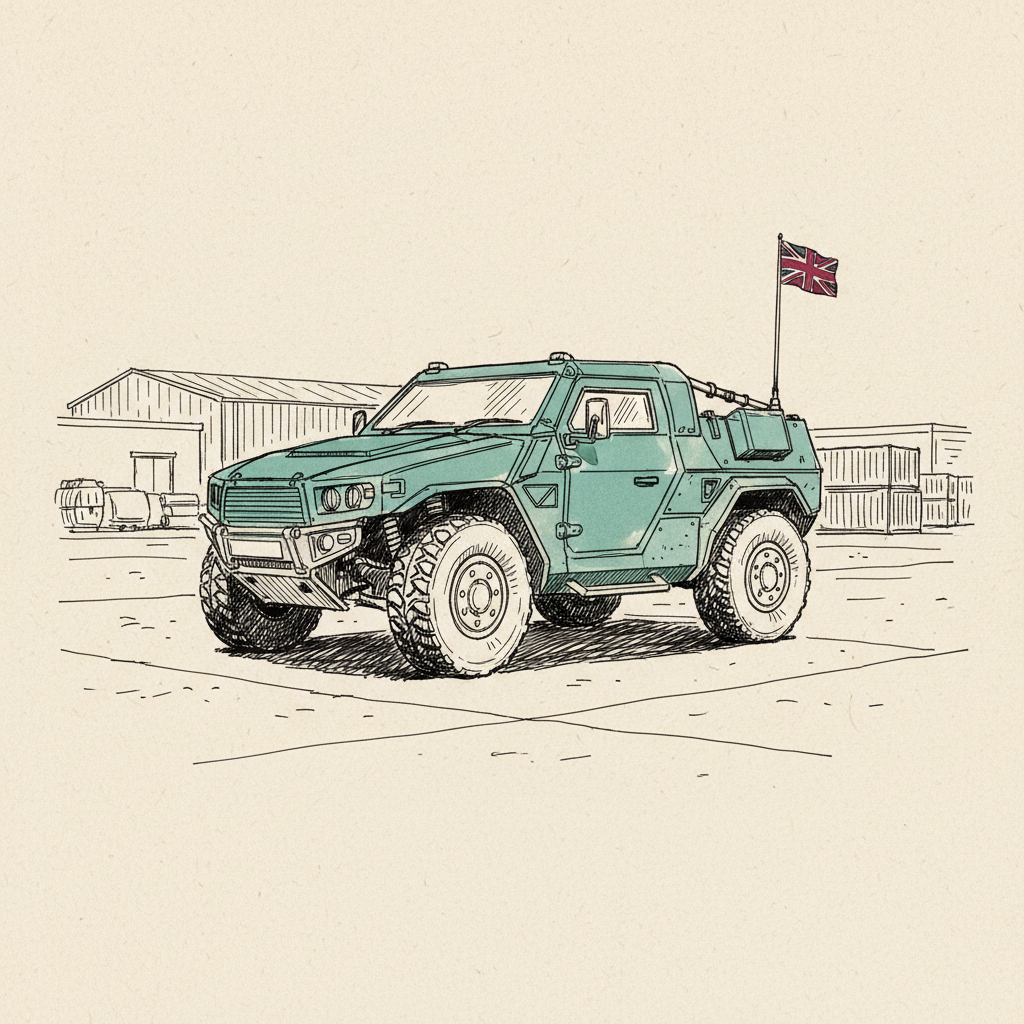
Jackal
Supacat-built high-mobility wheeled patrol vehicle used by the British Army; basis for an optionally crewed UGV variant in development with ARX Robotics.
The Jackal is Supacat's high-mobility patrol vehicle in service with the British Army, put forward as the UK's first optionally crewed land platform when ARX Robotics and Supacat signed a Memorandum of Understanding on 28 April 2026 to develop an autonomy-capable variant built in Britain.
Last refreshed: 24 July 2026 · Appears in 1 active topic
How close is the Jackal to becoming an optionally crewed autonomous British Army platform?
Timeline for Jackal
Mentioned in: Jackal IV produced 58 arrests in 23 countries
Cybersecurity: Threats and DefencesUkraine pulls in Europe's robot supply
Autonomous Systems: Land & SeaBackground
The Jackal is a British high-mobility, air-portable patrol vehicle built by Supacat and used by the British Army and allied special operations forces. Its open-frame design trades armour for speed and payload flexibility, making it suited to rapid overland movement and patrol in demanding terrain, carrying weapon mounts, communications equipment or logistics loads depending on role.
In April 2026 the Jackal became the candidate for the UK's first optionally crewed land platform, when ARX Robotics and Supacat signed a Memorandum of Understanding to develop an autonomous-capable variant with UK-based manufacturing. The conversion would preserve the vehicle's existing roles while allowing it to operate without personnel aboard in high-threat environments such as mine-contaminated ground or direct-fire zones.
The partnership pairs ARX's autonomy software with Supacat's established UK supply chain and maintenance network. For British Army land-autonomy planning, converting a known, tested platform is a lower-risk PATH than fielding an entirely new uncrewed vehicle from scratch.
What is the British Army Jackal vehicle?
Is the Jackal being converted to an autonomous vehicle?
Who makes the Jackal vehicle and where is it built?

