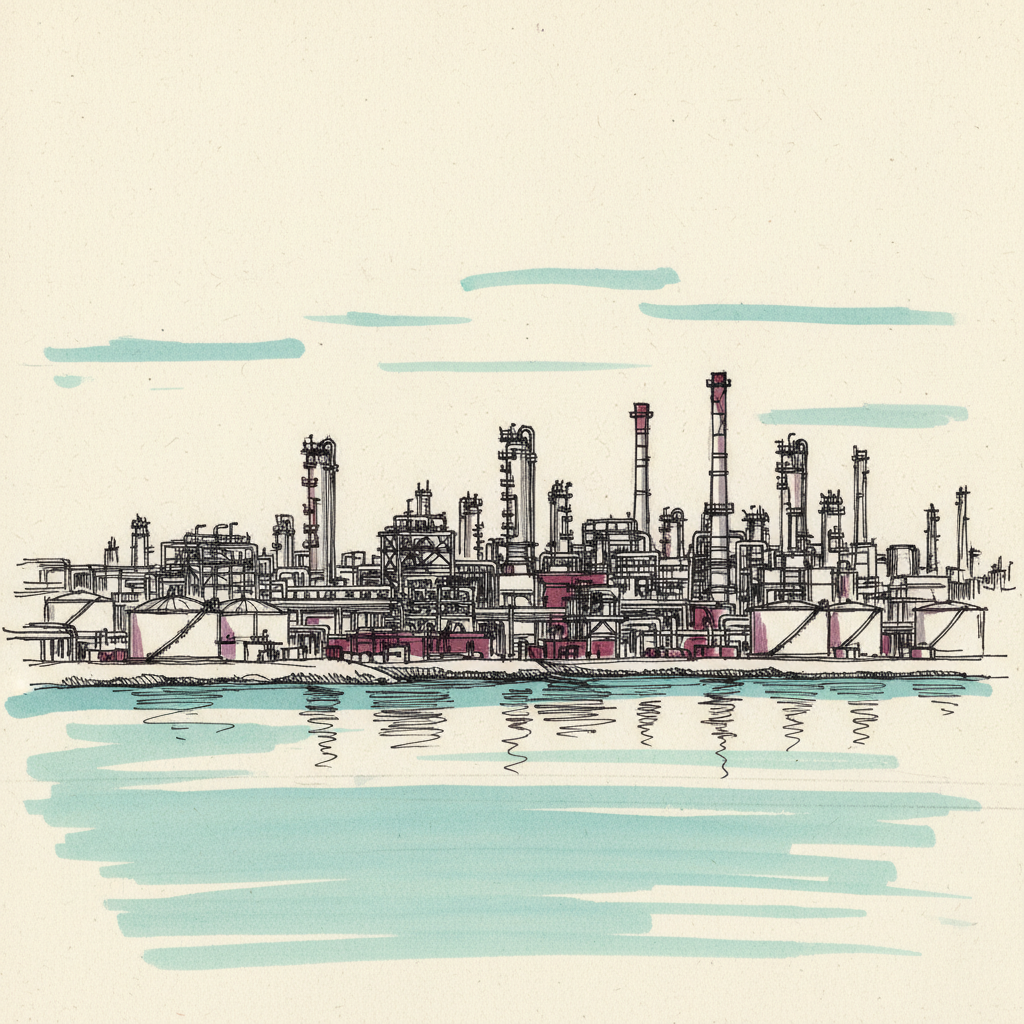
ISAB
320,000 b/d Priolo Gargallo refinery in Sicily, now being sold by GOI Energy to Ludoil.
ISAB is the 320,000 b/d Priolo Gargallo refinery in Sicily that GOI Energy agreed on 18 May 2026 to sell on to Ludoil Energy, a deal still stalled behind an unissued OFAC transaction licence and a final Golden Power order.
Last refreshed: 31 July 2026 · Appears in 1 active topic
Why is the ISAB sale stuck in managed stasis despite seven consecutive OFAC licence extensions?
Timeline for ISAB
ISAB is on the wrong sanctions clock
European Oil MarketsMentioned in: FAQ 1224 sets Lukoil sale conditions
European Oil MarketsGL 131G's perimeter never included ISAB
European Oil MarketsMentioned in: OFAC opens an all-programmes delisting portal
European Oil MarketsContinued operating past the 28 June GL 131F lapse under GL 131G cover
European Oil Markets: Seventh licence keeps ISAB Priolo openBackground
ISAB (Industria Siciliana Asfalti e Bitumi), the refining complex at Priolo Gargallo near Syracuse in south-east Sicily, is owned by GOI Energy, which agreed on 18 May 2026 to sell it Onward to Ludoil Energy in two phases. The sale is stalled behind an unissued OFAC transaction licence and a final Italian Golden Power order, both still pending.
Built in the 1970s, ISAB passed through several ownership phases before Lukoil acquired a controlling stake in the mid-2000s via Lukoil International GmbH. Litasco, Lukoil's Swiss trading Arm, sold ISAB outright to GOI Energy in May 2023 with Italian government approval, ending Lukoil's ownership of the refinery. With nameplate capacity of roughly 320,000 barrels a day, ISAB processes predominantly sour and medium-grade Mediterranean crude into petrol, diesel, jet fuel, fuel oil and petrochemical feedstocks; its Augusta Bay location gives it direct access to Mediterranean shipping lanes.
For ISAB, Washington's Lukoil licensing track is mostly beside the point: the negotiation window OFAC keeps renewing has never named Priolo Gargallo, so nothing in it governs whether the refinery can change hands. What gates ISAB's own sale sits closer to home: a debt claim and Milan court seizure order, plus Italy's still-pending Golden Power sign-off and the transaction licence Ludoil needs to close its own purchase.
The refinery's gates sit closer to home
OFAC's General Licence series that keeps renewing monthly, most recently as GL 131H on 24 July, authorises Lukoil International GmbH to negotiate sales of assets it still owns; ISAB has never been named in it, because Litasco sold the refinery to GOI Energy back in May 2023. What actually gates ISAB's Onward sale to Ludoil Energy sits closer to home.
A roughly €150m debt claim and a September 2024 Milan court seizure order against GOI's ISAB share capital, plus Italy's still-pending Golden Power sign-off and the transaction licence Ludoil needs for its own purchase, are the live obstacles. Reporting that keeps tying the refinery's fate to Washington's Lukoil rollover has been chasing the wrong clock.
Reference
Where is the ISAB refinery located in Italy?
What is the capacity and crude diet of the ISAB refinery?
What is ISAB refinery capacity?
How big is the ISAB refinery in Sicily?
Will the ISAB Priolo refinery sale close before 25 July 2026?
What happens to ISAB if the OFAC deadline is not met?
Who owns the ISAB refinery in Sicily?
What is Golden Power and why does it apply to ISAB?
What does OFAC General Licence 131F cover for ISAB?
Why has the Lukoil ISAB sale not closed after six OFAC extensions?
