Interaction nets
Graph-rewriting model of computation from 1990; Tendrils Compute is building chips on it.
Last refreshed: 14 November 2026 · Appears in 1 active topic
Can a 1990 model of computation beat today's processors at running AI agents?
Timeline for Interaction nets
Mentioned in: Tendrils lands a reported $30m seed
UK Startups and InnovationBackground
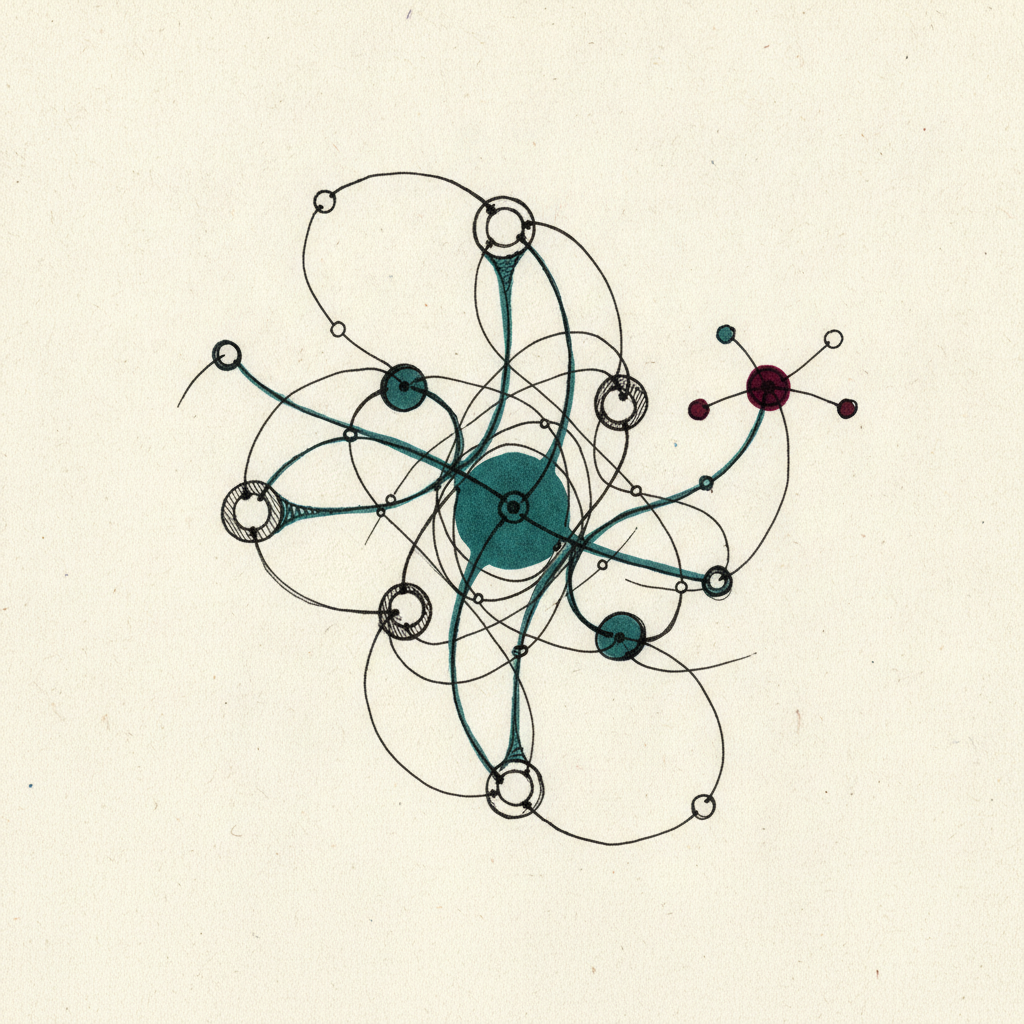
Interaction nets are a model of computation in which a program is a graph of agents joined by wires. Computation happens when two agents meet at their principal ports and a rewrite rule replaces the pair with a new piece of graph. The French logician Yves Lafont introduced them in a 1990 paper, generalising the proof nets of linear logic, and in 1997 described three interaction combinators that can simulate any other interaction system.
Because each rewrite touches only two agents, many rewrites can run at once without central control, which makes the model naturally parallel. Researchers have used it to implement the Lambda calculus efficiently.
The model moved from theory towards hardware in 2026. Tendrils Compute, a Cambridge startup, raised a seed round reported at about $30m, led by Benchmark, to build general-purpose chips on interaction nets for AI agents. Its open-source Vine language targets that kind of parallel-first design.
What are interaction nets?
Why are interaction nets good for parallel computing?
Which company is building chips based on interaction nets?


Written with AI from Lowdown's published reporting. Not individually reviewed by an editor. Updated 14 November 2026. Editorial standards.