IMF
Global lender of last resort whose own research confirms AI job polarisation while warning of bubble-level valuations.
Last refreshed: 10 April 2026 · Appears in 2 active topics
When the IMF's own data confirms AI polarisation, who is its audience?
Timeline for IMF
Mentioned in: General License U expires inside the ceasefire window
Iran Conflict 2026Mentioned in: UK leads 40-nation rival coalition against blockade
Iran Conflict 2026Mentioned in: Iran strikes five Gulf states on ceasefire day
Iran Conflict 2026Mentioned in: Brent's biggest single-day drop since 1991 Gulf War
Iran Conflict 2026How will the Iran conflict affect global economic growth?
What did the IMF say about AI valuations in 2026?
How does the IMF differ from the World Bank?
Background
The International Monetary Fund is the 190-member institution founded at Bretton Woods in 1944 to stabilise the post-war monetary order. It serves as the world's emergency lender, extending balance-of-payments rescue loans to member states in exchange for fiscal and structural reform conditions. Its World Economic Outlook and Global Financial Stability Reports set the terms of sovereign debt negotiations worldwide.
In March 2026, Managing Director Kristalina Georgieva warned that AI asset valuations are approaching dot-com-bubble levels, with the Shiller CAPE ratio at 40 against a 1999 peak of 45, cautioning that a sharp correction could drag down world growth . The warning landed as Morgan Stanley disputed the IMF's read , placing the Fund at the centre of a live dispute over AI exuberance.
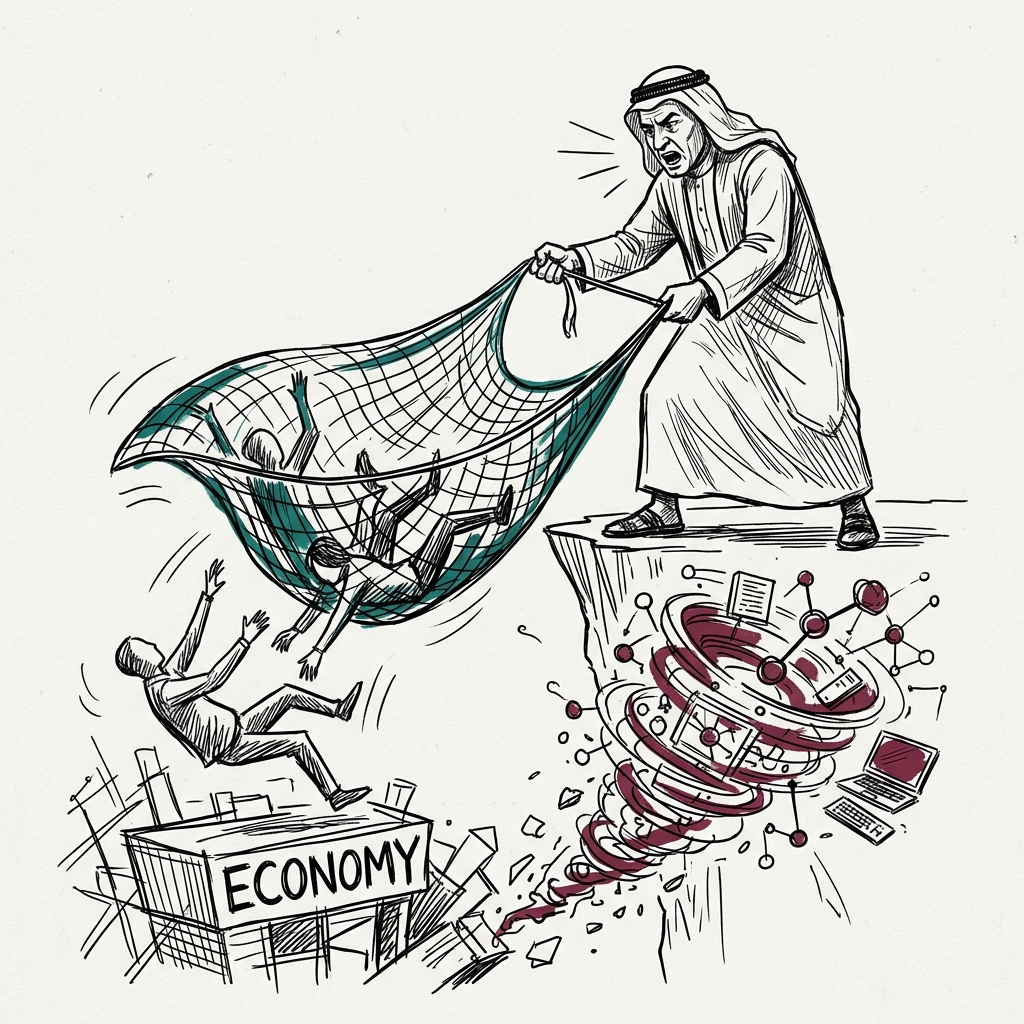
The IMF's own research Arm published SDN2026/001 in April, finding that AI skills command a 3 to 3.4% wage premium but middle-skilled workers capture zero benefit , confirming job polarisation through the Fund's own data rather than external economists. The finding lands as Goldman Sachs calculates AI is substituting 25,000 US jobs per month and as the IEA, IMF, and World Bank have jointly called the Hormuz disruption one of the largest energy supply shortages in modern history . The institution that warns against instability now documents the labour fracture driving it.
What is the Shiller CAPE ratio and why does it matter?
What does the IMF say about AI and wages?


