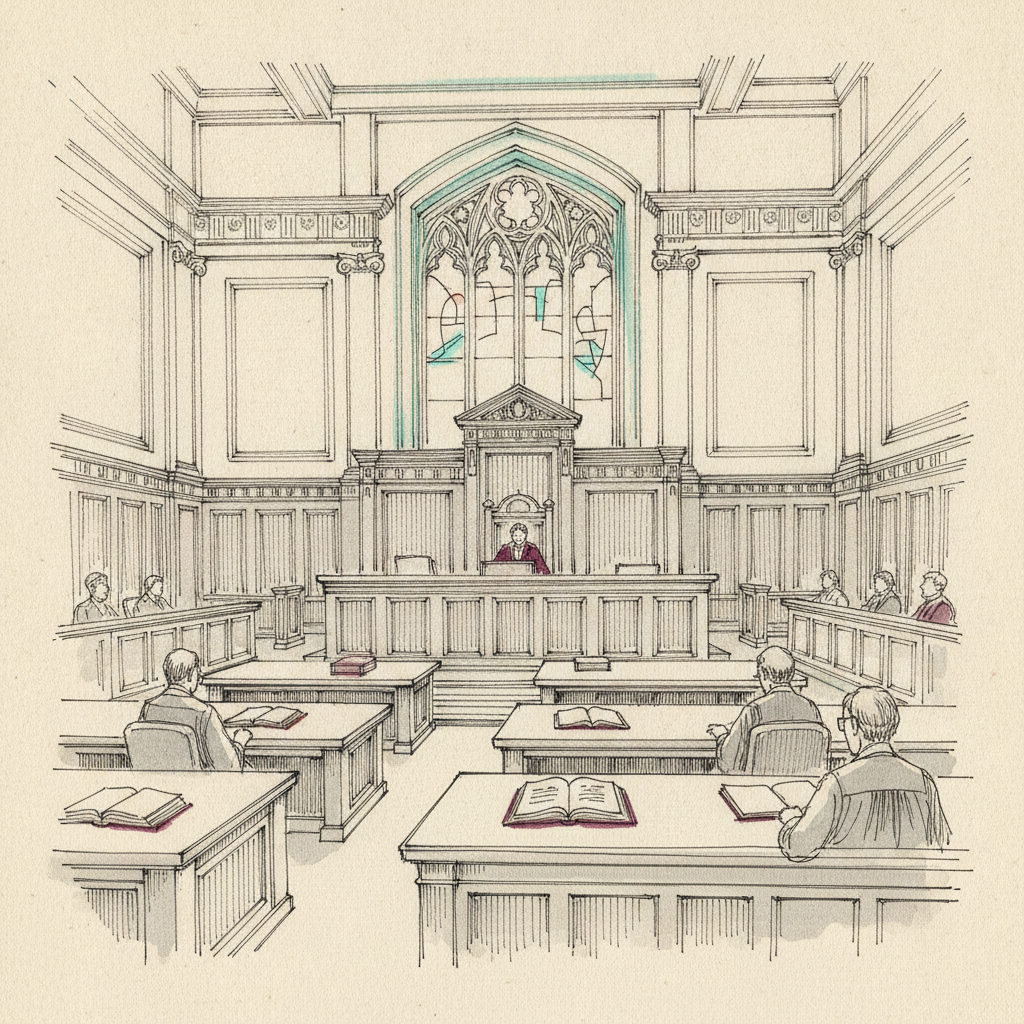
High Court of England and Wales
Senior civil court of England and Wales that hears judicial review claims.
Councils weighing a challenge to England's 2026 reorganisation decisions would file in the High Court, and for decisions dated 16 July the window shuts around 16 October 2026, after ministers withdrew four March decisions on 7 September.
Last refreshed: 7 October 2026
Timeline for High Court of England and Wales
Mentioned in: McMahon drops four mergers on legal advice
UK Local Elections 2026Background
The High Court, formally His Majesty's High Court of Justice, is one of the Senior Courts of England and Wales. It sits in three divisions: King's Bench, Chancery and Family. The King's Bench Division houses the Administrative Court, which reviews whether public bodies, ministers and councils among them, have acted lawfully.
Under Civil Procedure Rule 54.5, a judicial review claim must be lodged quickly, and no later than three months after the grounds first arose.
the Court's record on council reorganisation cuts both ways. In June 2010 it quashed the orders turning Exeter and Norwich into unitary councils, in Devon County Council v Secretary of State. In 2018 Christchurch Borough Council lost its claim against merger into Bournemouth, Christchurch and Poole, which opened in April 2019.
Reorganisation claims head for the court
Ministers withdrew the March reorganisation decisions for Essex, Hampshire, Norfolk and Suffolk on 7 September 2026, citing updated legal advice after councils challenged them. The decisions made in July for 14 other counties were paused for review but remain in force, so a council that wants to contest one must bring its judicial review to the High Court by around 16 October.
Lancashire County Council has authorised its lawyers to act, possibly through a protective claim it would ask the Court to hold over. Other councils have sent pre-action letters. Whether any case reaches a hearing turns on what the ministers' rapid review decides.