Hatch Act
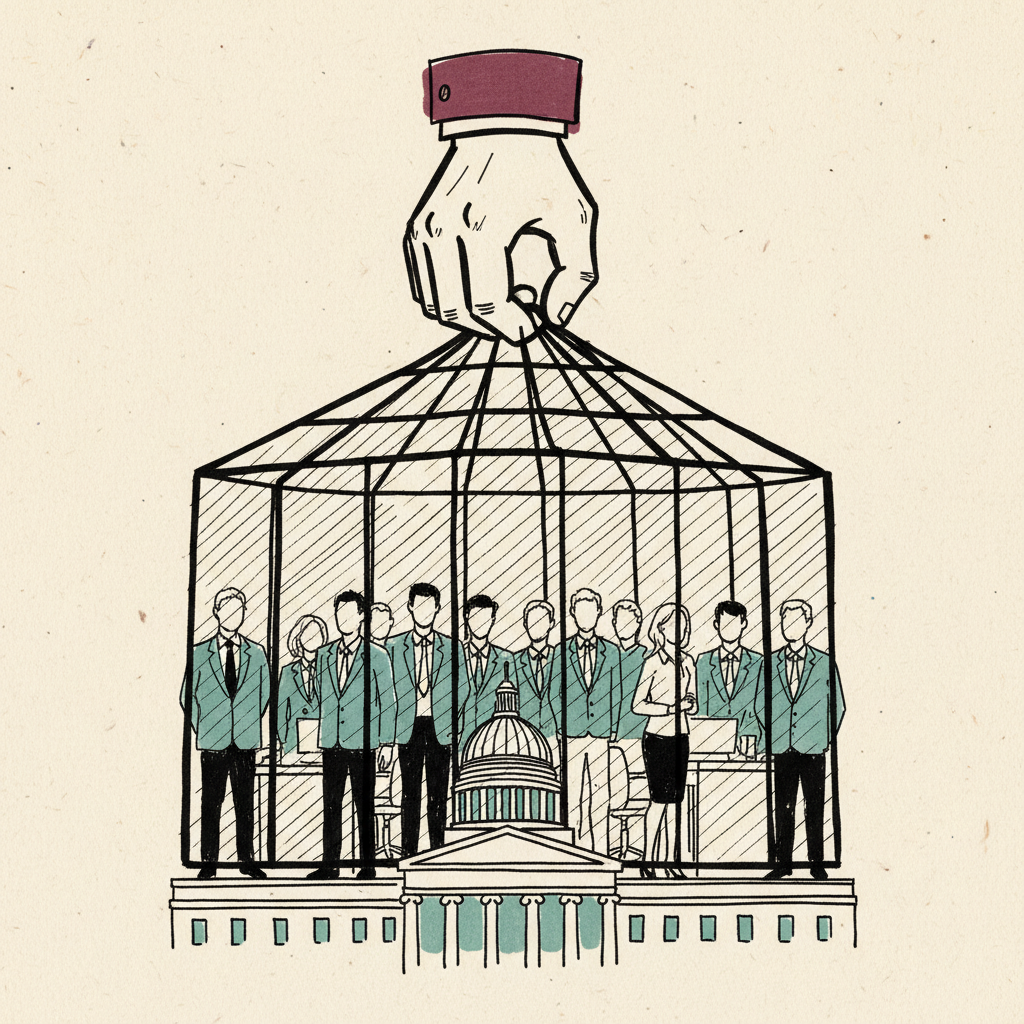
Federal law barring executive branch employees from partisan political activity.
Last refreshed: 7 May 2026 · Appears in 1 active topic
Does TrumpIRA.gov's branded midterm rollout expose White House staff to Hatch Act liability?
Timeline for Hatch Act
Mentioned in: White House signs nothing on elections
US Midterms 2026Trump signs TrumpIRA.gov order before midterms
US Midterms 2026Mentioned in: SAVE System Flags 1 in 6 Wrongly
US Midterms 2026Background
The Hatch Act of 1939 is the federal law that restricts most executive branch employees from engaging in partisan political activities while on duty or using government resources. Named after Senator Carl Hatch of New Mexico, it was enacted in response to concerns that federal workers were being coerced into campaign activity during the New Deal era. Enforcement falls to the Office of Special Counsel (OSC), which investigates complaints and can recommend disciplinary action including removal.
The Hatch Act became directly relevant to the 2026 midterms when two former DOGE staffers were referred to the OSC for possible violations after the DOGE-led voter data programme was found to have been coordinated with True the Vote, a partisan election-integrity organisation. A DOGE employee had signed a voter data agreement with True the Vote on 24 March 2025, raising questions about whether government employees were using official access to voter databases to assist a politically aligned non-governmental organisation.
The Hatch Act is widely viewed as having diminished enforcement force during the Trump administration following high-profile instances where violations were found but no penalties applied. Critics argue this creates a structural gap: the law remains on the books but the enforcement mechanism has been selectively deployed, making it less of a deterrent for political operatives working within the executive branch.
President Trump's 30 April 2026 signing of the TrumpIRA.gov executive order, which created a branded consumer-facing retirement savings product with six months of Runway into the November 2026 midterm window, raised fresh Hatch Act questions. The product bears the President's name, was signed 26 days before the filing Deadline for federal candidates, and appeared on the White House Presidential Actions portal alongside routine contracting orders.
The OSC's Hatch Act authority does not cover the President or Vice President, WHO are explicitly exempt under the statute. The question is whether staff WHO promote TrumpIRA.gov to voters using government resources or official time cross the line. The earlier DOGE referral and the TrumpIRA.gov launch represent two concurrent Hatch Act pressure points in the same midterm cycle, reinforcing the pattern of weakened enforcement making the act a deterrent in name only.
What is the Hatch Act and who does it apply to?
Did DOGE violate the Hatch Act by working with True the Vote?
Did DOGE employees violate the Hatch Act by working with True the Vote?
Does TrumpIRA.gov violate the Hatch Act?
Why is the Hatch Act rarely enforced in practice?





