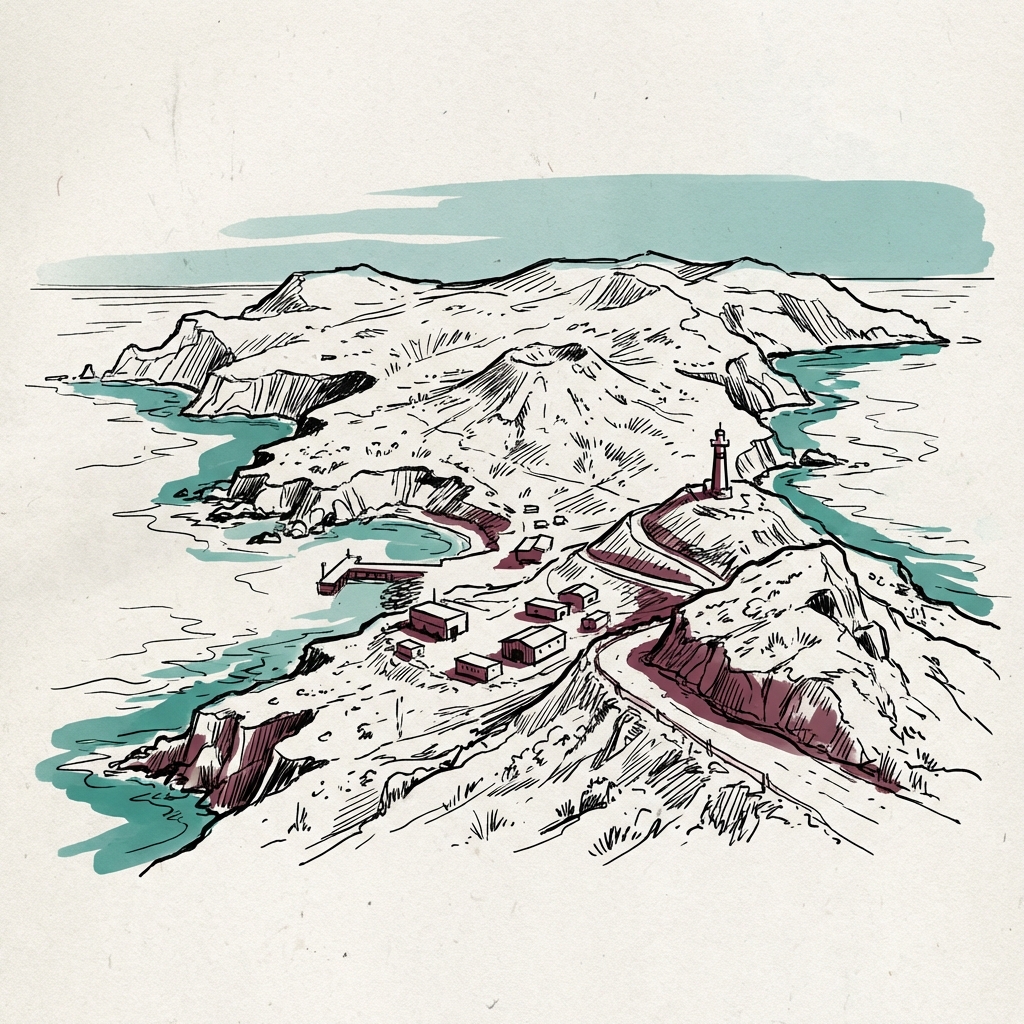
Guadalupe Island
Isolated Mexican island west of Baja California; the backup Artemis splashdown zone used when Pacific weather blocks the primary site.
Last refreshed: 9 April 2026 · Appears in 1 active topic
Why did Artemis I splash down near Guadalupe Island, and could it happen again on Artemis II?
Timeline for Guadalupe Island
Mentioned in: Recovery weather clears; San Diego zone confirmed
Artemis II Moon MissionRecovery Fleet in Position off San Diego
Artemis II Moon MissionBackground
Guadalupe Island (Isla Guadalupe) is a volcanic island owned by Mexico, approximately 250 kilometres west of the Baja California peninsula in the Pacific Ocean. It sits at roughly 29 degrees north Latitude, uninhabited except for a Mexican naval station and a research station, and is best known internationally as a protected great white shark habitat and a Californian SEA lion breeding colony. The island's nearest mainland port is Ensenada, roughly 350 kilometres to the northeast.
In the context of Artemis, Guadalupe Island is the backup splashdown zone when the primary Pacific recovery site off San Diego is blocked by weather. It was used as the recovery zone for Artemis I in December 2022, when a Pacific cold front moved through the primary area and forced the recovery south. The distance shift extended recovery operations and complicated logistics for the uncrewed test flight. For Artemis II, Flight Director Henfling noted that a Pacific cold front approaching for 10 April 2026 had not yet forced a site change, but conditions were being monitored.
The use of Guadalupe as a backup reflects the narrow geographic corridor available for Pacific capsule recovery. The Orion trajectory is fixed by the return-from-Moon entry angle; recovery assets can reposition but the splashdown zone cannot be moved significantly without a trajectory change. For a crewed flight, a site shift to Guadalupe adds travel time and complexity to medical extraction, making it a consequential decision rather than a routine contingency.
Where did Artemis I splash down?
Could Artemis II splash down near Guadalupe Island?
What is Guadalupe Island?
Why does NASA have a backup splash down site?



