What efficiency and cooling conditions must a data centre meet under Singapore's 2026 roadmap?
Timeline for Green Data Centre Roadmap
Singapore prices its conditions up front
Data Centres: Boom and BacklashBackground
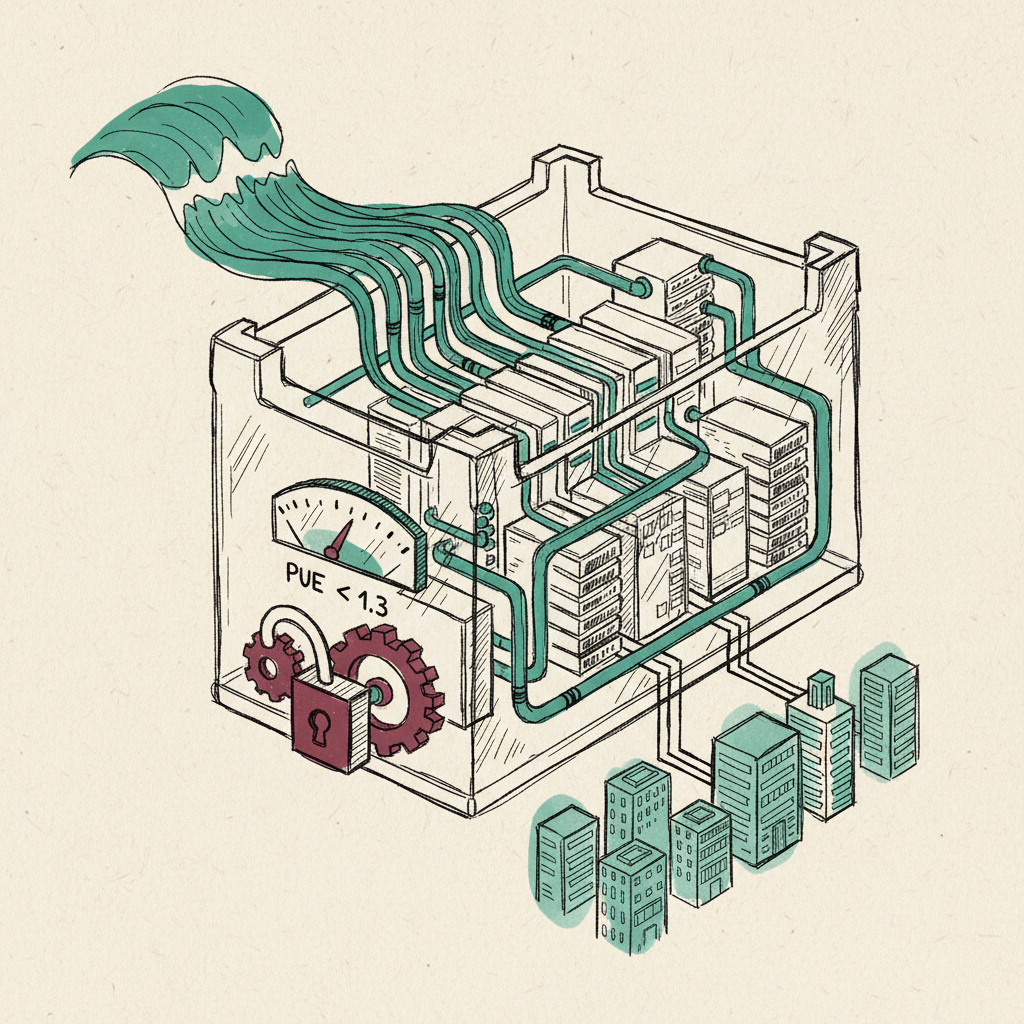
Singapore's Green Data Centre Roadmap, launched by IMDA on 30 May 2026 and announced by Deputy Prime Minister Heng Swee Keat, ended a de-facto freeze on new data-centre capacity that had been in place since approximately 2019. It unlocks 300 MW of near-term capacity for operators WHO achieve a system-wide PUE (power usage effectiveness) of 1.3 or below at full IT load within ten years, plus a further 200 MW tranche reserved for operators demonstrating certified green energy supply. All operators must adopt liquid or immersion cooling and maintain data-hall temperatures at 26°C. Conditions are fixed at the permit stage, before construction begins.
The roadmap positions Singapore's approach in direct contrast to both Johor's abrupt capacity halt in 2026 and the US model of consenting builds first and allocating costs through litigation afterward. The 1.3 PUE ceiling at full IT load effectively rules out air cooling at AI rack densities, making liquid or immersion cooling a structural requirement rather than a recommended practice. The 200 MW green-energy tranche creates a two-tier market: operators with established renewable energy certificate programmes — typically hyperscalers — gain preferential access to the protected allocation.
The roadmap is being watched as a replicable template by regulators in South Korea, Japan, and other land- and grid-constrained Asian markets. It adapts the conditional-access model that Ireland's Commission for Regulation of Utilities applied to renewables obligations in December 2025 — applied here to efficiency and cooling-technology requirements instead. Structure Research estimates the combined 500 MW release will accommodate roughly four to five new hyperscale campuses, less than one year of pre-freeze demand at Singapore's 2021–23 growth rate.