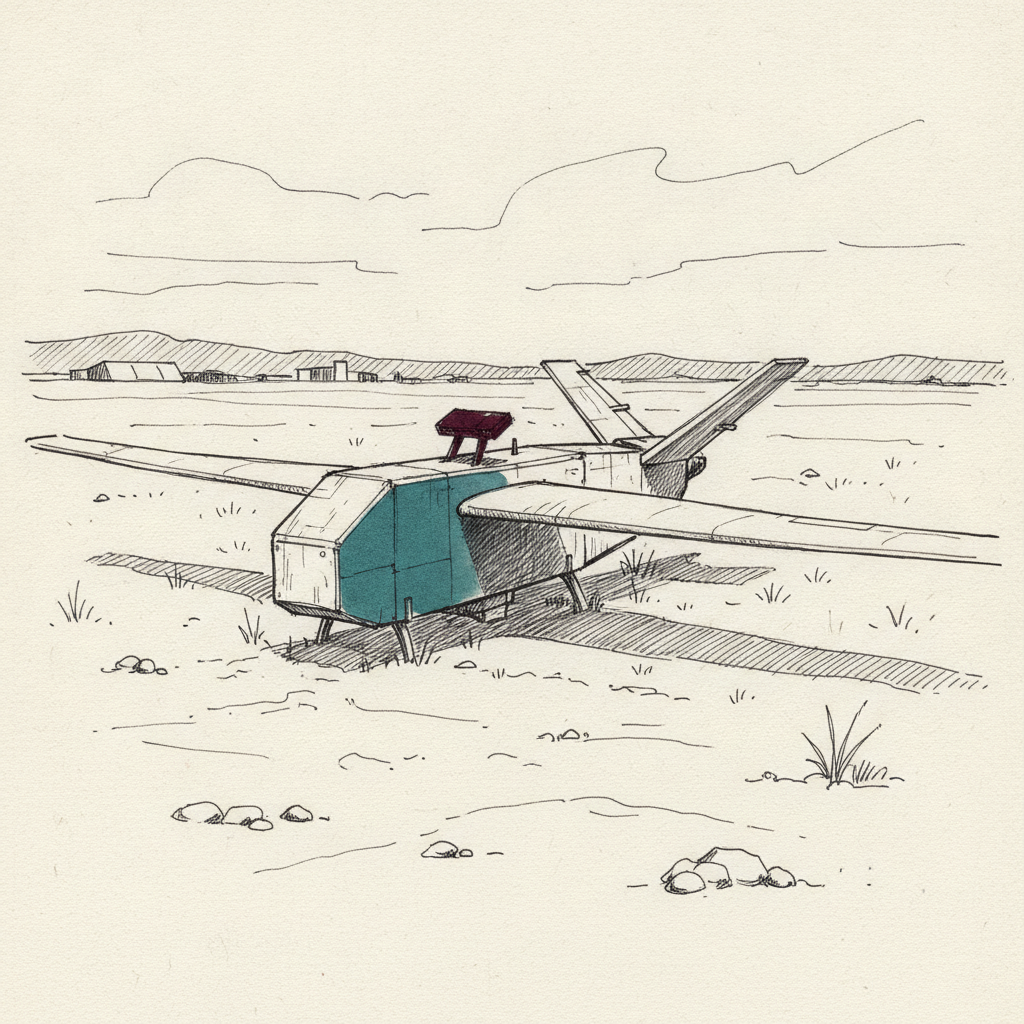
Gerbera decoy drone
Cheap Russian plywood-and-foam drone that decoys Ukrainian air defences away from Shahed-type strike drones.
Russia fired more than 850 drones at Ukraine on the night of 14 to 15 October 2026, and Ukraine's Air Force stopped 536. Gerbera decoys have padded such raids since 2024, so interceptors go on targets that carry no warhead.
Last refreshed: 18 October 2026
Why does Russia fly drones that carry no warhead at Ukraine?
Timeline for Gerbera decoy drone
Mentioned in: Russia fires 850 drones across Ukraine
Russia-Ukraine War 2026Background
The Gerbera is a cheap Russian drone built mainly to draw fire. A plywood frame sits inside a polystyrene foam body, driven by cheap, largely foreign-made electronics. Ukrainian officials put its cost at about $10,000, roughly a tenth of the price of a Shahed.
Russia has flown it alongside Shahed-type strike drones since 2024. Mixed salvos force Ukraine to spend interceptors on targets that carry no warhead, which lets more strike drones through. The method scales with the size of a raid, and on the night of 14 to 15 October 2026 Russia launched more than 850 drones at 15 regions. Ukraine's Air Force stopped 536 of them, with impacts at 31 locations.
Russian forces have also fitted warheads to some, and versions carrying cameras and mesh modems cost far more than the basic decoy.
Bigger salvos put decoys to work
Russia sent more than 850 drones at 15 Ukrainian regions overnight on 14 to 15 October 2026, outnumbering the roughly 800 it launched on 13 May. Ukraine's Air Force reported 536 stopped, with impacts at 31 locations.
Raids of this size are where the Gerbera does its job. Russia has mixed the foam decoys into Shahed-type salvos since 2024, so part of each wave carries no warhead yet still draws a missile or an interceptor. At about $10,000 a decoy, by Ukrainian estimates, a larger launch count costs Russia far less than it costs Ukraine to answer.
What is a Gerbera drone?
How much does a Gerbera drone cost?
Why does Russia use decoy drones?
Written with AI from Lowdown's published reporting. Not individually reviewed by an editor. Updated 18 October 2026. Editorial standards.