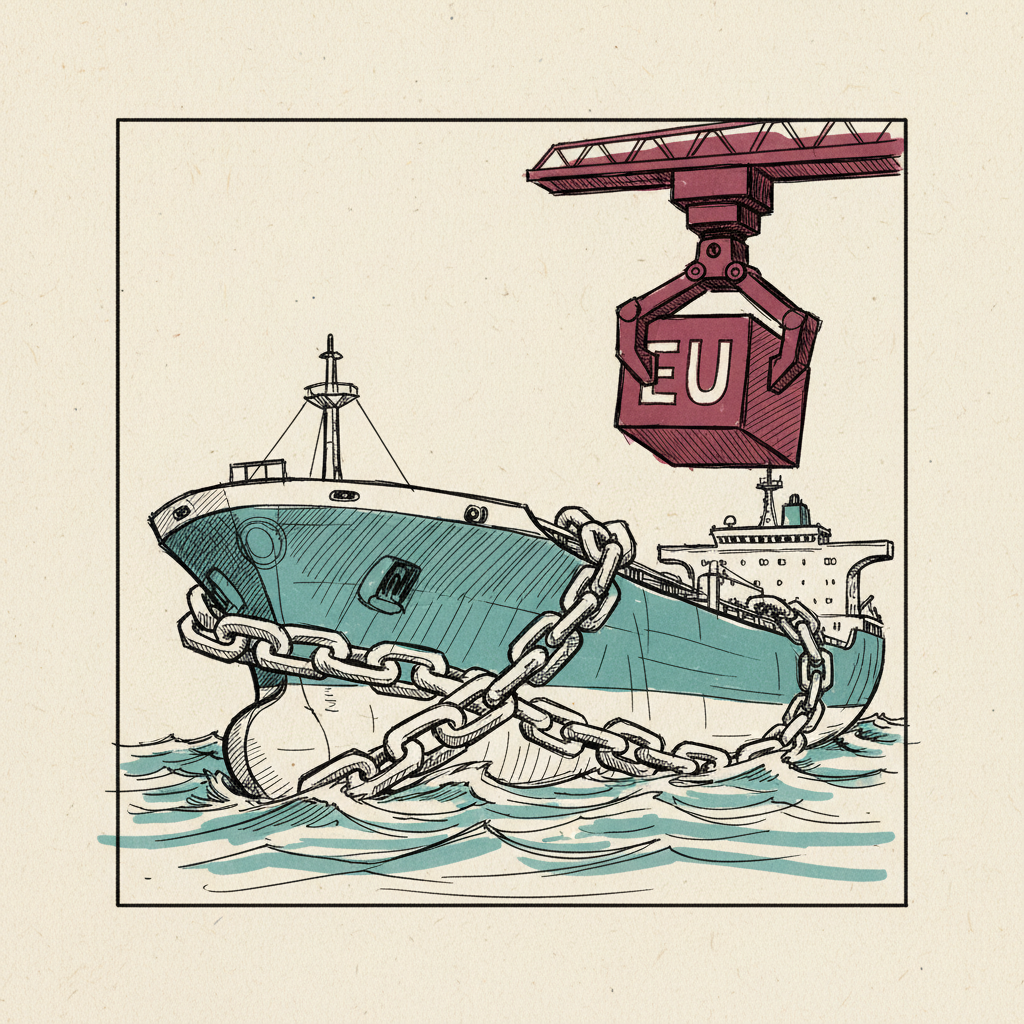
EU 21st sanctions package
EU 21st Russia sanctions round targeting shadow-fleet tonnage and carry costs, announced May 2026.
The EU's 21st Russia sanctions package, formally proposed on 9 June 2026, remains blocked from full adoption over a Russia oil price cap freeze and a separate Raiffeisen Bank International dispute, with a fresh COREPER vote pending and no outcome yet settled.
Last refreshed: 20 July 2026 · Appears in 2 active topics
What happens to the Russia oil price cap if the 15 July formula review is not blocked by January 2027?
Timeline for EU 21st sanctions package
EU freezes $44 Russia oil cap 12 months
European Oil MarketsSix states hold the 22 July Coreper vote
European Oil MarketsStayed blocked on LNG phase-out and Raiffeisen-access disputes
European Oil Markets: EU freezes Russia oil cap for a weekProposed first-ever designations of shadow-fleet bunkering, STS and port-service providers
European Oil Markets: EU targets shadow fleet's service layerEU Council opens Ukraine accession talks
Russia-Ukraine War 2026Background
The European Commission formally proposed the EU 21st Russia sanctions package on 9 June 2026, following Commission President Ursula von der Leyen's initial announcement on 26 May. A mini-package of 34 individuals and 47 entities was adopted by the EU Council on 15 June 2026, ahead of the full package. The package's core objective is to freeze the G7 Russia oil price cap and ADD further shadow-fleet vessel listings and bank and oil-trading entity designations, rather than to name Russian oil majors directly.
The 21st package is the direct follow-through on a deferral in the 20th package, adopted 23 April 2026, which established the legal basis for a full maritime-services ban covering P&I insurance and vessel management for Russian crude shipping but withheld the measure for lack of EU-27 unanimity. That ban remains blocked by Malta and Greece, WHO have opposed it since April, citing port-economy exposure. Full adoption of the 21st package as a whole is still pending as unanimity has not yet been reached, with member states holding out over conditions unrelated to oil itself.
How many vessels has the EU sanctioned in its Russia shadow-fleet campaign?
What is the difference between the EU 20th and 21st Russia sanctions packages?
How many EU sanctions packages have targeted Russia since the Ukraine invasion?
What does the EU 21st sanctions package do to Russian oil?
Why did the EU not include a maritime services ban in the 21st sanctions package?
What happened to the Russia oil price cap on 15 July 2026?
Why is Raiffeisen Bank International part of the EU 21st sanctions package dispute?
Has the EU 21st sanctions package on Russia been adopted?

