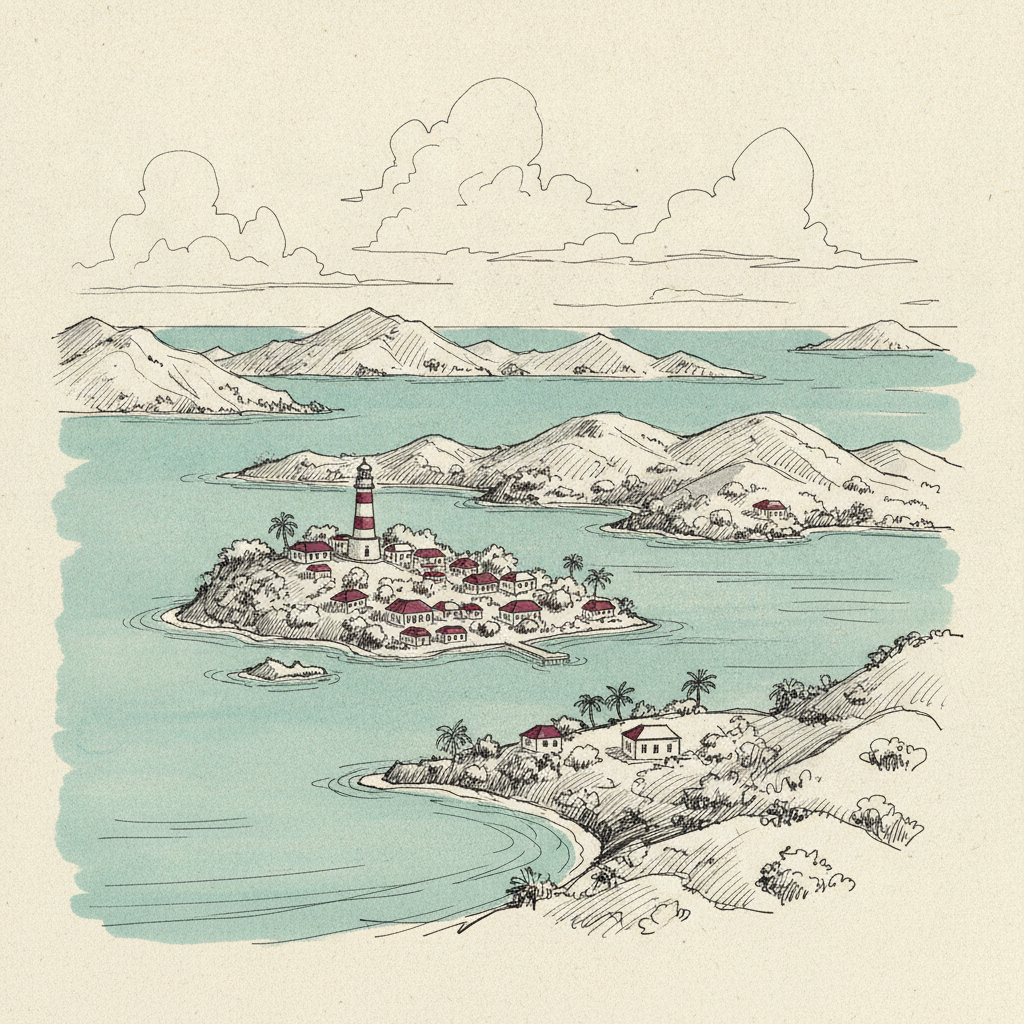
Eastern Caribbean
Island sub-region of the Caribbean whose states share the OECS and the Eastern Caribbean dollar.
Five Eastern Caribbean states, from Antigua and Barbuda to Saint Lucia, face a European Commission demand to close their citizenship-by-investment schemes by 1 June 2028, with visa-free Schengen access for their passports at stake.
Last refreshed: 4 October 2026
Will Eastern Caribbean passports lose visa-free access to Europe?
Timeline for Eastern Caribbean
Mentioned in: St Kitts says it will end passport sales
Nomads & CommunitiesMentioned in: Saint Lucia keeps its EU reply private
Nomads & CommunitiesMentioned in: Caribbean PMs ask EU for CBI transition
Nomads & CommunitiesBackground
Five OECS members sell citizenship through investment schemes that Brussels wants closed by 1 June 2028; Saint Lucia, St Kitts and Nevis, Grenada, Dominica and Antigua and Barbuda make up the group. Their passports carry visa-free access to the Schengen Area, and the EU decides who keeps it. Two of their prime ministers pressed for a longer wind-down in New York on 24 September 2026 and came away empty-handed.
The region has no single government. The Organisation of Eastern Caribbean States dates from the 1981 Treaty of Basseterre, revised in 2010, and has seven full members and five associate members; its Commission sits at Morne Fortune in Castries, Saint Lucia. Eight governments share the Eastern Caribbean dollar, issued by the Eastern Caribbean Central Bank in Basseterre, St Kitts, and pegged at EC$2.70 to the US dollar.
Those shared institutions let the five negotiate as one. Saint Lucia's prime minister, Philip J. Pierre, puts the schemes at about 10% of national revenue, and the states send a joint technical team to EU officials in October 2026.
Which Eastern Caribbean countries sell citizenship by investment?
Why does the EU want Eastern Caribbean citizenship schemes to close?
Which countries use the Eastern Caribbean dollar?
What is the Organisation of Eastern Caribbean States?
Written with AI from Lowdown's published reporting. Not individually reviewed by an editor. Updated 4 October 2026. Editorial standards.