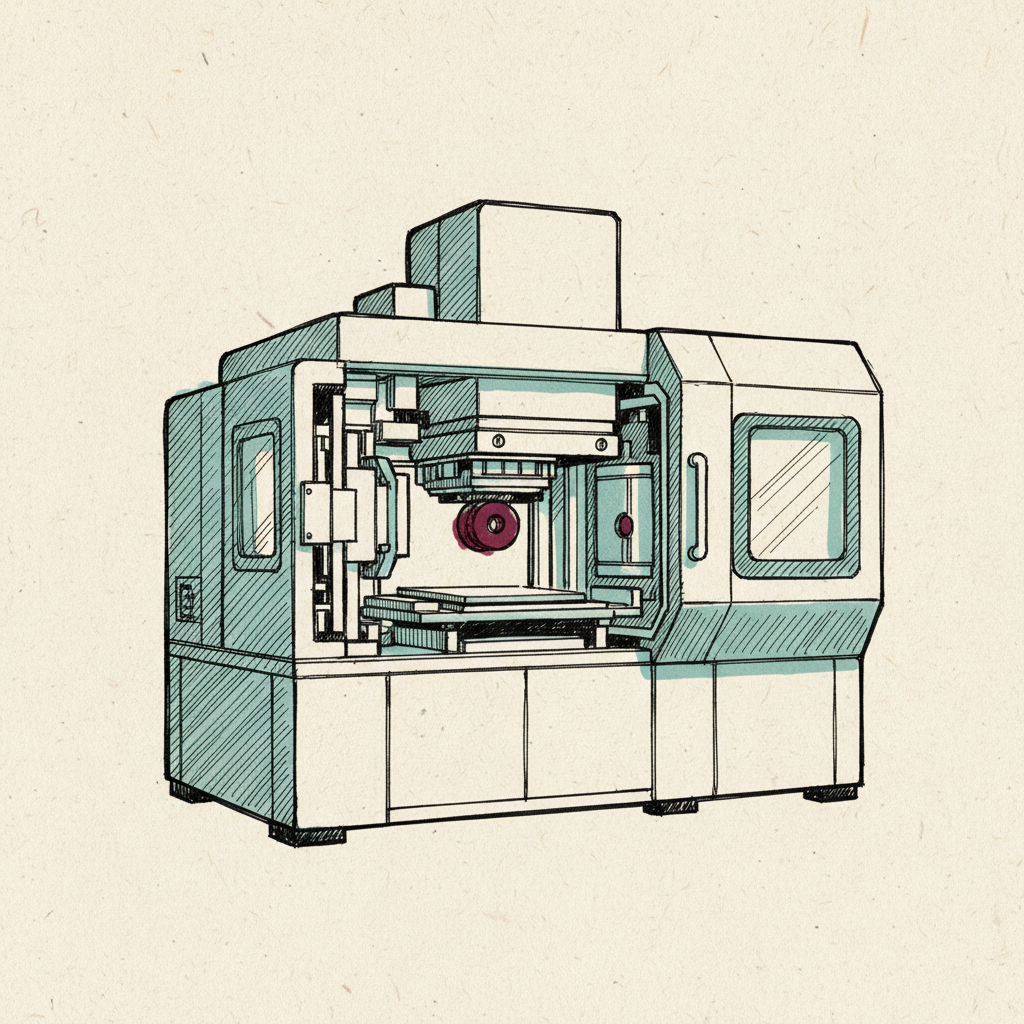
DUV
Deep ultraviolet lithography: the older ASML chip-printing technology now central to the US-China chip war.
Last refreshed: 17 May 2026 · Appears in 1 active topic
Will US pressure force the Netherlands to cut off China's access to ASML's DUV machines?
Timeline for DUV
Deployed as production equipment being shipped from Taiwan to Dresden
European Tech Sovereignty: TSMC ships gear to Dresden fab for 2027Mentioned in: ASML Q2 guidance lands €300m below consensus
European Tech SovereigntyWhat is the difference between DUV and EUV lithography?
Why does China want to keep buying DUV machines from ASML?
What is the MATCH Act and how does it affect ASML's DUV exports?
Background
Deep ultraviolet (DUV) lithography is a semiconductor manufacturing technique that uses 193nm or 248nm wavelength light to pattern transistors onto silicon wafers. It is the workhorse of global chip production — used for logic nodes from 28nm down to roughly 7nm when combined with multi-patterning techniques — and the technology at the centre of the escalating US-China semiconductor dispute. ASML is the world's dominant supplier of DUV systems, shipping both dry (ArF) and immersion (ArFi) variants from its Veldhoven facility. Chinese customers accounted for 33% of ASML's revenue in 2025, falling to 19% in Q1 2026 as export restrictions tightened. ASML's Q2 guidance missed consensus by €300 million, reflecting uncertainty over further DUV curbs .
DUV is strategically distinct from EUV (extreme ultraviolet, 13.5nm wavelength), which the Dutch government banned from export to China in 2019. EUV is required for sub-5nm nodes; DUV cannot reach those geometries regardless of multi-patterning tricks. However, DUV immersion machines are sufficient to produce 7nm-class chips at scale, which is precisely the capability enabling Huawei's Kirin 9000 series and China's domestic AI accelerator programmes. A Chinese fleet of several hundred DUV immersion machines is projected to produce millions of high-end logic dies in 2026. The US MATCH Act, introduced in 2026, would extend export restrictions to DUV immersion systems, requiring the Netherlands and Japan to act within 150 days before Washington moves unilaterally.
For European tech-sovereignty strategy, DUV export policy is a direct test of EU strategic autonomy: the Netherlands controls the chokepoint, but faces US pressure to align restrictions. The EU's ability to manage this without being reduced to a passive rule-taker in Washington's semiconductor strategy has significant implications for the bloc's credibility as a geopolitical actor.

