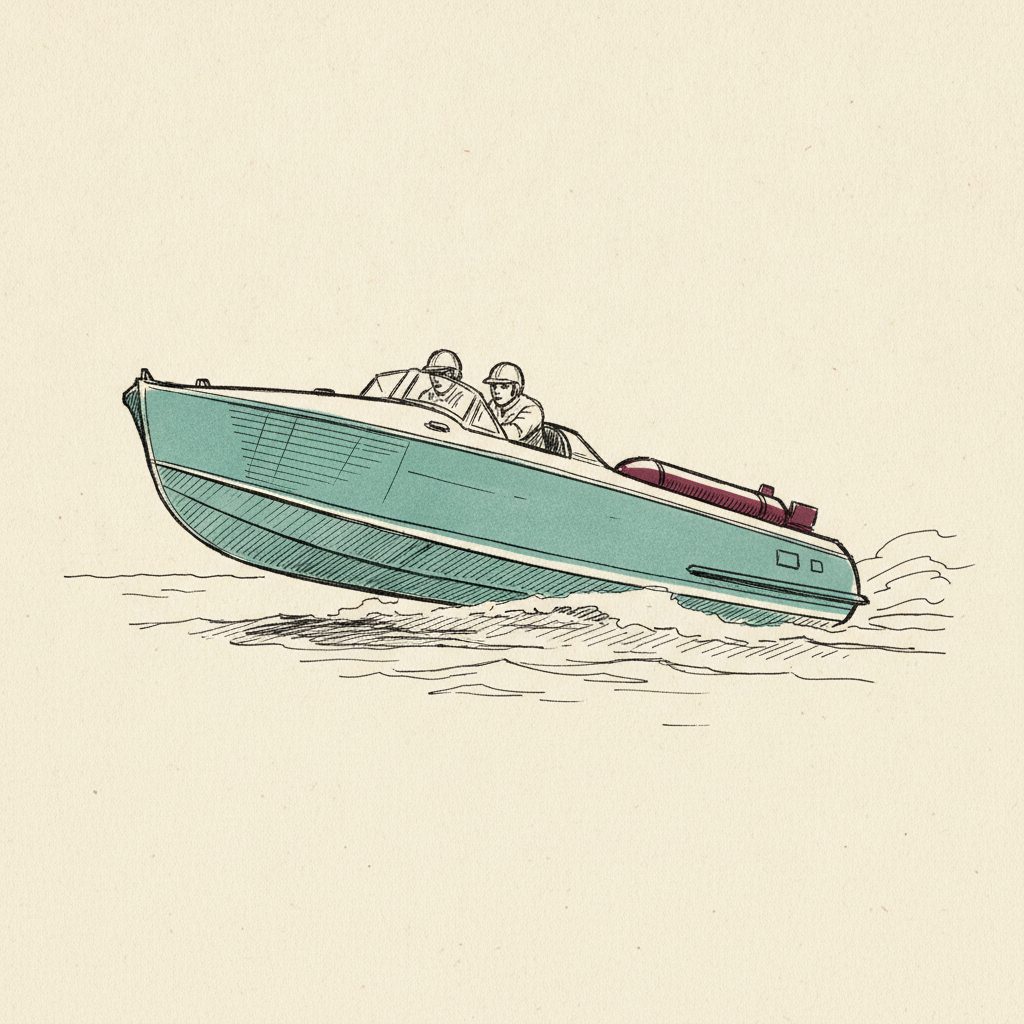
Coastal Motor Boat
British torpedo-armed motor boat of the First World War
On 17 June 1919 Lieutenant Augustus Agar's Coastal Motor Boat CMB-4 sank the Russian cruiser Oleg at Kronstadt with a torpedo, showing that a small, fast hull could kill a large warship.
Last refreshed: 7 October 2026
Timeline for Coastal Motor Boat
Mentioned in: Stark and MBDA plan Sea Venom on a USV
Autonomous Systems: Land & SeaBackground
The Coastal Motor Boat was a small, fast Royal Navy torpedo boat of the First World War. Thornycroft designed it, and the Admiralty ordered the first twelve in January 1916. The boats were built of mahogany planking in 40ft and 55ft versions, ran at more than 30 knots and dropped their torpedo backwards from a stern trough.
On 17 June 1919 Lieutenant Augustus Agar sank the Russian cruiser Oleg at Kronstadt in CMB-4, and won the Victoria Cross for it. CMB-4 survives at Portsmouth.
The CMB showed that a cheap, fast boat could threaten a large warship. Stark Defence and MBDA's plan, announced on 30 September 2026, to Arm a 12m uncrewed boat with anti-ship missiles revives that idea, with software in place of the crew.