Clean Water Act
US federal water-pollution law whose citizen suits need 60 days' written notice.
As of November 2026, the Clean Water Act is the law behind a threatened suit against QTS: river campaigners and Fayetteville homeowners have served the 60-day notice it requires over muddy runoff from a Georgia data-centre build.
Last refreshed: 26 November 2026
Can residents sue a data centre over muddy runoff?
Timeline for Clean Water Act
Fayette County bills QTS 109m gallons
Data Centres: Boom and BacklashMentioned in: Amazon pays $20.5m Boardman nitrate deal
Data Centres: Boom and BacklashMentioned in: Microsoft Mount Pleasant: 8M gallons via lawsuit
Data Centres: Boom and BacklashBackground
The Clean Water Act is the main US federal law against water pollution. It lets citizens sue a polluter directly, but only after written notice, which gives the target a window to fix the problem or settle.
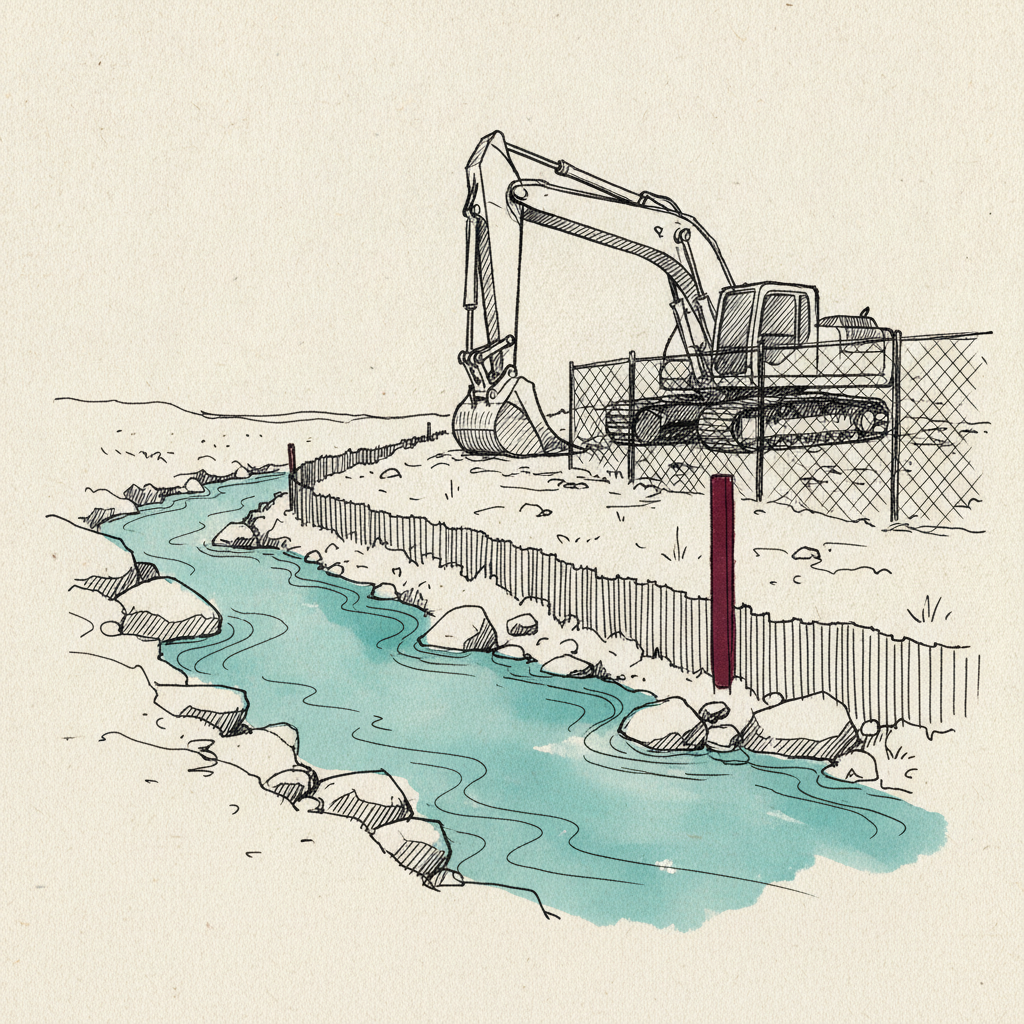
In Georgia the Act now reaches a data centre through its construction phase. Campaigners and neighbours have warned QTS, the Blackstone-owned operator, that they will sue over runoff from its Fayette County building site getting into a creek that feeds the Flint River.
The campaigners have not yet filed a case. If the dispute is not settled once the notice period runs out, the complaint would go to federal court under the Act. For data-centre builders, the lesson is that water law can bite while the ground is still being cleared, well before a cooling system is switched on.
Reference
Why must you give 60 days' notice before a Clean Water Act lawsuit?
When was the Clean Water Act passed?
What is the Clean Water Act?
Is QTS being sued under the Clean Water Act?
Written with AI from Lowdown's published reporting. Not individually reviewed by an editor. Updated 26 November 2026. Editorial standards.