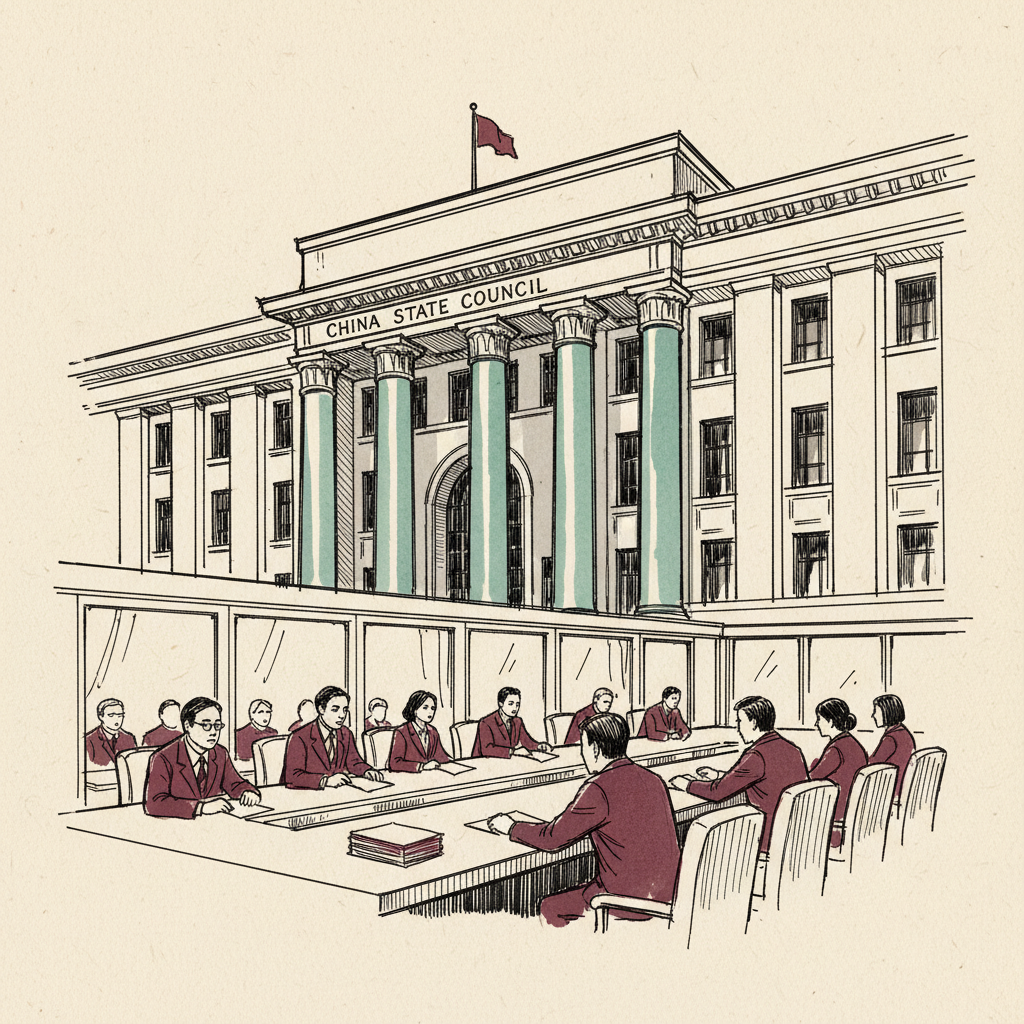
China State Council
China's Cabinet; issued Decree No. 835 on 13 April 2026 creating a Malicious Entity List aimed at countering US secondary sanctions.
Last refreshed: 28 April 2026 · Appears in 1 active topic
Why did China's State Council create its sanctions list before the US targeted Hengli?
Timeline for China State Council
Issued Decree No. 835 on 13 April creating a Malicious Entity List with asset-freeze and entry-ban powers
Iran Conflict 2026: GL-V opens a 24 May Iran deadlineIssued Decree No. 835 on 13 April creating a Malicious Entity List with asset-freeze, entry-ban and investment-restriction powers
Iran Conflict 2026: China's Decree 835 sits in reserveBackground
The State Council is China's chief administrative authority — its national Cabinet. Chaired by the Premier, it drafts legislation, oversees ministries, and issues executive decrees with the force of law.
On 13 April 2026, the State Council issued Decree No. 835, creating a Malicious Entity List eleven days before OFAC's Hengli designation. The decree assigned identification authority to the Ministry of Justice rather than MOFCOM and remained unactivated as of 28 April, functioning as a reserve retaliatory instrument.
What powers does China's State Council have over sanctions?
Did China activate its counter-sanctions against Hengli's US designation?
How does Decree No. 835 compare to US OFAC sanctions?

