C-Scope
Kongsberg Discovery sensor-fusion command software for subsea threat detection.
C-Scope is Kongsberg Discovery's sensor-fusion command layer, the decision software that tells HUGIN and other underwater robots when to investigate. On 3 July 2026 it became the deal-winning core behind a nameless customer's seabed-security order.
Last refreshed: 24 July 2026 · Appears in 1 active topic
Kongsberg just sold subsea-infrastructure protection to a buyer it won't name; who is that nervous about their cables?
Timeline for C-Scope
Kongsberg sells subsea guard in secret
Autonomous Systems: Land & SeaBackground
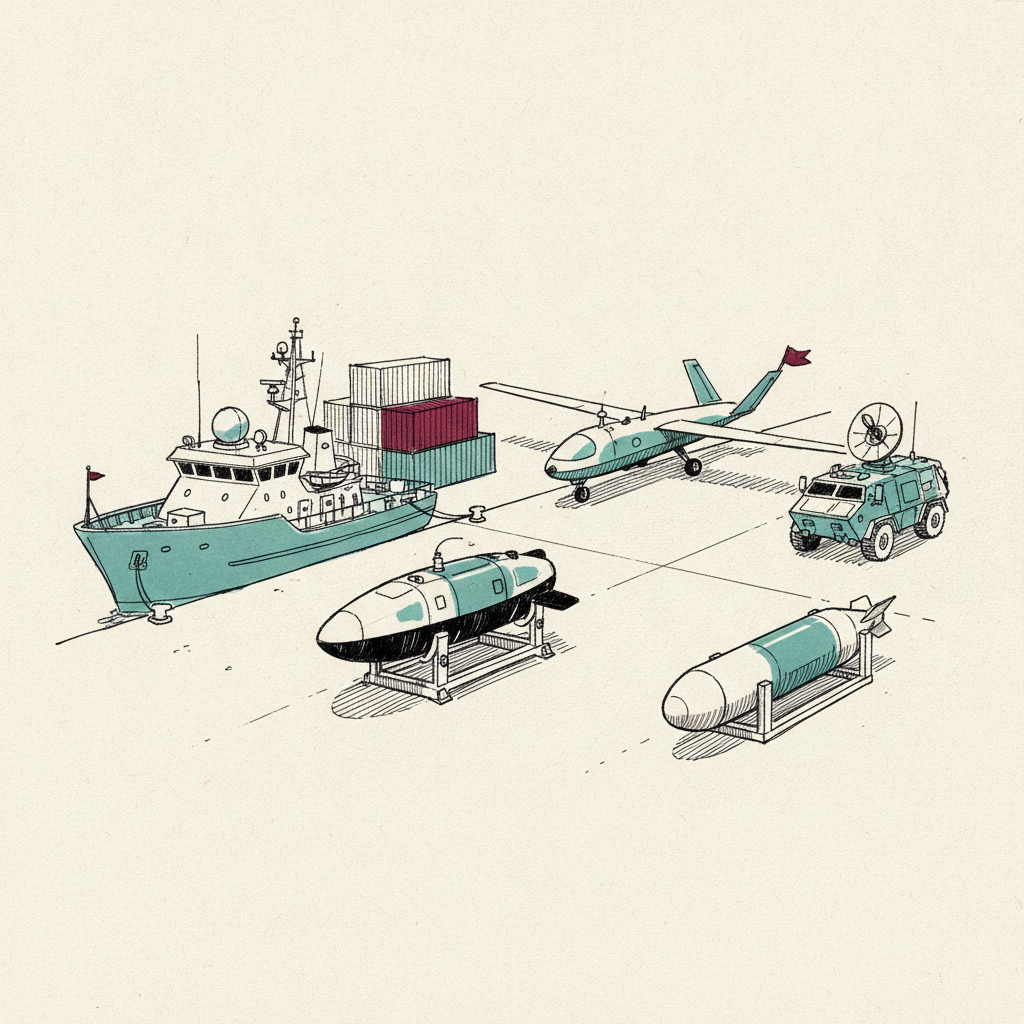
C-Scope is the sensor-fusion command software behind Kongsberg Discovery's subsea-surveillance offer. It fuses active and passive sonar with camera feeds to classify underwater threats, then cues autonomous underwater vehicles, including Kongsberg's HUGIN, rated to 2,200km range and 6,000m depth, to investigate once an alert triggers.
The commercial logic sits in the fusion-and-tasking layer rather than the vehicle hardware: sensor-plus-software-plus-tasking lets a single operator watch a wide spread of maritime sites at once, concentrating the margin and the customer lock-in in C-Scope itself rather than in any one robot.
C-Scope's positioning extends beyond single contracts. The same seabed-threat demand underpins Kongsberg's AUKUS Pillar II bid alongside DRASS and NATO's uncrewed GIUK-gap surveillance task force, making C-Scope one strand of a wider Kongsberg push into subsea-infrastructure protection as a saleable capability rather than a one-off system.
C-Scope wins a secret protection contract
C-Scope's job is classification and tasking, not physical guarding: it reads active and passive sonar alongside camera feeds, decides which contacts are worth investigating, and only then cues a robot such as Kongsberg's HUGIN to go and look. That software layer, not any single sensor or vehicle, is what Kongsberg sold on 3 July 2026 when an unnamed international buyer signed up for standing coverage across a spread of maritime infrastructure sites.
Because the buyer stays locked into whichever robots C-Scope is built to command, Kongsberg keeps the customer even after the initial hardware sale, and its silence on WHO bought the system reads pointedly against a backdrop of Baltic and North Sea cable sabotage: someone wanted this capability badly enough to buy it without saying so.

